
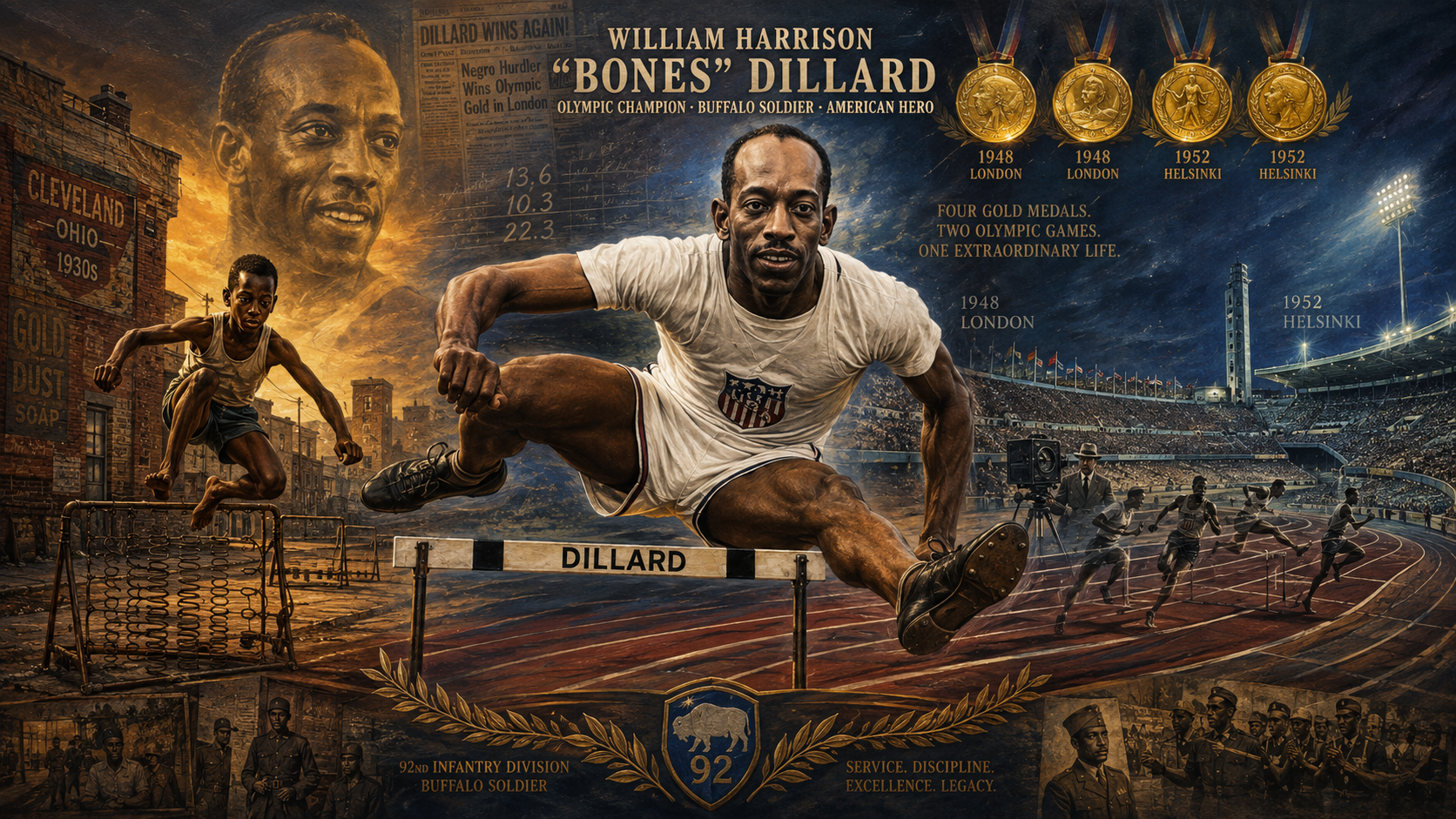
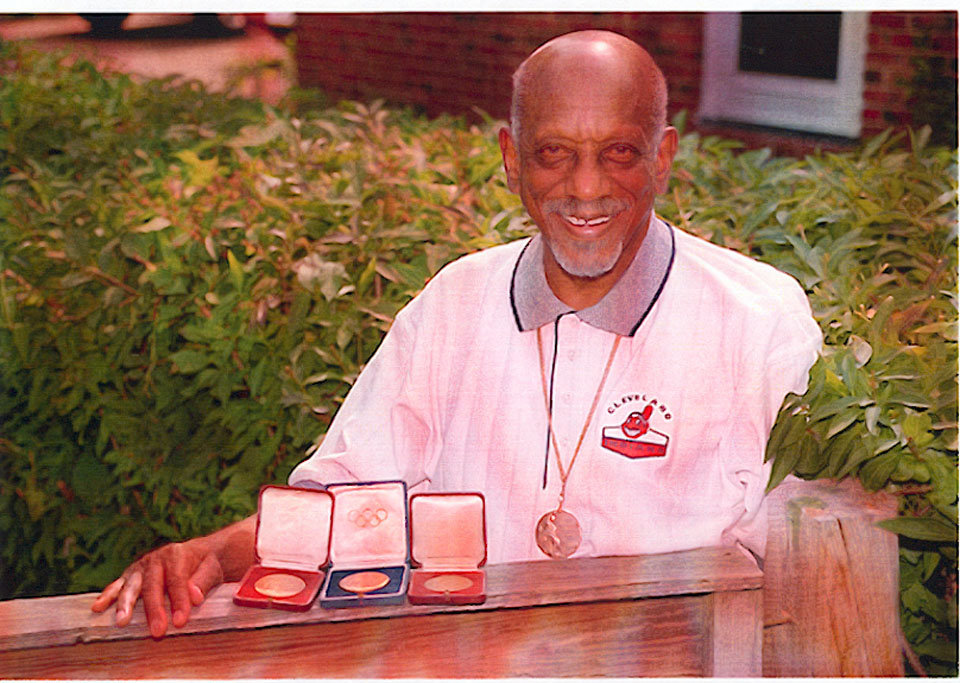
William Harrison “Bones” Dillard was an African‑American Olympic track and field athlete. Dillard was the finest hurdler of his era and one of just three male athletes to win Olympic titles in both sprinting and hurdling events. He remains the only male in Olympic history to win gold in both the 100-meter dash and the 110-meter hurdles, and he won four Olympic gold medals in total.
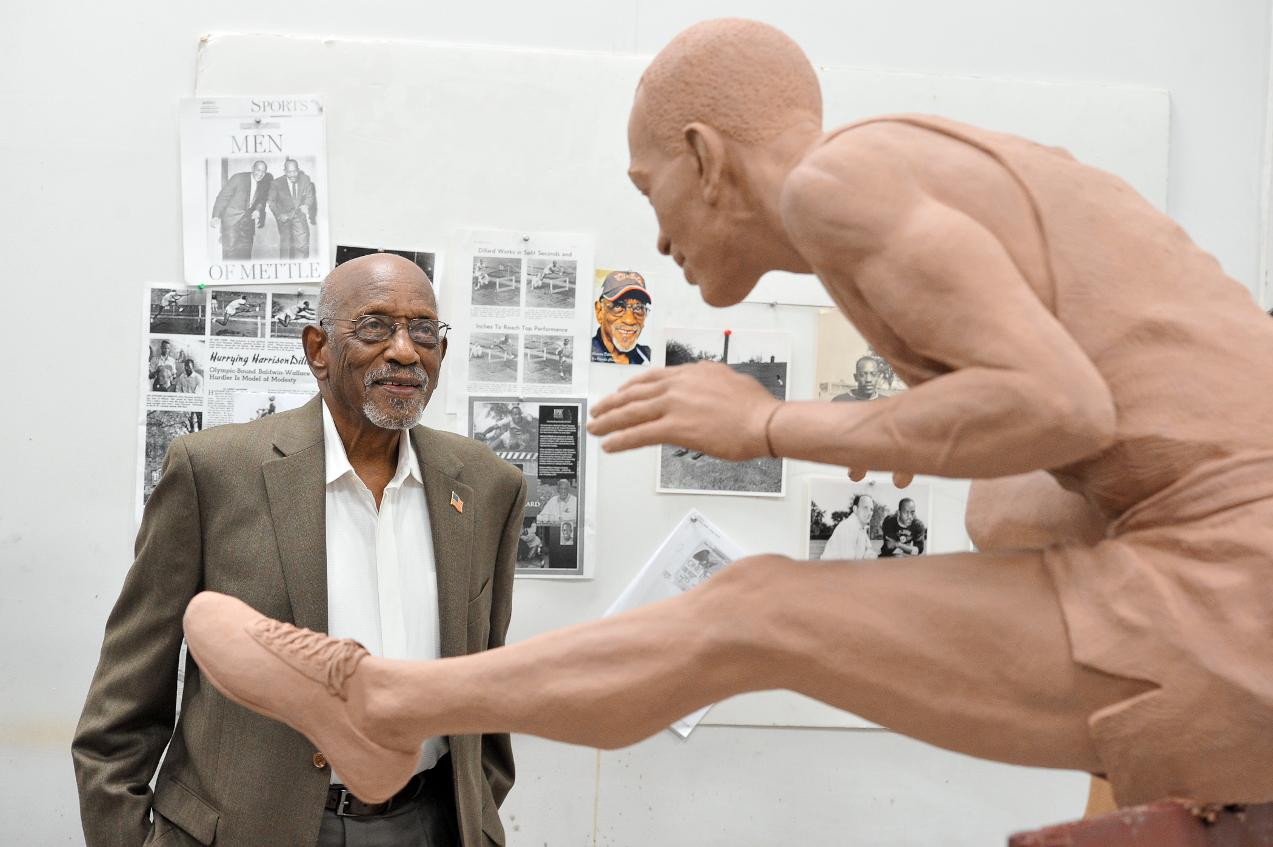
Dillard was born in Cleveland, Ohio, on July 8, 1923. He began hurdling at the age of eight, running in an alley and using springs from discarded car seats as barriers. At thirteen, he attended a parade in Cleveland honoring triple‑gold‑medallist Jesse Owens upon his return from the 1936 Berlin Olympics, and later met Owens, who presented him with his first pair of running shoes. Known as “Bones” because of his tall, lean frame, Dillard attended Baldwin‑Wallace College in Berea, Ohio, where he won four national collegiate titles in the high and low hurdles. He also took 14 AAU outdoor titles in the high and low hurdles, losing the chance to win more because of the outbreak of World War II. In 1943, he was drafted into the United States Army and served in the all‑Black 92nd Infantry Division, the famed Buffalo Soldiers. He returned to Baldwin‑Wallace in 1946 and resumed athletics, still inspired by Jesse Owens, the fellow Cleveland native who had attended East Technical High School as Dillard did.
Dillard won the NCAA and AAU 120‑yard and 220‑yard hurdles in both 1946 and 1947 and tied world records in both events, clocking 22.3 seconds for the 220‑yard hurdles in 1946 and 13.6 seconds for the 120‑yard hurdles. During 1947 and 1948, he won 82 straight hurdles races, yet at the U.S. Olympic trials in 1948, he lost his stride in the 110-meter hurdles final and failed to finish. Fortunately, he had already qualified for the Olympic team in the 100 meters.
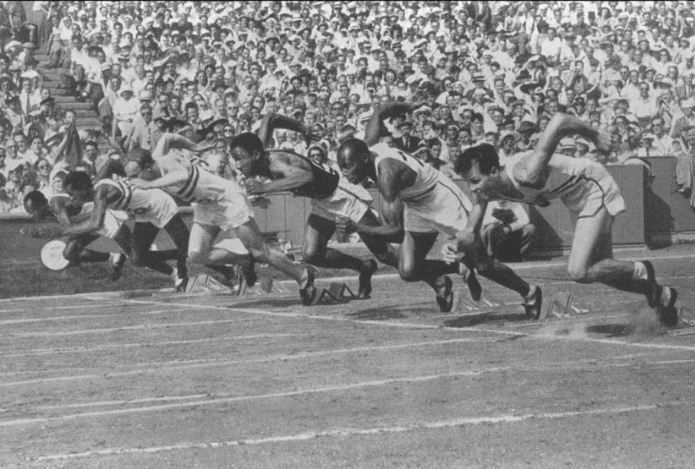
At the London Olympic Games in 1948, Dillard edged his teammate Barney Ewell for the gold medal in the 100 meters, equalling the world record; the race was decided by photo finish, the first time such technology was used at an Olympic Games. As a member of the United States 4×100‑metre relay team, he won a second gold medal at the London Games. Nonetheless, Dillard still wanted to win an Olympic hurdles title.
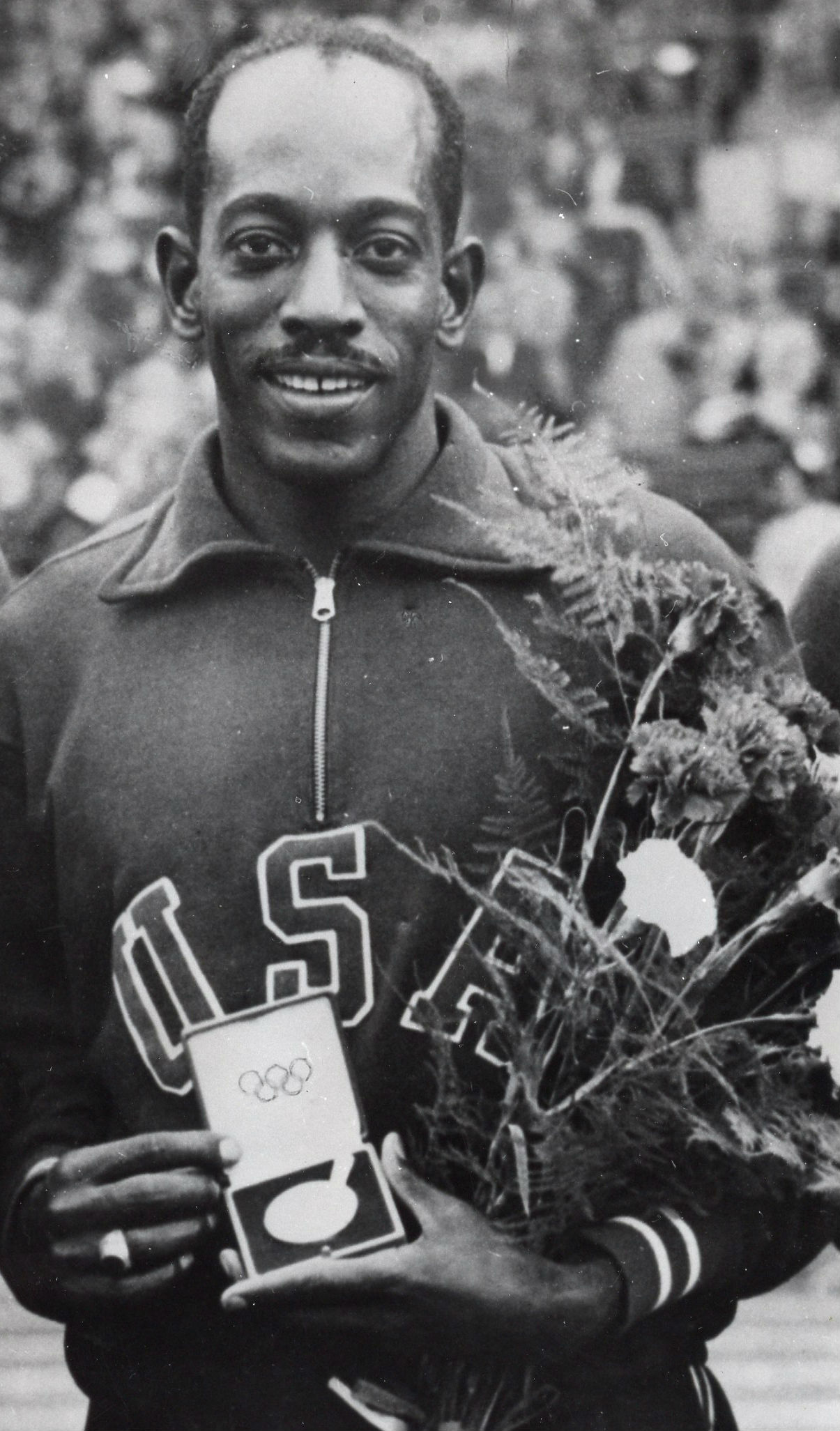
Four years later, at the Helsinki Olympics, the 29‑year‑old Dillard finally got his chance, narrowly beating fellow American Jack Davis to win gold in the 110-meter hurdles. The usually calm Dillard leaped for joy and exclaimed, “Good things come to those who wait.” He won another gold medal in the 4×100‑metre relay in Helsinki, bringing his Olympic career total to four gold medals.
Dillard was virtually unbeatable indoors, winning the AAU 60‑yard hurdles seven years in a row from 1947 through 1953 and again in 1955. A world‑record holder in both the high and low hurdles, he received the James E. Sullivan Award in 1953 as the nation’s top amateur athlete.
For many years, Dillard was the only man to have won Olympic titles in both sprinting and hurdling events. After retiring from competition, he enjoyed a long career in public relations and civic service: he worked for the Cleveland Indians baseball franchise in scouting and public relations, hosted a radio talk show on Cleveland’s WERE, wrote a column for the Cleveland Press, and served as business manager for the Cleveland City School District for many years. He remained deeply involved in Cleveland community affairs until his retirement from the school system in the early 1990s.
William Harrison “Bones” Dillard died on November 15, 2019, in Cleveland, Ohio, from stomach cancer, at the age of 96. At the time of his death, he was the United States’ oldest living Olympic gold medallist.
Source:
http://www.olympic.org/harrison-dillard
http://www.usatf.org/halloffame/TF/showBio.asp?HOFIDs=44
https://en.wikipedia.org/wiki/Harrison_Dillard
http://www.aaregistry.org/historic_events/view/harrison-dillard-olympic-legend