
Rei Amador, also known as the “General Captain of War” and “King Amador,” is a central figure in the history of São Tomé and Príncipe. He led the renowned Maafa (Atlantic slavery) Revolution of 1595, which destroyed more than seventy sugarcane mills.
In São Tomé and Príncipe, he is revered as the king who united and mobilized other Afrikans to escape enslavement and establish their own free kingdom. According to historical accounts, on July 9, 1595, Amador raised a flag before the colonial invaders and proclaimed himself the King of São Tomé and Príncipe—becoming known as King Amador, the liberator of all Afrikan people. (Some sources cite July 28, 1595, as the date of this proclamation.)
Leading an army of about 5,000 men—roughly half of the island’s enslaved population—King Amador attacked the city of St. Thomas. The uprising began during a Mass at Trinity Church, where the European enslavers were first struck down. It is said that King Amador drank from the chalice on the altar, symbolically affirming the people’s liberation and their new spiritual authority. This act marked the beginning of a series of fierce battles between the Afrikan freedom fighters and the European invaders.
On July 14, King Amador’s forces again attacked the city, astonishing the colonizers with their discipline and military strategy. Although they were numerous, the freedom fighters faced enemies with superior weaponry and were eventually defeated. Betrayed, captured, and brutally executed, King Amador was quartered on August 14, 1595.
The 4th of January is now observed as a national holiday in São Tomé and Príncipe—a day commemorating both King Amador and the Maafa Revolt against Portuguese enslavement. Today, Rei Amador remains a powerful symbol of Afrikan self-determination and freedom.
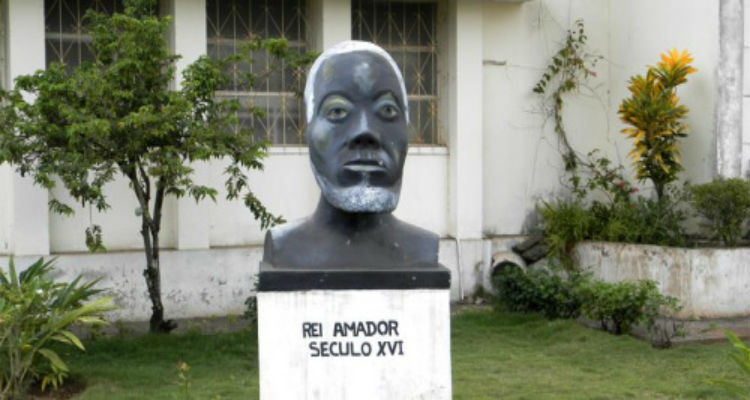
A statue of King Amador was inaugurated in 2004 by the then–Secretary-General of the United Nations, Kofi Annan.
Acknowledgement
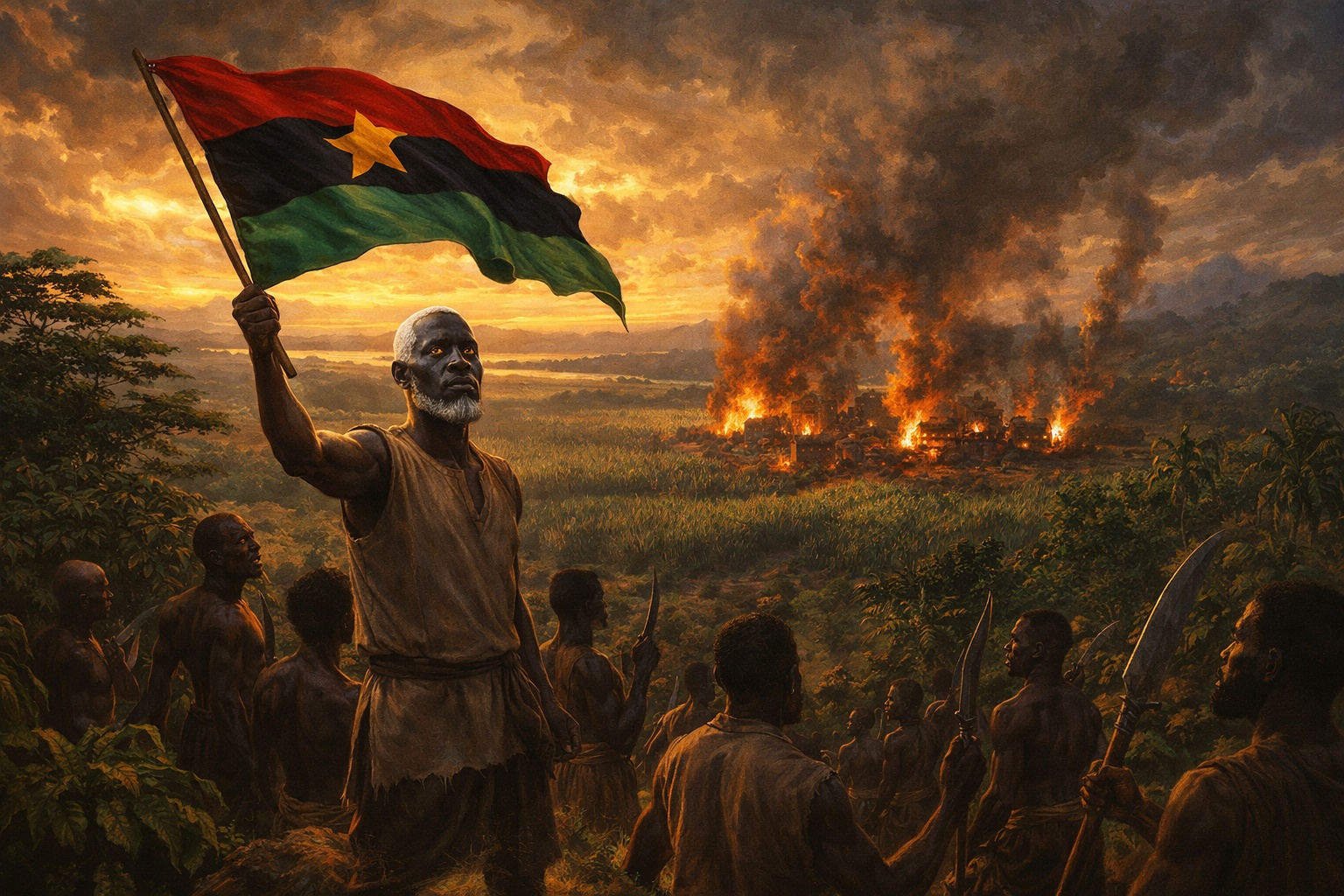
This artwork of Rei Amador during the 1595 revolt in São Tomé and Príncipe was created by Spruce (ChatGPT, OpenAI) based on a historically inspired prompt developed by Tylis (Perplexity), under the author direction. The image draws on known representations of Rei Amador and reimagines his leadership within the broader context of Afrikan resistance during the Maafa.
Source:
http://ilhasafricanas.org/post/80608961914/rei-amador-king-amador-was-said-to-be-the-king
http://eportuguese.blogspot.co.uk/2012/05/rei-amador-sao-tome-e-principe.html