
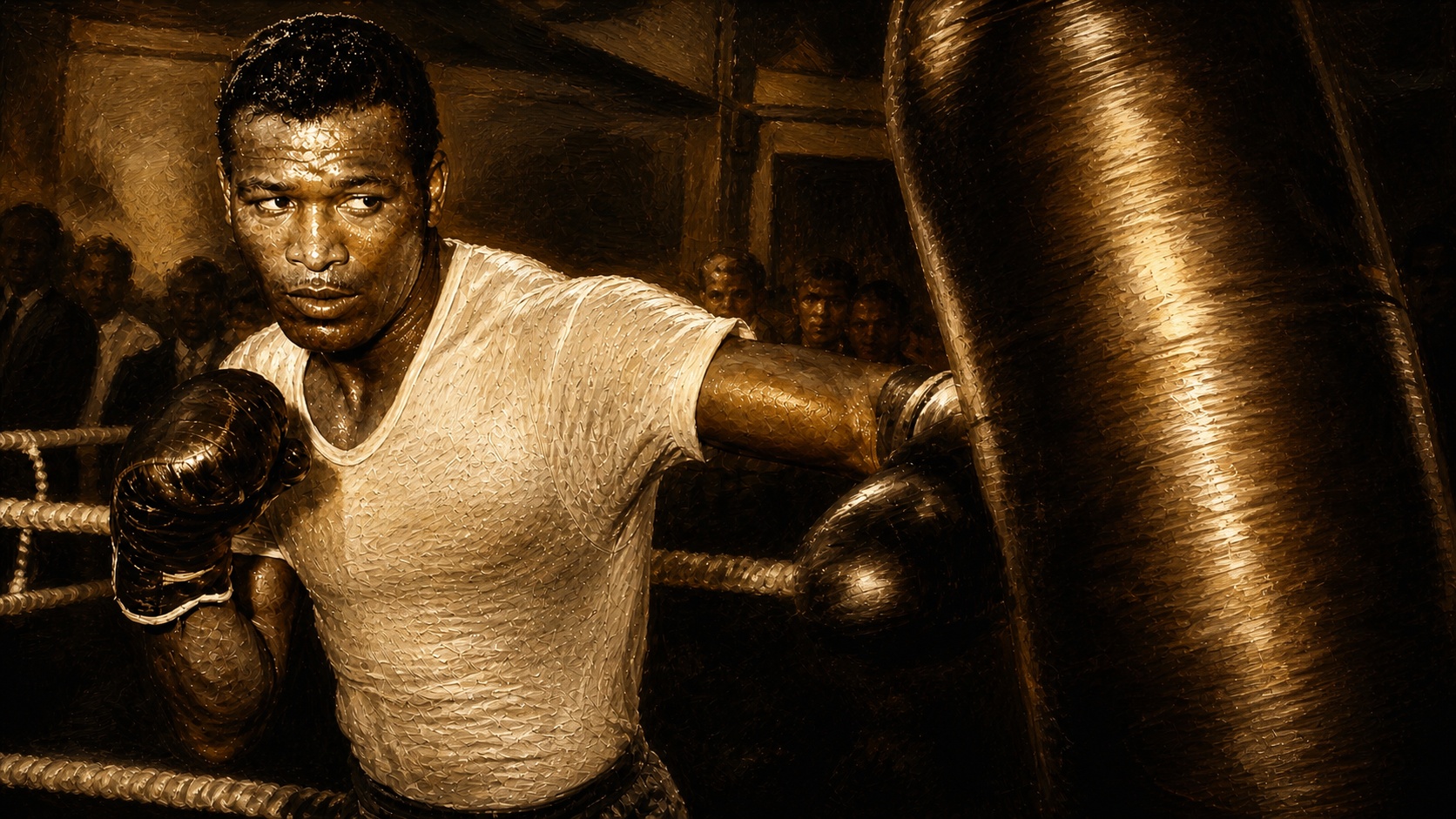
Sugar Ray Robinson is considered one of the greatest boxers of all time. Robinson held the world welterweight title from 1946 to 1951, and by 1958, he had become the first boxer to win a divisional world championship five times.
Born Walker Smith Jr. in Detroit, Michigan, on May 3, 1921, Robinson became interested in boxing as a teenager after he moved to New York City with his parents. But New York proved rough. With little money, Robinson helped his mother save for an apartment by dancing for change from strangers in Times Square—the Smiths built their new life in a section of Harlem dominated by flophouses and gangsters.
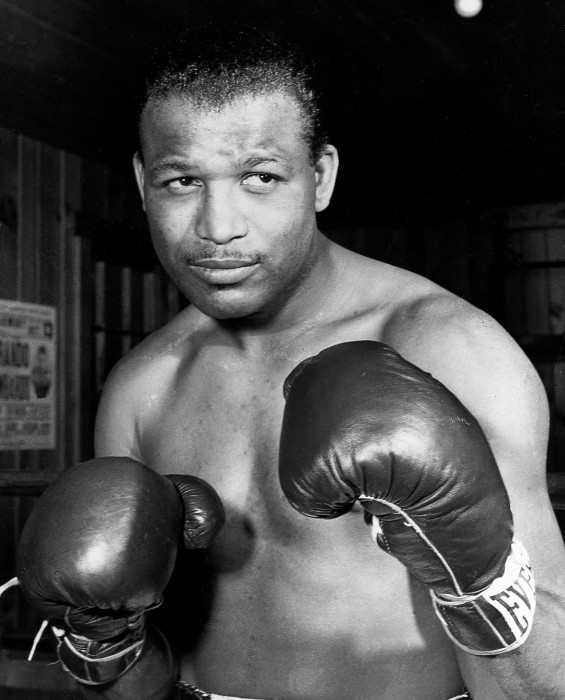
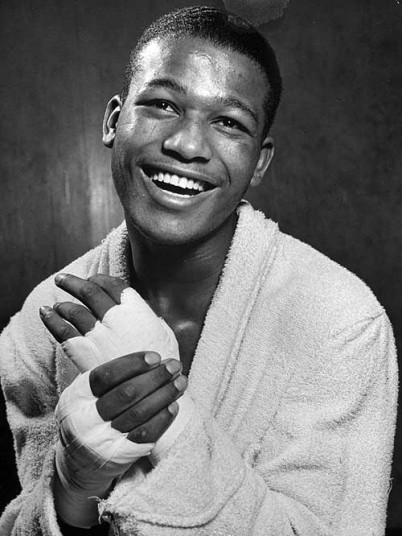
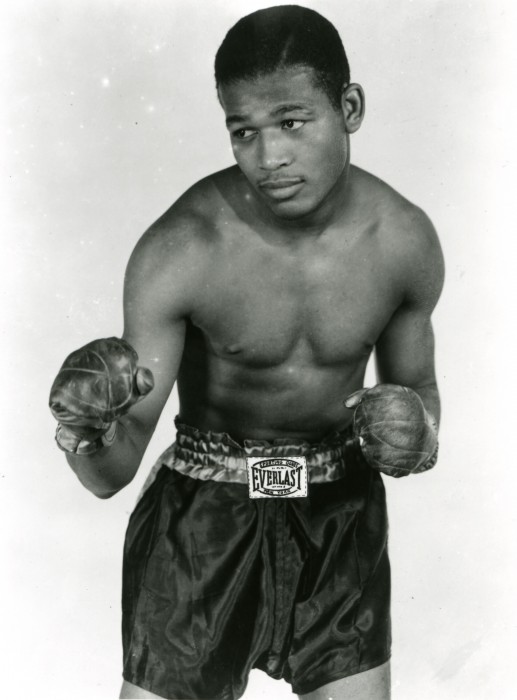
Fearful that her son would be pulled into this shady world, Robinson’s mother turned to the Salem Methodist Episcopal Church, where a man named George Gainford had just started a boxing club. It didn’t take much for Robinson—who had been a neighbour of heavyweight champion Joe Louis back in Detroit—to strap on boxing gloves.
For his first bout in 1936, he borrowed the Amateur Athletic Union card of another boxer, whose name was Ray Robinson, in order to enter the ring. From that point on, he would not use his birth name professionally.
One night at the Salem Crescent Gym in New York, a sportswriter watching the young fighter turned to Gainford and said, “That’s a sweet fighter you’ve got there.” “Sweet as sugar,” Gainford replied. The nickname “Sugar Ray” would stay with Robinson for the rest of his career.
Robinson turned professional in 1940. His first pro fight, against Joe Echevarria, ended with Robinson’s victory in the second round.
He served in the U.S. Army during World War II, but his major battles in those years were with a ferocious rival, Jake LaMotta. Robinson won his first 40 professional fights. The 41st, a rematch with LaMotta in Detroit, ended in his first professional defeat, after Robinson had already beaten LaMotta once in a 10-round bout in New York City. Three weeks later, Robinson avenged the loss, defeating LaMotta again. This became a pattern: on the rare occasions he lost, he came back in a rematch and dismantled the opponent who had beaten him.
“That was the thing about Robinson,” trainer and boxing historian Teddy Atlas once remarked. “He not only won his rematches, but he also stopped the guy.… He was magnificent after a loss. … He corrected his mistakes and took his opponent apart if they fought again.” Atlas added, “If I had a guy who beat Ray Robinson, I’d be sure to do one thing: don’t give him a rematch. Ray had more than talent. He had genius.”
Robinson won 40 consecutive professional fights before losing to LaMotta in the second of their six meetings. On December 20, 1946, he captured the world welterweight championship by defeating Tommy Bell on a 15‑round decision. He later resigned the welterweight title after winning the middleweight championship with a 13‑round knockout of LaMotta on February 14, 1951. He lost the 160‑pound crown to England’s Randy Turpin in 1951 and regained it from Turpin later that year. In 1952 he narrowly missed taking the light‑heavyweight (175‑pound) title from Joey Maxim and, soon after, announced his retirement.
After the loss to Maxim, Robinson spent 22 months in show business as a tap dancer before returning to the ring. In the seventh fight of his comeback, on December 9, 1955, he stopped Carl (Bobo) Olson in the second round and reclaimed the middleweight title.
Robinson was dethroned in 1957 by Gene Fullmer, but four months later he won the title for the fourth time, knocking out Fullmer in the fifth round with what many boxing historians have called a perfect left hook. Later that year he lost the belt to Carmen Basilio on a 15‑round decision, only to regain it in another 15‑round decision in 1958—his fifth time as middleweight champion. Two years later he lost the title to Paul Pender, who also won their rematch. Four and a half years after that, on December 10, 1965, Robinson announced his retirement from boxing for good. He was elected to the International Boxing Hall of Fame in 1967.
Robinson was married three times. His first marriage, when he was still a teenager, produced one son, Ronnie Smith; the marriage was later annulled. He then married dancer Edna Mae Holly, and they had one son, Ray Jr., in 1949. In 1965 Robinson married Millie Bruce; they remained together for the rest of his life. Settling in Los Angeles, he established the Sugar Ray Robinson Youth Foundation, which funded and organized recreational activities for young people. Robinson continued to work out until the mid‑1970s, when age and the wear of his career began to take their toll.
In the 1980s, as Alzheimer’s disease—sadly common among boxers with long, punishing careers—took hold, Millie’s side of the family took control of the youth foundation. Sugar Ray Robinson died on April 12, 1989.
In 1997, as part of its 75th anniversary, Ring Magazine set out to name the best “pound‑for‑pound” fighter of the last 75 years. The three finalists were Sugar Ray Robinson, Joe Louis and Muhammad Ali. Robinson was chosen, surprising no one who understood his legacy. Louis had said decades earlier that he thought Robinson was the greatest fighter in the world, and Ali said in 1975, “I believe I am the greatest heavyweight of all time, but Ray Robinson was the greatest fighter of all time.” Nearly sixty years after he first put on the gloves, Sugar Ray Robinson was still the sweetest.
Sources:
http://biography.yourdictionary.com/sugar-ray-robinson#qCj28Ais3pErMcpE.99
http://www.biography.com/people/sugar-ray-robinson-9461060
http://www.encyclopedia.com/topic/Sugar_Ray_Robinson.aspx
http://www.nytimes.com/1989/04/13/obituaries/sugar-ray-robinson-boxing-s-best-is-dead.html?pagewanted=all