
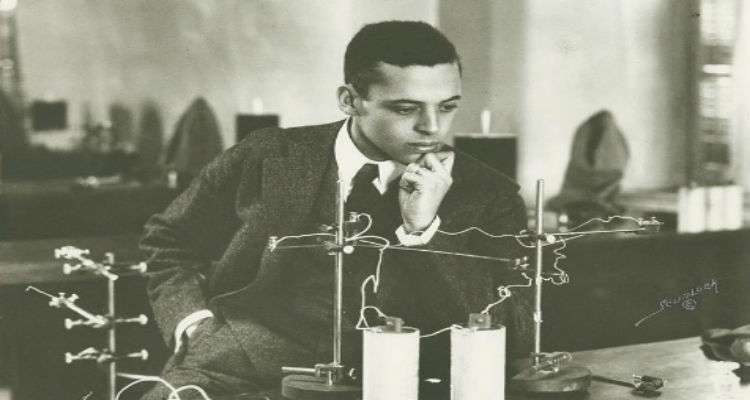
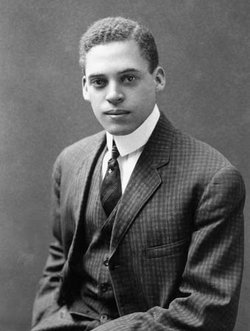
Ernest Everett Just was an internationally respected African American biologist, zoologist, and physiologist whose pioneering research on fertilization, experimental parthenogenesis, cell physiology, and embryonic development made major contributions to twentieth-century biology.
Just was born on August 14, 1883, in Charleston, South Carolina, to Charles Frazier Just and Mary Matthews Just. An intelligent and inquisitive student, he attended Kimball Union Academy in New Hampshire before enrolling at Dartmouth College.
During his university years, Just developed a deep interest in biology and embryology. He excelled academically, receiving the highest marks in Greek during his freshman year and being named a Rufus Choate Scholar in his junior and senior years. He graduated from Dartmouth in 1907 magna cum laude—the only member of his class to do so—and received honors in botany, sociology, and history.
After graduating from Dartmouth, Just accepted a teaching position at the historically Black Howard University in Washington, D.C., where he initially taught English and other humanities subjects. By 1909, however, he had begun teaching biology. He later helped establish Howard’s zoology department and became its head. At Howard, Just also worked to strengthen scientific training and research opportunities, while pursuing grants and fellowships to sustain his own investigations.
Beginning in 1909, Just spent summers—and often six months or more each year—conducting research at the Marine Biological Laboratory in Woods Hole, Massachusetts. He was the first African American to study and work there. Through meticulous research on marine invertebrates and their eggs, he became a leading authority on fertilization, embryology, and developmental physiology. His early work showed that the sperm’s point of entry determines the first cleavage plane of an egg, while later research examined the cellular processes that prevent polyspermy, or the entry of more than one sperm.
In 1915, Just became the first recipient of the National Association for the Advancement of Colored People’s Spingarn Medal, awarded annually for outstanding achievement by an African American.
Taking leave from Howard, Just pursued graduate study at the University of Chicago, where he had enrolled in absentia in 1911. He completed his Ph.D. in zoology in 1916. Although he was among the relatively small number of African Americans then earning doctorates from major American universities, he was not the first African American to receive a Ph.D. from the University of Chicago; that distinction belonged to the zoologist Charles H. Turner in 1907.
From 1920 to 1931, Just held a Julius Rosenwald Fellowship in biology through the National Research Council. Despite his growing reputation, his productivity, and the publication of more than 70 scientific articles and two books, he continued to confront entrenched racial barriers in the United States. Those barriers limited his access to major research appointments and institutional resources.
From the late 1920s onward, Just spent increasingly long periods conducting research in Europe, including in Italy, Germany, France, and at the Station Biologique in Roscoff, France. There he found scientific opportunities and a degree of social freedom that were largely unavailable to him in the segregated United States. His major works included Basic Methods for Experiments on Eggs of Marine Animals and The Biology of the Cell Surface, both published in 1939.
In 1940, during the German invasion and occupation of France, Just was interned by the Nazis. He was eventually released, and he and his second wife, Hedwig Schnetzler, escaped Europe and returned to the United States. Just had previously married Ethel Highwarden, a teacher at Howard University, on June 26, 1912. They had three children—Margaret, Highwarden, and Maribel—before divorcing in 1939. That same year, he married Schnetzler, whom he had met in Berlin; the couple later had a daughter, Elisabeth.
After returning to the United States, Just resumed his work at Howard University, though his health was rapidly declining. He died of pancreatic cancer in Washington, D.C., on October 27, 1941, at the age of 58. He was buried at Lincoln Memorial Cemetery in Suitland, Maryland.
Sources:
http://www.biography.com/people/ernest-everett-just-9359195#career-success-
http://www.factmonster.com/ipka/A0775692.html
http://science.howstuffworks.com/dictionary/famous-scientists/biologists/ernest-everett-just-info.htm