
“A riot is the language of the unheard.” ~MLK
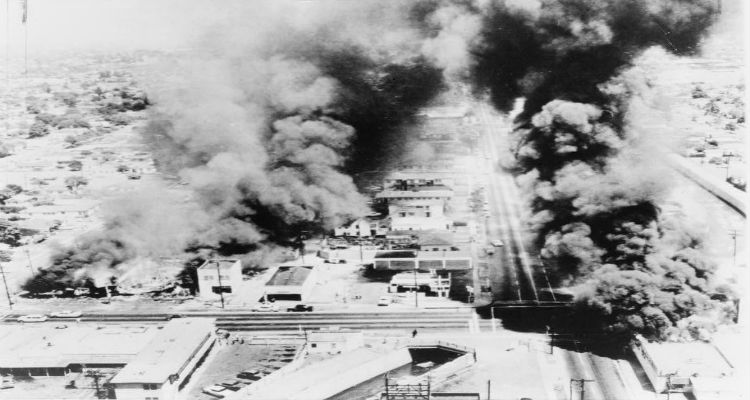
The Watts Rebellion, often called the Watts riots or Watts Uprising, unfolded over six days beginning on August 11, 1965, in Watts and surrounding areas of South Los Angeles. It was among the largest and costliest urban rebellions of the civil-rights era. The confrontation between local residents and law enforcement left 34 people dead, 1,032 injured, and 3,438 arrested, while property damage exceeded $40 million.
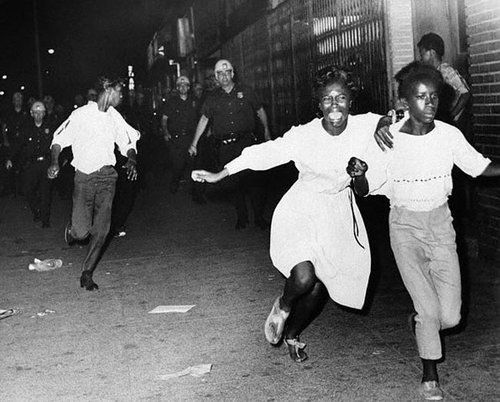
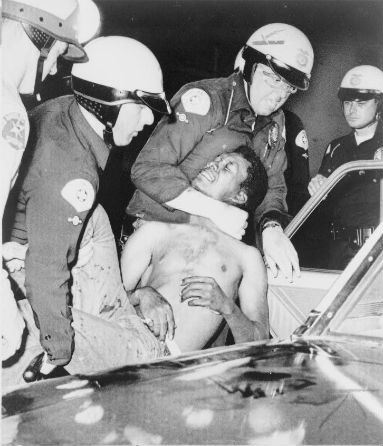
On the evening of August 11, 1965, 21-year-old Marquette Frye, an African American man driving his mother’s 1955 Buick, was stopped near Avalon Boulevard and 116th Street by California Highway Patrol officer Lee W. Minikus after reports of reckless driving. Frye failed sobriety tests and was arrested on suspicion of driving while intoxicated. Minikus also arranged for the Buick to be impounded.
A crowd of onlookers gathered at the scene. Frye’s older stepbrother, Ronald, went to bring their mother, Rena Frye—also known as Rena Price—to the intersection so that she could claim the car. Upon arriving, she scolded her son for drinking and driving. Tensions escalated as officers attempted to handcuff Frye, who resisted. In the ensuing struggle, an officer’s baton struck Frye in the head, leaving him bleeding. Officers also arrested Rena and Ronald Frye.
Rumors quickly spread that police had brutally beaten Frye and assaulted a pregnant woman. The allegation concerning the pregnant woman was later found to be untrue by the McCone Commission, but it intensified the crowd’s anger amid longstanding grievances about police abuse, housing discrimination, unemployment, inadequate schools, and poor living conditions in Black Los Angeles.
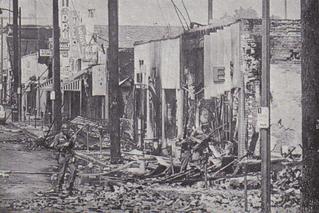
As the crowd grew, residents threw rocks and other objects at police vehicles. By the following evening, the unrest had developed into a broader rebellion across Watts and other parts of South Los Angeles. Participants overturned and burned automobiles, looted and damaged businesses, and set fires. Some people fired at police officers and firefighters, while firefighters attempting to contain the blazes were forced to take cover. The disturbance ultimately spread across a curfew area of roughly 46.5 square miles.
On August 12, local Black leaders and residents held a meeting at Athens Park to urge calm, but it did not halt the expanding unrest. On August 13, Los Angeles officials requested assistance from the California National Guard. Over the course of the rebellion, approximately 13,900 to 14,000 Guardsmen were deployed, alongside nearly 2,000 Los Angeles police officers and sheriff’s deputies. Authorities imposed an 8 p.m. curfew across the affected area.
The rebellion’s toll was severe. Thirty-four people died, 1,032 were injured, and nearly 3,500 people were arrested, most on burglary or theft charges. At least 600 buildings were damaged by fire or looting, and about 200 were destroyed. Of those killed, 23 died at the hands of Los Angeles police officers or National Guardsmen.
White motorists were sometimes pulled from their cars and assaulted, while Black-owned and white-owned businesses alike suffered damage. However, many businesses targeted by looters or arsonists were white-owned establishments that some residents regarded as exploitative or as symbols of economic exclusion within the neighborhood.
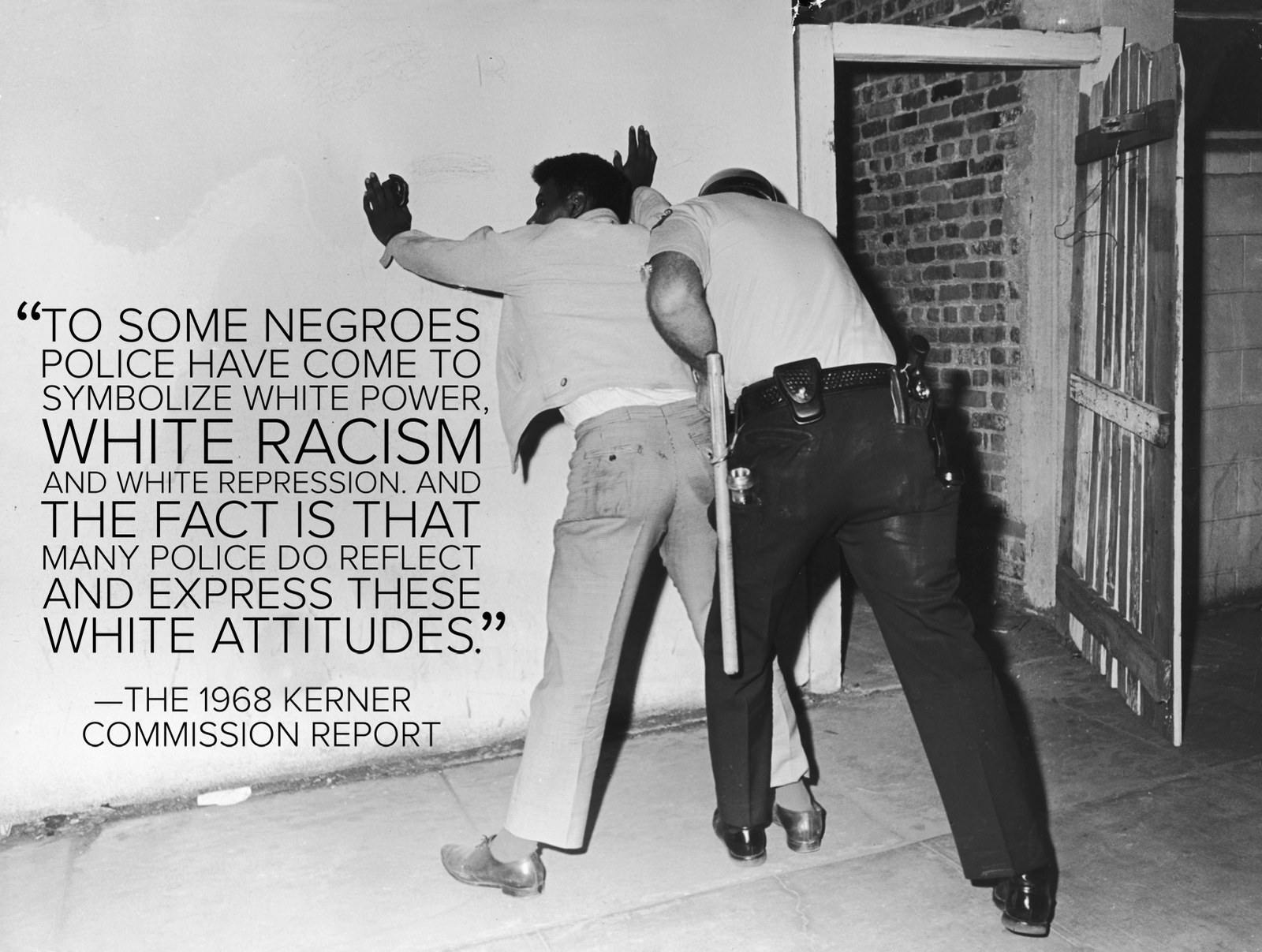
Many white Americans viewed the events chiefly as a collapse of public order. Many Black residents and activists, however, understood them as an uprising against racialized poverty, police violence, political exclusion, and the daily indignities of segregated urban life. In a 1966 essay, Bayard Rustin wrote that the Watts outbreak “marked the first major rebellion of Negroes against their own masochism” and expressed a refusal to “quietly submit to the deprivation of slum life.”
In the aftermath, Governor Pat Brown appointed the Governor’s Commission on the Los Angeles Riots, widely known as the McCone Commission, which was chaired by former CIA director John A. McCone. Its 101-page report, Violence in the City—An End or a Beginning?, was issued on December 2, 1965. The commission identified high unemployment, inferior schools, inadequate housing, and poor relations between police and the Black community as central causes of the rebellion. It recommended expanded preschool and literacy programs, job training, improved low-income housing, better health services and public transportation, and stronger police-community relations. Many proposed reforms were only partially implemented or not implemented at all.
Marquette Frye died of pneumonia on December 20, 1986, at age 42. Rena Price died on June 10, 2013, at age 97. Contemporary accounts report that she never recovered the impounded 1955 Buick because its storage fees exceeded its value.
Source:
http://www.history.com/this-day-in-history/watts-riot-begins
https://en.wikipedia.org/wiki/Watts_riots
http://crdl.usg.edu/events/watts_riots/?Welcome