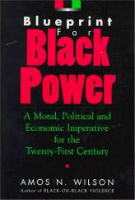
 Blueprint for Black Power: A Moral, Political, and Economic Imperative for the Twenty-First Century details a master plan for the power revolution necessary for Black survival in the 21st Century. The book posits that an African American/Caribbean/Pan-African bloc would be most potent for the generation and delivery of Black power in the United States and the World to counter white and Asian power network.
Wilson frame this imperative by deconstructing the US elite power structure of Government, political parties, think tanks, corporations, foundations, media, interest groups, banking and foreign investment particulars. Potentially strong Black institutions as the church, media and think tanks are analyzed. Pan Afrikanism, Black Nationalism, ethnocentrism and reparation are assessed, often misused and underused financial institutions as securities, mutual funds, stock, bonds, underwriting, and incubators, advocated, thus elucidating oft-negated opportunities for economic empowerment.
An excerpt from Blueprint for Black Power “Increases in homelessness, poverty, unemployment, criminality and violence in the Black community; disorganization of the traditional Black family, inadequacies in education, increases in health problems of all types, and a host of other social and political ills have all attended increases in the number of Black elected and appointed officials. That is, the more elected and appointed Black politicians, the more social-economic problems the Black community has suffered. While we are not implying a causal relationship between the increase of the number of Black appointed and elected officials and the increased misery indices of the Black community, we are implying or asserting that their increase obscures those things which are responsible for and do little to ameliorate or uproot the increasing prevalence of social and economic problems in the Black community. The community’s concern with the election and appointment of Black political figures helps it to maintain false hopes that their attainment of office will significantly resolve its problems. The activities of Black politicians, given the current inadequacy of social organization and economic resources, harmfully distract the Black community’s attention from recognizing and eradicating the true causes of its problems and the remediation of its powerlessness.” –Amos N. Wilson
Read the first chapter online, here.