

“Slavery is not an indefinable mass of flesh. It is a particular, specific enslaved woman, whose mind is as active as your own, whose range of feelings is as vast as your own; who prefers the way the light falls in one particular spot in the woods, who enjoys fishing where the water eddies in a nearby stream, who loves her mother in her own complicated way, thinks her sister talks too loud, has a favorite cousin, a favorite season, who excels at dressmaking and knows, inside herself, that she is as intelligent and capable as anyone… For this woman, enslavement is not a parable. It is damnation. It is the never-ending night. And the length of that night is most of our history.” ~Ta-Nehisi Coates
In his essay “Social Death and Political Life in the Study of Slavery,” Vincent Brown, author of The Reaper’s Garden: Death and Power in the Atlantic World, relates a hauntingly evocative tale of what he calls “an oracle of literature.” He writes:
“Aboard the Hudibras in 1786, in the course of a harrowing journey from Africa to America, a popular woman died in slavery. Although she was ‘universally esteemed’ among her fellow captives as an ‘oracle of literature,’ an ‘orator,’ and a ‘songstress,’ she is anonymous to historians because the sailor on the slave ship who described her death…did not record her name. Yet he did note that her passing caused a minor political tumult when the crew herded the other enslaved women below decks before they could see the body of their fallen shipmate consigned to the water. This woman was no alienated isolate to be hurled over the side of the ship without ceremony. She had been, according to Butterworth, the ‘soul of sociality’ when the women were on the quarterdeck. There she knelt nearly prostrate, with hands stretched forth and placed upon the deck, and her head resting on her hands. Then, in order to render more easy the hours of her sisters in exile, the woman would sing slow airs of a pathetic nature and recite such pieces as moved the passions; exciting joy or grief, pleasure or pain, as fancy or inclination led. Around her, the other women were arranged in ordered rows around her, with the innermost ring comprising the youngest girls and the elderly on the perimeter–a fleeting makeshift community amid the chaos of the slave trade.”
This unknown ancestress, whose life journey took her to the realm of Olókun rather than the labour camps of the so‑called “New World,” was a holder of the Word and an inner vital force of harmony for Black women on the Hudibras. She was perhaps a doma or soma in Bambara thought, as the knowers and makers of knowledge are called. Through her, the women on the Hudibras had created a ritual of healing, protection and community in the very belly of the trafficking in human beings. Unfortunately, she was the first to die, and her body was given to the waters of the Atlantic.
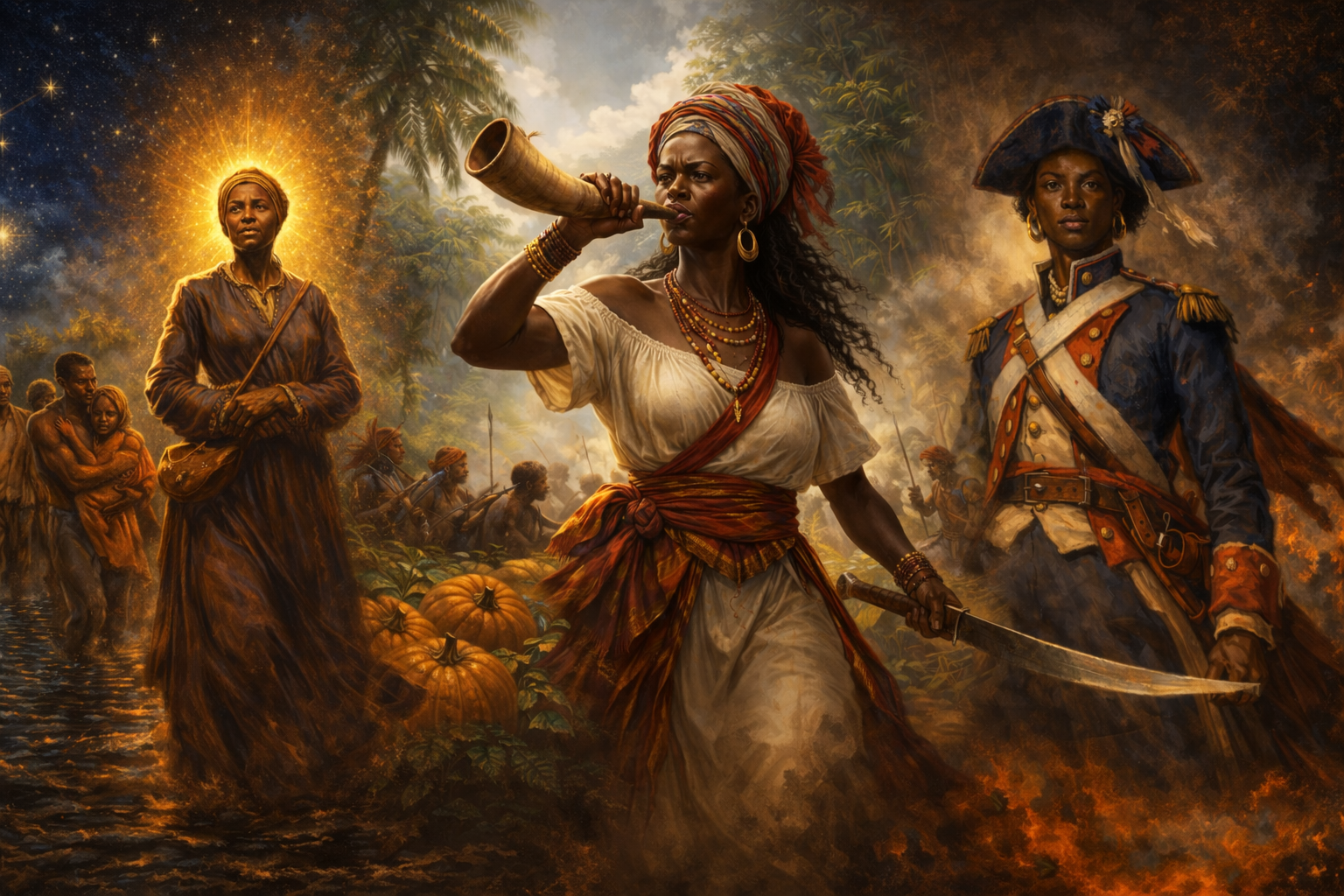
There are millions of unknown women from the Maafa (Atlantic trafficking and captivity), but there are those whose names still live with us. Some are legendary, such as Queen Nanny and Harriet Tubman, women who played a central role in the ourstory of the Black Atlantic as they struggled to humanise the inhumane world around them. Some gave their lives in battle, such as Dandara of Brazil, Carlota of Cuba, Solitude of Guadeloupe, Maria of Curaçao, and Sanite Belair of Haiti. Marie‑Joseph Angélique of Canada and Sally Bassett of Bermuda were executed for allegedly setting fires meant to destroy the property and persons of a few of the perpetrators of the “damnation.”
Dido Elizabeth Belle of Britain may seem a “surprise” choice among the ten women featured, because she was not a warrior heroine, nor is she known to have tried directly to destroy the machinery of bondage. Born into slavery in the Caribbean, Dido was brought to Britain and raised in William Murray’s household at Kenwood as part of an aristocratic family at the height of the Maafa. Despite her origins, she led an aristocratic life, moving among the affluent circles of British society and enjoying privileged access to education, resources, and refined surroundings. It has been observed that she was “in the top 5 per cent, perhaps the top 1 per cent, in terms of how she lived, her allowance, her dress, her education,” even as her legal and social position remained precarious.
Would William Murray have made the rulings he did had Dido not been part of his household? Historians are cautious about drawing a straight causal line, but some have suggested that his daily intimacy with a beloved mixed‑race relative inflected his sense of the Maafa’s “odious” nature. I share the intuition that her presence helped shift the terms of the possible. I believe her presence in the Black Atlantic world created a radical change in the “never‑ending night,” a subtle but profound disturbance in the order of things. A lesson I have learned from looking at Dido’s life is that the universe can make revolutionary changes in very subtle ways: there are times when fire can only be stopped by fire, and other times by water. Dido’s life suggests that, at certain moments, the work of water—quiet, persistent, reshaping—can be as revolutionary as fire. Therefore, her birth was a call to the earth to challenge the “damnation” in a different way from the other nine ancestresses, a different modality of resistance within the same long night.
“Courage is the most important of all the virtues because without courage you can’t practice any other virtue consistently. You can practice any virtue erratically, but nothing consistently without courage.” ~Maya Angelou
If I am searching for the bravest and most courageous people on earth, I find them in this dark period of ourstory, that our Ancestors called the “Time of Sorrow.” I cannot find a woman more courageous than Queen Nanny, the indomitable warrior-priestess; or Harriet Tubman, who braved countless perilous nights under the north star to liberate others; or Carlota, who resisted despite knowing the brutal consequences she faced. I cannot find a woman braver than Sanite, who commanded her own execution; or Solitude, who fought for freedom while pregnant; or Dandara, who chose death over bondage. Their unconquerable spirits made these ancestresses real-life heroines, not fantasy warriors. They faced the worst oppression in history, and yet had the presence of mind to fight back. They stand as shining embodiments of an Ashanti teaching: “Fight prior to your death if death, if death cannot be avoided.” Taken together, these ten women make looking back at the Maafa not only a confrontation with horror, but also a profound source of pride.
1. Dandara of Brazil (died 6 February 1694)
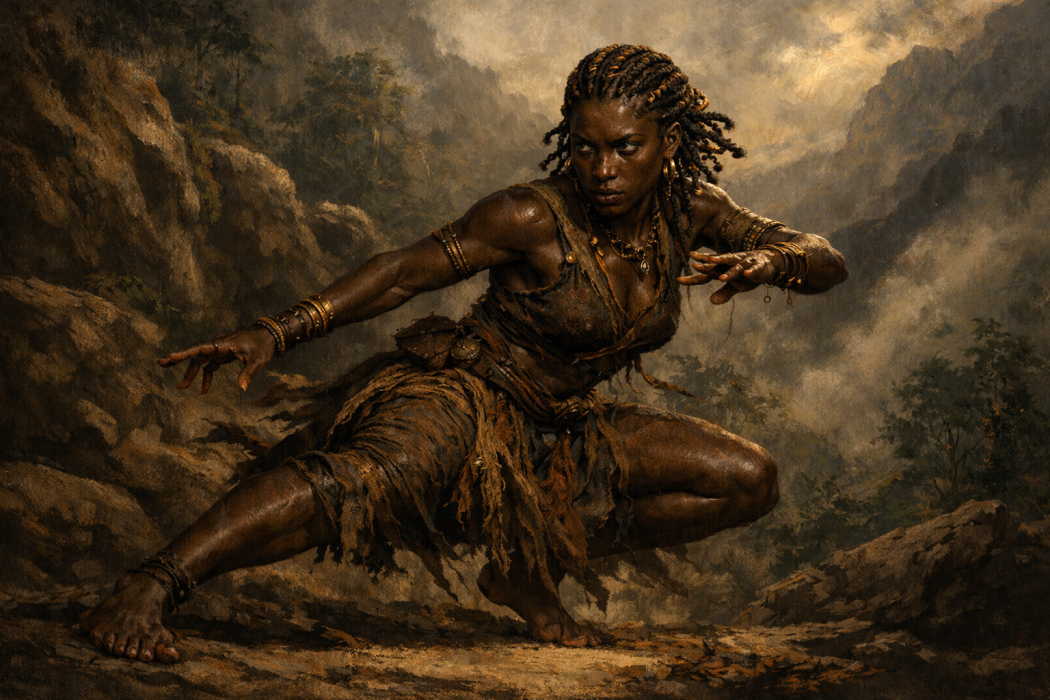
Dandara was the last Queen of the Quilombo dos Palmares and the wife of Zumbi dos Palmares, the last king of the Quilombo. Together, they had three children. Renowned as a master of capoeira, Dandara fought courageously alongside her husband in numerous battles to defend Palmares. She notably led the female phalanx of the Palmares army in resistance against Portuguese and Dutch forces. After her capture on February 6, 1694, Dandara chose death over a return to bondage. According to many accounts, she and several other quilombolas leapt from the highest peak rather than submit to renewed captivity. Dandara died a heroine, true to the legacy she forged in life.
Little is known about Dandara’s early life, and even basic details—such as whether she was born in Brazil or Africa—remain uncertain. Oral traditions and later historical reconstructions suggest that she played a key role in devising defense strategies for Palmares. In addition to her skills as a warrior, Dandara hunted and farmed, reflecting the significant role women played in sustaining the quilombo’s agricultural foundation. She is credited with planting crops such as corn, manioc, beans, sweet potatoes, sugarcane, and bananas, helping to secure the material well-being of this free Black community. Dandara is also remembered for her influence in persuading Zumbi to break with his uncle Ganga-Zumba, the first leader of the Quilombo dos Palmares. In 1678, Ganga-Zumba agreed to a peace treaty with the government of Pernambuco that recognised limited freedom and land for some residents of Palmares, but required the return of those not born in the Mocambos to their former captors—a compromise that failed to end the Maafa/Atlantic slave trafficking and wider captivity. Dandara and Zumbi reportedly opposed this agreement precisely because it left the larger system of captivity intact.
The video game Dandara, developed by Long Hat House and published by Raw Fury, is inspired by Dandara’s history.
2. Queen Nanny of Jamaica (c. 1686 – c. 1755)
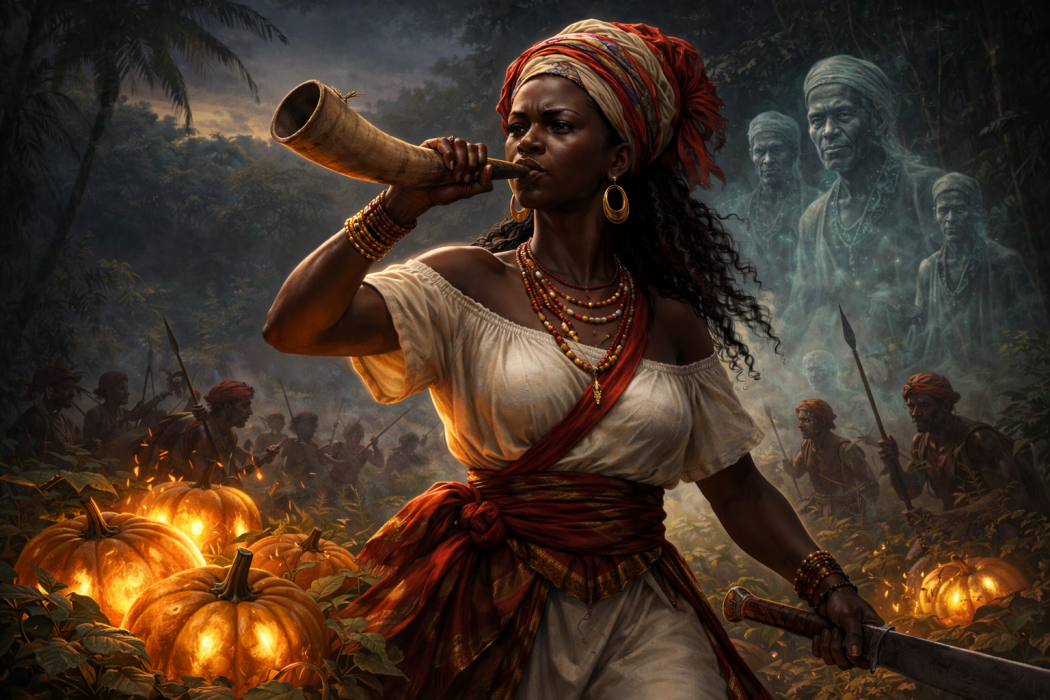
Queen Nanny was the military leader and priestess of the Windward (Eastern) Maroons in what is now Portland, Jamaica. In keeping with Asante tradition, she is remembered not only as a leader or queen but as a kind of “first mother” or ancestral queen, regarded as the mother of her people. Unlike many other Kromanti/Maroon leaders, numerous objects and places bear her name: Jamaicans speak of the Nanny bird, Nanny Thatch (a particular style of house), Nanny Pot, the Nanny River, and, of course, Nanny Town in the Blue Mountains.
Much of Queen Nanny’s life is wrapped in myth and legend, but both oral traditions and British documents agree that she possessed exceptional leadership gifts. She is often described as a small, wiry woman with piercing eyes, whose influence over the Maroons seemed almost supernatural and was linked to her powers as an obeah woman. Nanny helped organise and direct the guerrilla campaigns of the Windward Maroons against the British, training her warriors in the use of the abeng – a cow horn used for long-distance communication – and in the arts of camouflage and ambush; these tactics formed the backbone of a new kind of mountain warfare that repeatedly confounded British troops. While some accounts emphasise her as a strategist rather than a front-line fighter, others simply present her as a commanding military leader in battle, so it is safer to say she oversaw and organised the warfare rather than that she “never fought.”
The Maroons’ prolonged resistance forced the British to sue for peace, leading to treaties in 1739–1740 that recognised Maroon autonomy. A treaty signed on 20 April 1740 granted Nanny and her followers 500 acres of land in Portland; the settlement created there is known today as Moore Town, or “New Nanny Town,” whose people still honour the date as a local holiday. Oral traditions insist that Nanny herself distrusted British promises and opposed the terms that required Maroons to return future runaways, so negotiations and treaty-signing were led by male captains such as Quao, even as her spiritual authority remained central.
Queen Nanny is widely believed, in Maroon and Ghanaian memory, to have come from the Asante in what is now Ghana, perhaps of royal or chiefly lineage. One strand of tradition holds that she and her brothers were trafficked to Jamaica through the Maafa (Atlantic trafficking and captivity) and escaped into the mountains; another suggests she may have come as a free African dignitary but joined existing Maroon communities. Her brothers Cudjoe, Accompong, Johnny, Cuffee and Quao are remembered as fellow Maroon leaders in different regions of the island. With Quao, Nanny established a stronghold in the Blue Mountains that became known as Nanny Town, from which the Windward Maroons harried plantations and sheltered runaways.
Nanny was known for insisting that African rituals, music, and customs be maintained among the Windward Maroons, teaching legends, songs and practices that sustained pride and communal cohesion in exile. Many legends also ascribe to her extraordinary spiritual powers, presenting her as an obeah woman in close communion with the ancestors, whose rituals were said to have protected her people and terrified their enemies. In Maroon remembrance, her opposition to “Buckra” – the Europeans – was fierce and uncompromising.
Nanny’s life and accomplishments have been formally recognised by the Jamaican state. In 1975, she was declared a National Hero, the only woman and the only Maroon in Jamaica’s official pantheon. Since 1994, a modern portrait of Nanny, created from historical descriptions, has appeared on the Jamaican $500 note, which Jamaicans colloquially call a “Nanny,” symbolising her enduring presence in the nation’s everyday life.
3. Maria of Curacao (died 9 November 1716)
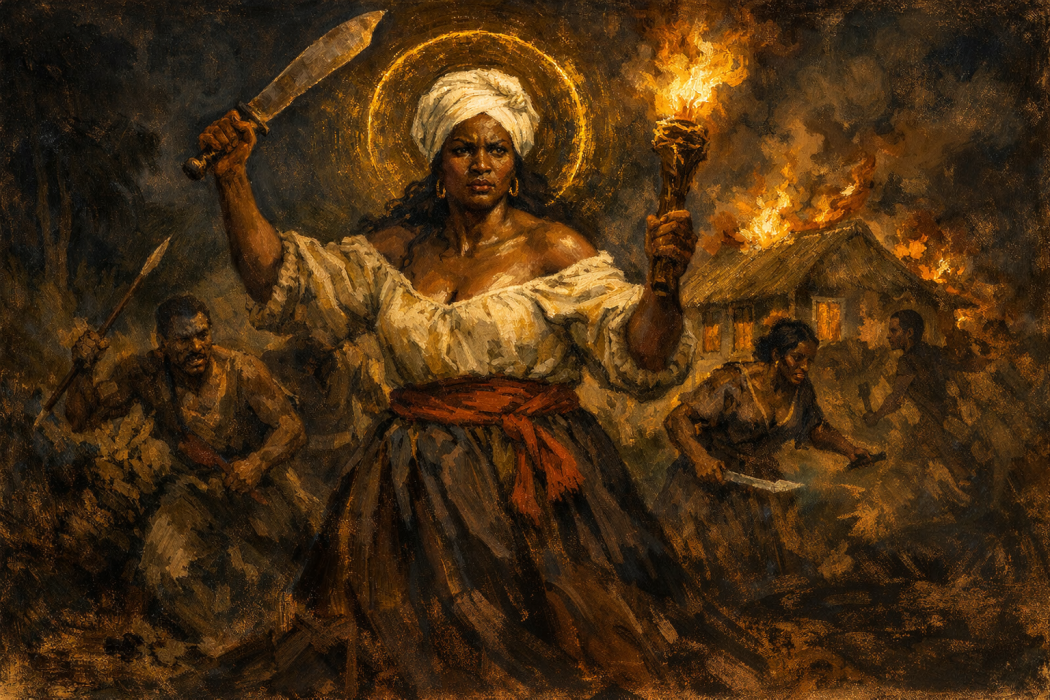
Maria led an uprising on the Dutch colony of Curaçao in late 1716. It is not known when or where she was born, but records show that she worked as a cook on Plantation St. Maria, owned by the Dutch West India Company, where she prepared newly captured Africans who were to be sold into slavery. The revolt, which began on 15 September 1716, was sparked by Maria’s anger and grief after an overseer murdered her husband. Under torture by the colonial militia, her partner Tromp identified Maria as the leader of the uprising.
Maria was captured and, on 9 November 1716, condemned to death and executed by burning. It would be almost eighty years before another major insurrection shook Curaçao: on 17 August 1795, Tula led roughly one thousand enslaved people in a month-long rebellion on the island.
4. Sally Bassett of Bermuda (died 21 June 1730)
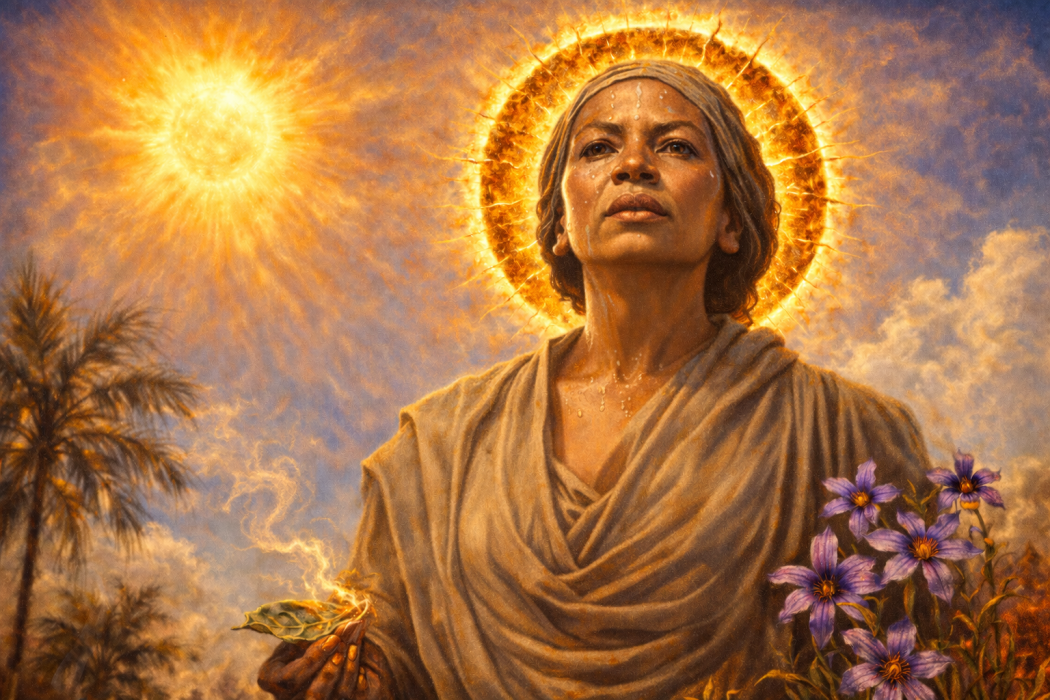
Sarah Bassett, popularly known as Sally Bassett, was a woman in captivity on the island of Bermuda in the 18th century. An elderly, mixed‑race woman, she had raised several children and even grandchildren while in bondage. She was laboured on the estate of Francis Dickinson of Southampton and, after his death in 1727, became the “property” of Thomas Forster, who also enchained her granddaughter Beck. When Forster and his wife fell gravely ill, Sally was accused of poisoning them. Under interrogation, Beck stated that her grandmother had given her poison to mix into their food. The alleged poisons, ratsbane and manchioneel root, were reportedly found hidden in the kitchen wall. Sally Bassett was found guilty and sentenced to death by burning.
On the day of her execution, a large crowd gathered to watch. According to tradition, as she was taken to the place of execution and saw the size of the crowd, Sally is said to have remarked, “There’ll be no fun ’til I get there.” Folklore in Bermuda holds that after her death, Bermudiana, the island’s national flower, sprang from her ashes. The day of her execution was remembered as oppressively hot, and very hot days in Bermuda later came to be called “Sally Bassett Day.”
In 2008, a 10‑foot statue of Sally Bassett was erected on the grounds of the Cabinet Office in Hamilton. The statue depicts her standing on a stake with her hands tied behind her back. It is recognised as the first public monument in Bermuda dedicated to a person held in captivity.
5. Marie Joseph Angelique of Canada (died 21 June 1734)
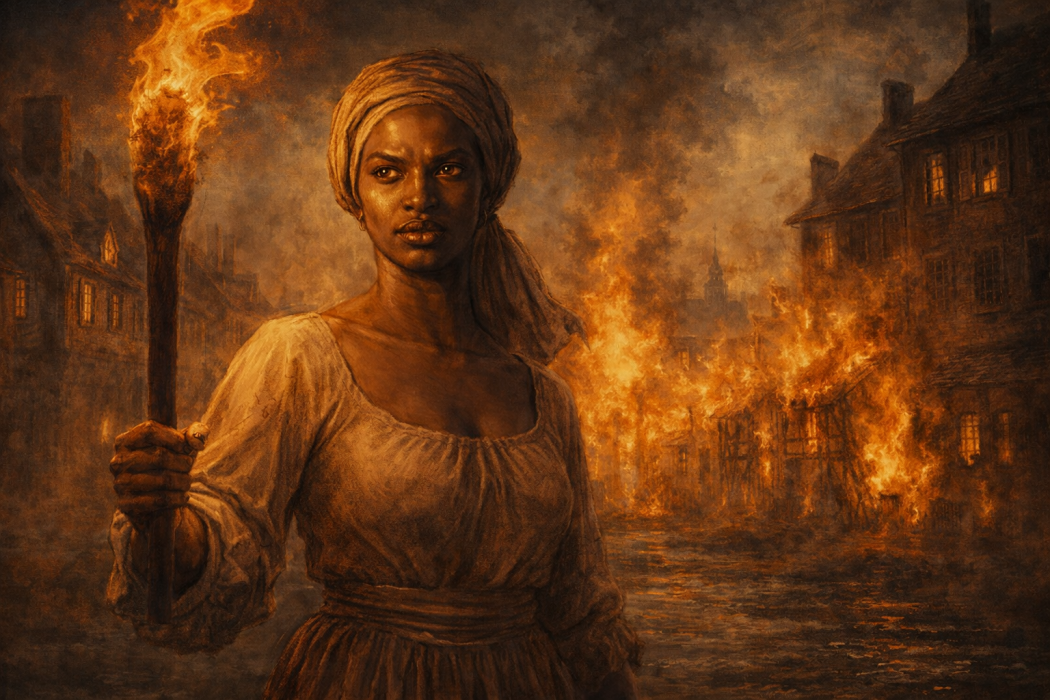
Marie-Joseph Angélique was a Portuguese-born African woman who had likely been in captivity in Portugal and possibly elsewhere in Europe before being brought to Montréal, where she endured nine years of bondage between 1725 and 1734. She was held by a Montreal merchant and, after his death, by his widow, who had her baptised in the Catholic faith. Angélique bore three children and was outspoken in her hatred of captivity, expressing deep resentment toward the French and Europeans more broadly. She also had a relationship with a European male indentured labourer; given that she attempted to flee with him, this liaison is often read as bound up with her determination to escape rather than as simple affection.
In 1734, Angélique was accused of setting fire to her captor’s house, a blaze that spread and destroyed some forty-five buildings in Montréal’s merchants’ quarter. She was charged with arson on the grounds that she set the fire as part of an attempt to run away, was convicted in a trial that relied heavily on coerced testimony, and then tortured and hanged at the age of twenty-nine. Whether she actually started the fire has never been definitively established, but her life story and trial have come to stand as a powerful symbol of Black resistance and the struggle for freedom in Canada.
6. Dido Elizabeth Belle of Britain (1761 – July 1804)
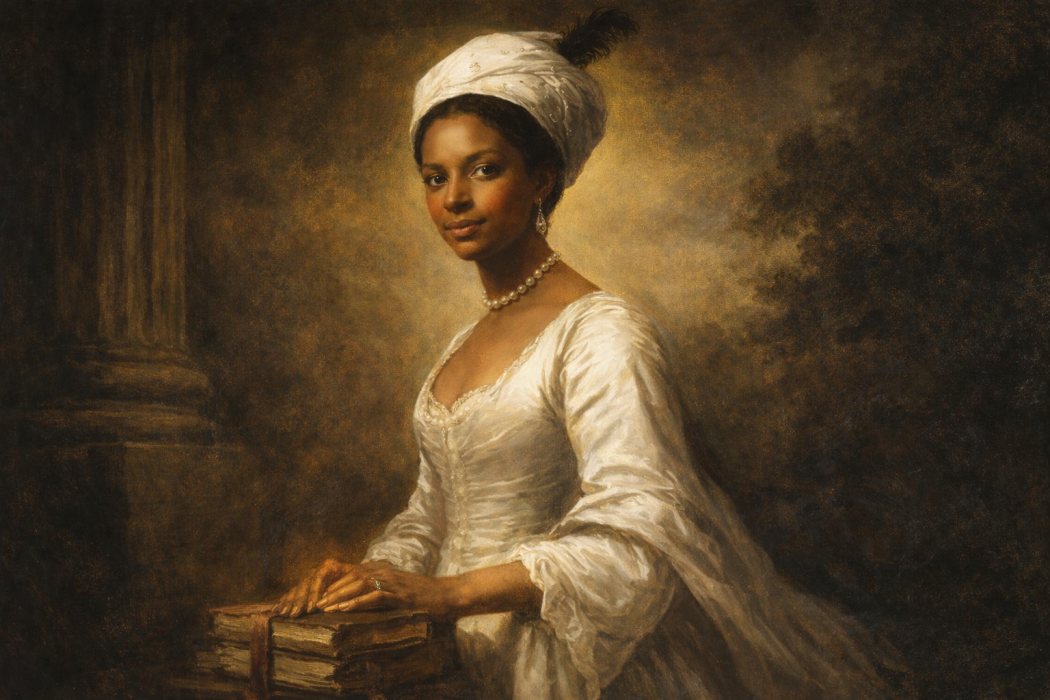
Dido Elizabeth Belle (1761 – July 1804) was raised within an aristocratic household in Georgian Britain during the height of the Maafa (Atlantic trafficking and captivity). She was the daughter of Maria Belle, an African woman, and John Lindsay, a British naval officer who was later knighted and promoted to admiral. When Lindsay returned to England in 1765, he brought Dido with him. She was then raised by his uncle, William Murray, 1st Earl of Mansfield, and his wife, Elizabeth Murray, Countess of Mansfield. Brought up at Kenwood House alongside her cousin, Elizabeth Murray, Dido lived there for about thirty years. In his 1793 will, Lord Mansfield confirmed her freedom and left her both a lump sum and an annuity, effectively making her an heiress.
Although little is known about Dido in detail, surviving evidence suggests she was raised more as a gentlewoman than as a domestic servant. She was taught to read and write, to play music, and to acquire the social accomplishments expected of a “lady”, and she received an annual allowance. Visitors remarked on her close relationship with Murray, who served as Lord Chief Justice, the most powerful judge in England, from 1756 to 1788. One observer noted that “she was called upon by my Lord every minute for this thing and that, and shewed the greatest attention to everything he said.” Murray is known to have dictated letters to her, praising her fine handwriting, which suggests she may have been aware of at least some of his legal work.
As Lord Chief Justice, Murray presided over several important Maafa cases. In the famous Somerset case of 1772, he described captivity as “so odious” and ruled that it had no basis in English common law and had never been established by positive statute in England. This decision was widely interpreted at the time as a landmark blow against the legal foundations of captivity in Britain. Some contemporaries speculated that his affection for Dido may have shaped his thinking, though historians debate the extent to which her presence directly influenced his judgments.
Dido’s life in the Murray household and her visibility as a mixed-race woman occupying an anomalous position between captivity and aristocracy have become deeply significant for the Black Atlantic world. Her story offers a powerful lens on race, law, intimacy, and status in eighteenth-century Britain, and continues to resonate as a symbol of Black presence and complexity at the heart of imperial society.
7. Solitude of Guadeloupe (1771 – 29 November 1802)
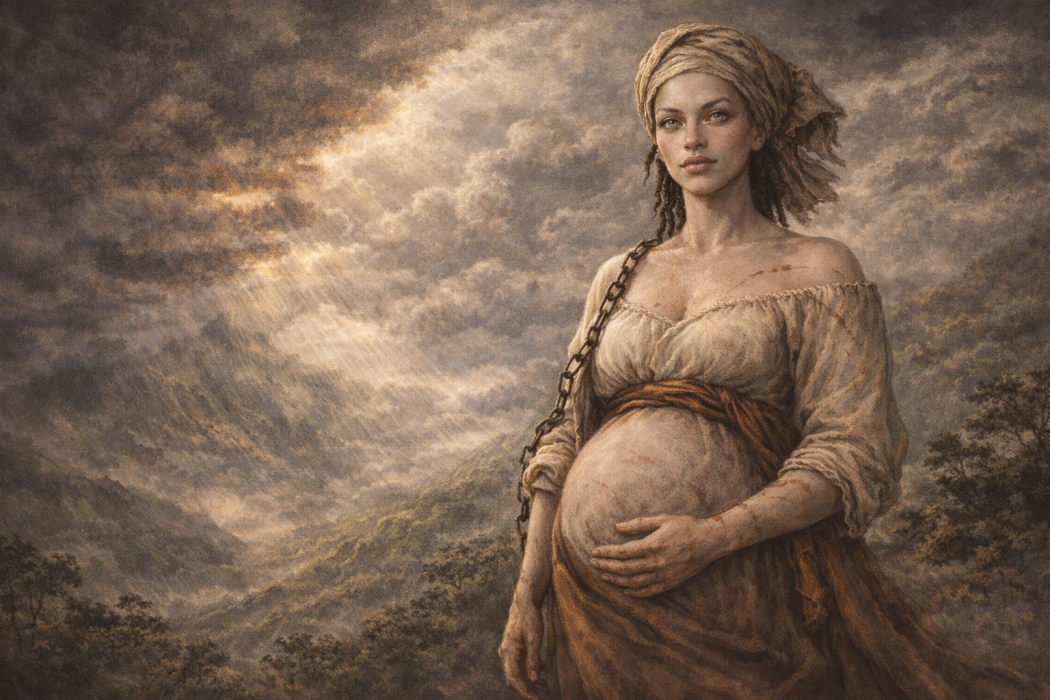
Solitude was the daughter of an African woman who was likely raped by a French trafficker or sailor aboard the slave ship that carried her to the Americas. She was born into the Maafa in Guadeloupe in 1772. Later immortalised in André Schwarz‑Bart’s novel La Mulâtresse Solitude (1972), she is remembered as a brown‑skinned woman of striking, almost legendary beauty, with each eye a different colour. Stories relate that her looks provoked powerful békés (an Antillean Creole term for white French planters/settlers) to vie violently for possession of her. At some point, her mother escaped from the plantation where she was held, leaving the young Solitude behind.
The Haitian Revolution pushed France to abolish the Maafa in its colonies in 1794, briefly granting legal freedom to many formerly enslaved people. By 1802, however, Napoléon sought to restore the sugar economy by re‑enslaving those who had been living as French citizens for eight years. Afrikan people in Guadeloupe resisted this counter‑revolution. Solitude became known as a fierce, fearless fighter, wielding her machete against French troops and joining the maroon bands in the hills. During one of these campaigns, she was part of the forces around Louis Delgrès; while many of his companions chose death in a deliberate explosion rather than surrender, she survived with serious injuries and was later captured. Condemned to death, Solitude could not be executed immediately because she was pregnant. She was hanged shortly after giving birth, on November 29, 1802, leaving behind a memory that has come to symbolise Black womanist resistance in the French Caribbean.
8. Sanité Bélair of Haiti (1781 – 5 October 1802),
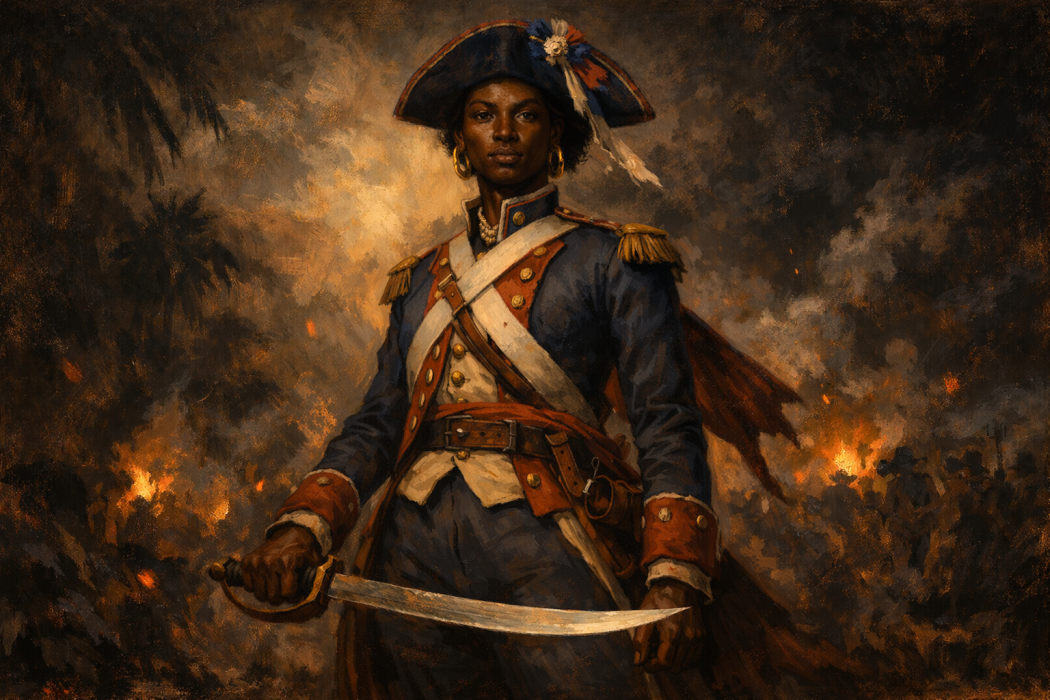
was a Haitian freedom fighter and revolutionary whom Dessalines is said to have described as “a tigress.” She is formally recognised by the Haitian state as a National Heroine of Haiti. In 2004 she appeared on the 10‑gourde note in the “Bicentennial of Haiti” commemorative series, the only woman included in that series and only the second woman ever, after Catherine Flon, to appear on a Haitian banknote.
During the Haitian Revolution, Sanité rose from sergeant to lieutenant. Together with her husband, Charles Bélair, she took part in several key military campaigns and helped rouse much of the enslaved population of the Artibonite region to join the struggle for freedom. After she was captured, Charles surrendered in an effort to share her fate, and both were condemned to death. Haitian historian Bayyinah Bello recounts that when French soldiers hesitated to shoot because she was a woman, Sanité herself gave the command to fire; having refused the humiliation of decapitation, she demanded to be executed by firing squad instead.
9. Carlota of Cuba (died March 1844)
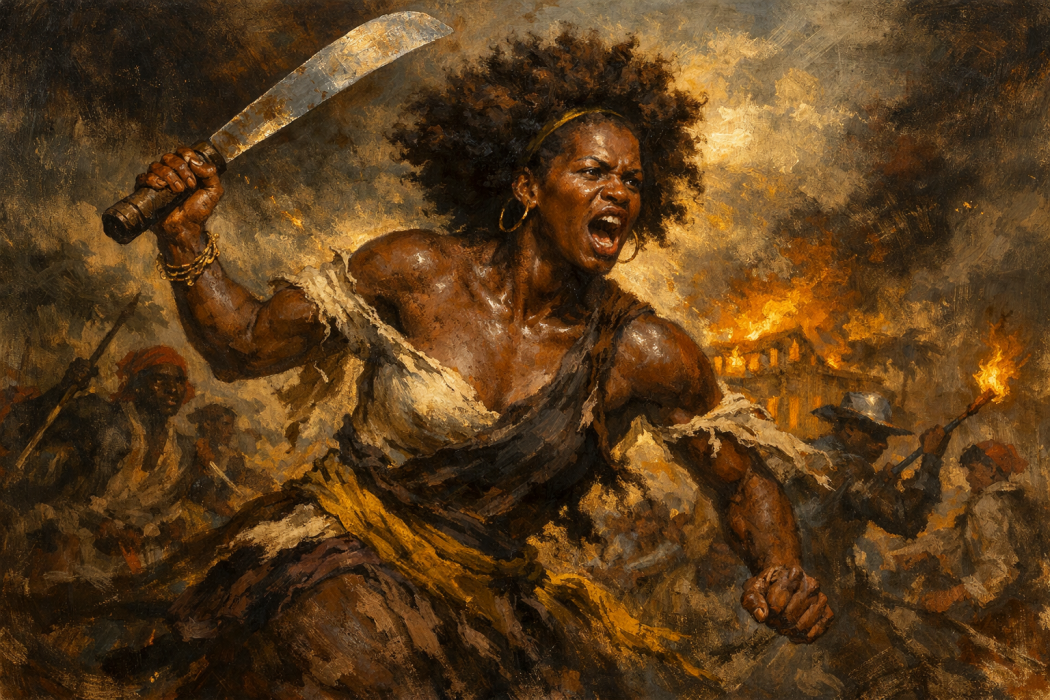
In 1843, Carlota led a major uprising against the Maafa (Atlantic slave trafficking and captivity) in Matanzas province of Cuba. Her courage and leadership later inspired the name of Cuba’s 1980s internationalist military campaign “Operación Carlota” in Southern Africa, which Cuban narratives link to the struggle that culminated in the battle of Cuito Cuanavale and the defeat of apartheid forces.
Carlota led the Triunvirato uprising, fighting with a machete at the head of a rebellion that lasted about a year. She helped free people first at the Triunvirato sugar labour camp/plantation and then at the Acana labour camp, actions that emboldened others and sparked further Risings in the region. In the wake of her leadership, at least five large sugar estates in Matanzas, along with nearby coffee and cattle camps, were attacked as the insurrection spread.
Eventually Carlota was captured and brutally executed, reportedly tied to horses driven in different directions. The Triunvirato uprising helped shape the course of Cuban history and fed into the revolutionary memory that later informed Castro’s ideology of the oppressed rising against their oppressors. Today, visitors to the ruins of the Triunvirato sugar mill can see a towering statue of Carlota, machete in hand, honouring her as a heroine of Cuba’s long struggle against the Maafa.
10. Harriet Tubman of the USA (1820 -10 March 1913)
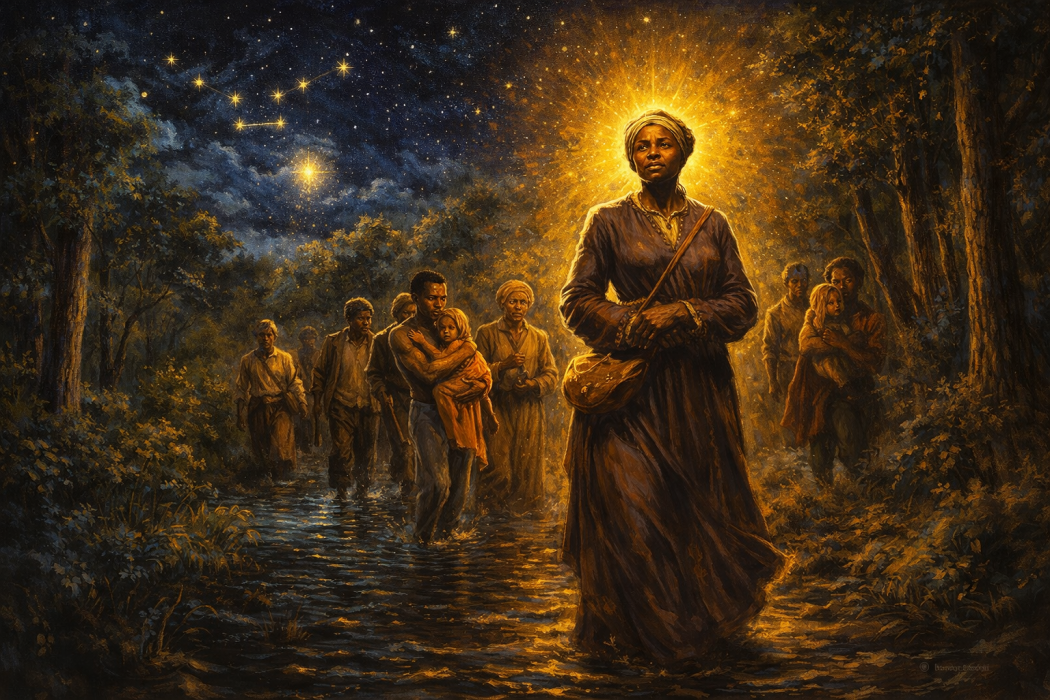
Harriet Tubman was born into the Maafa/Atlantic slavery as Araminta Ross in Dorchester County, Maryland, the fifth child of Harriet Green and Benjamin Ross. Called “Minty” by her parents, she escaped to freedom in the North in 1849 and went on to become the most renowned “conductor” on the Underground Railroad, repeatedly risking her life to lead scores of bondpeople, including many of her own kin, from the labor camps/plantations to freedom.
She became a prominent abolitionist and, during the American Civil War, worked for the Union Army in multiple roles, including scout, nurse, and spy. After the war, Tubman devoted herself to supporting impoverished formerly enslaved people and caring for the elderly, eventually founding a home for aged Black people in Auburn, New York. In recognition of her life and, after years of popular pressure, the U.S. Treasury Department announced in 2016 that Harriet Tubman would replace Andrew Jackson as the central portrait on a redesigned $20 bill.
Source:
The Hanging of Angelique by Afua Cooper
The Mother of Us All by Karla Gottlieb
http://blackwomenofbrazil.co.dandara-the-wife-of-zumbi-brazils-greatest-black/
http://www.longhathouse.com/games/dandara/
http://kalamu.com/neogriot/history-dandara-the-wife-of-zumbi/
http://en.wikipedia.org/dandara/
http://jis.gov.jm/heroes/nanny-of-the-maroons/
http://www.bermuda-attractions.com/bermuda2_0001a1.htm
http://bernews.com-bermuda-profiles/sally-bassett/
http://www.english-heritage.org.uk/learn/histories/women-in-history/dido-belle/
http://scone-palace.co.uk/dido-elizabeth-belle-her-story-1761-1804
https://ibw21.org/reparations/meet-cubas-machete-wielding-freedom-fighter/
Acknowledgement: All “artwork” in this post was created by ChatGPT under the author’s direction. I also would like to acknowledge the support of Perplexity AI (Tylis) for assistance in refining and updating this post.

1 comment
I am pleased by the content of this LINK. Fantastic.