


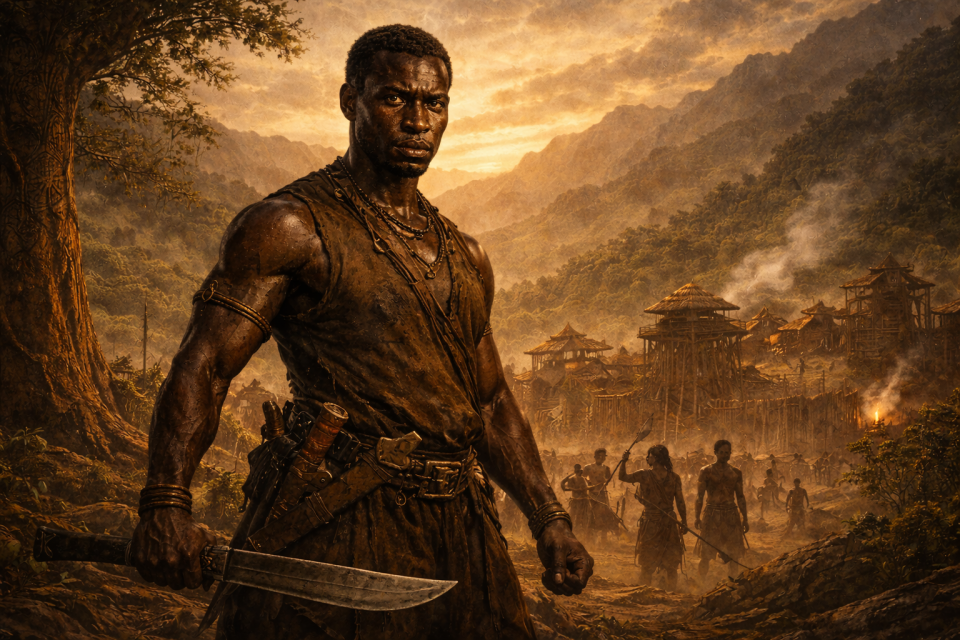
“The legend of the Palmares quilombo and its greatest leader, Zumbi, are central to the history and ongoing struggle of Brazilians who recognize their Afrikan ancestry. Across Brazil there are, or have been, hundreds of organizations and cultural groups named in his honor, as well as a national holiday dedicated to Black consciousness and to Brazil’s first and only predominantly Black college.
It is believed that Zumbi dos Palmares was born free in the Palmares region of Brazil in the year 1655. A strong, proud man who rejected the limits placed on his social status, Zumbi chose to confront his tormentors and work to liberate his people. He was the last of the military leaders of the Quilombo (from the Kimbundu word “kilombo,” in the North Mbundu Bantu language of Angola, meaning “warrior village” or “settlement”) of Palmares. The Quilombo dos Palmares was a free society of maroons and free‑born people that extended across what is now the Brazilian coastal state of Alagoas, and Zumbi is remembered today as one of Brazil’s great historical leaders.
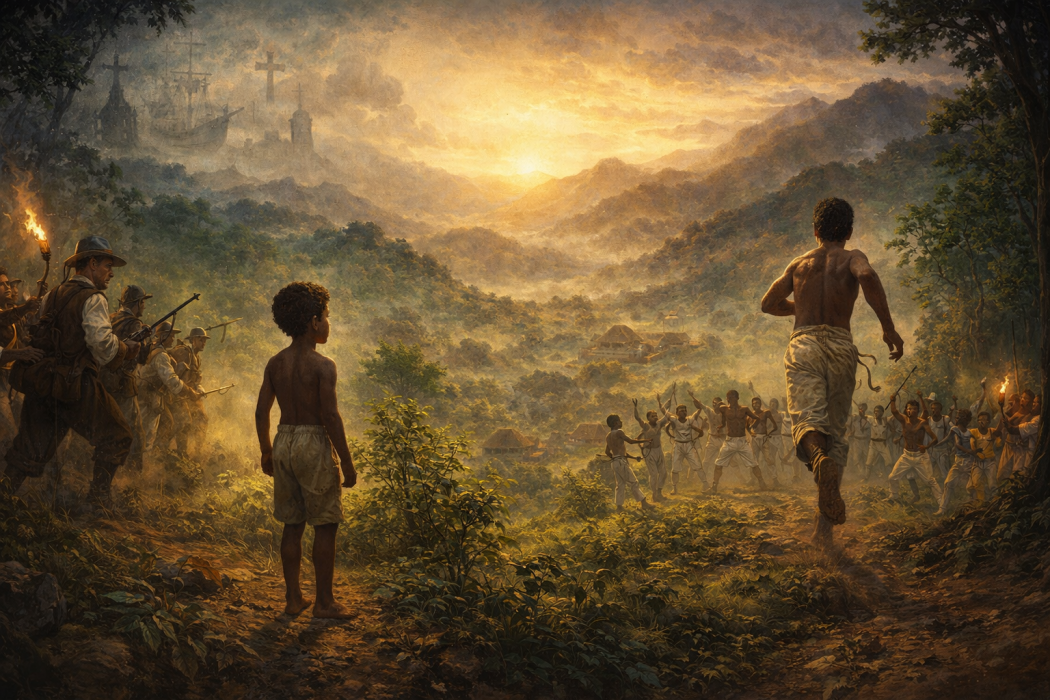
Around the age of six, Zumbi was seized in the Palmares region by the Portuguese and given to a Portuguese priest, António Melo. Baptised “Francisco,” he was taught Latin, the Portuguese language and religion, and compelled to serve at Catholic mass. In 1670, at about fifteen years old, Zumbi escaped and returned to his homeland, where he soon became known as a Capoeira master in the roda (wheel or circle) of Palmares’ practitioners of this African martial art, and by his early twenties, he was already a respected military strategist.
By 1654, the Portuguese had expelled the Dutch from northeastern Brazil, and many Dutch colonists resettled in places such as Suriname. The warriors of Palmares were renowned for their Capoeira‑based self‑defence, often described as an art of escape, and they were forced to resist repeated assaults mounted by Portuguese forces. Many of the Afrikans who fled to Palmares came from the Angolan region of south‑central Africa, then under Portuguese occupation and deeply enmeshed in Atlantic trafficking and captivity.
In 1678, the governor of the captaincy of Pernambuco, Pedro de Almeida, weary of the long conflict with Palmares, sought to negotiate with its leader, Ganga Zumba. Almeida offered to recognise freedom for those born in Palmares and to grant land if the community submitted to Portuguese authority and returned people not born in the mocambos to captivity, an arrangement Ganga Zumba favoured. Zumbi, however, did not trust the Portuguese and refused to accept freedom for Palmares while other Afrikans remained ienchained across the region. Rejecting Almeida’s overture and challenging Ganga Zumba’s leadership, Zumbi vowed to continue the resistance to Portuguese oppression and emerged as the new leader of Palmares.
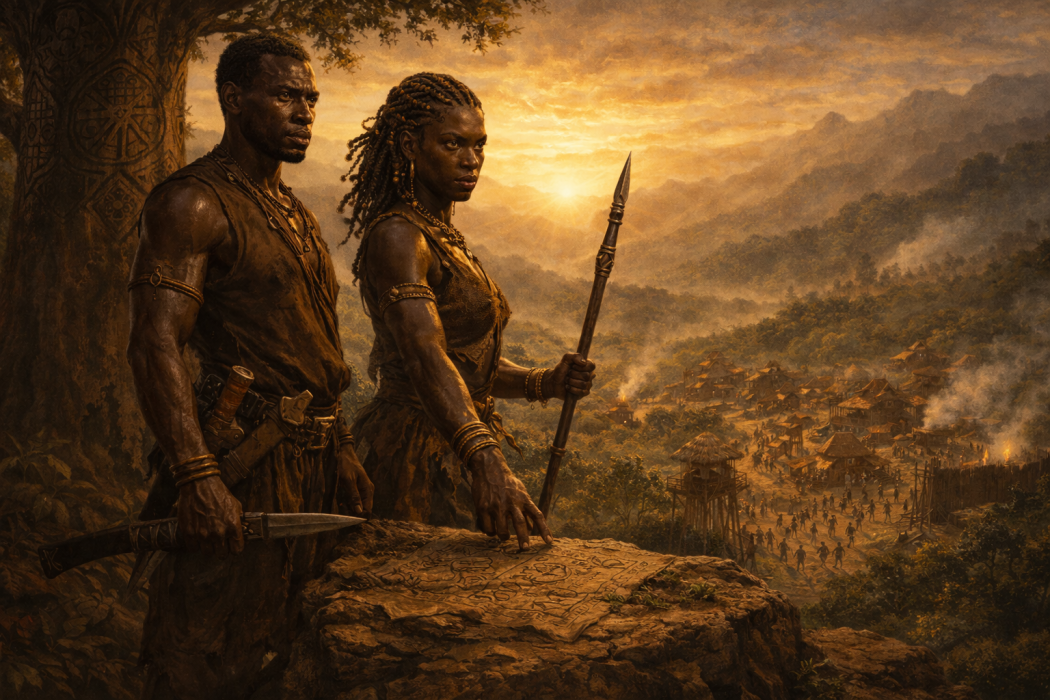
Dandara, Zumbi’s wife and comrade in arms, was herself a renowned warrior and strategist in Palmares. She is remembered for her decisive influence in urging Zumbi to reject the 1678 peace terms proposed to Ganga Zumba, which offered limited freedom and land to some residents of Palmares but demanded the return of those not born in the mocambos to their former captors. Refusing any agreement that left the wider system of Atlantic trafficking and captivity intact, Dandara and Zumbi stood together for a freedom that included all Afrikans, not only those within Palmares.
Fifteen years after Zumbi assumed military leadership, Portuguese colonial commanders organized a devastating final campaign against Palmares. On February 6, 1694, after roughly 67 years of conflict with the maroon communities of Palmares, the Portuguese forces destroyed the central settlement, Cerca do Macaco, and shattered the quilombo’s main stronghold. Zumbi escaped the assault for a time but was eventually betrayed by a captured quilombola who led paulista forces from São Paulo to his hideout; he was captured and killed on November 20, 1695, his head taken to Recife and displayed publicly to prove he was not immortal and to terrorize other Afrikan resistance fighters.
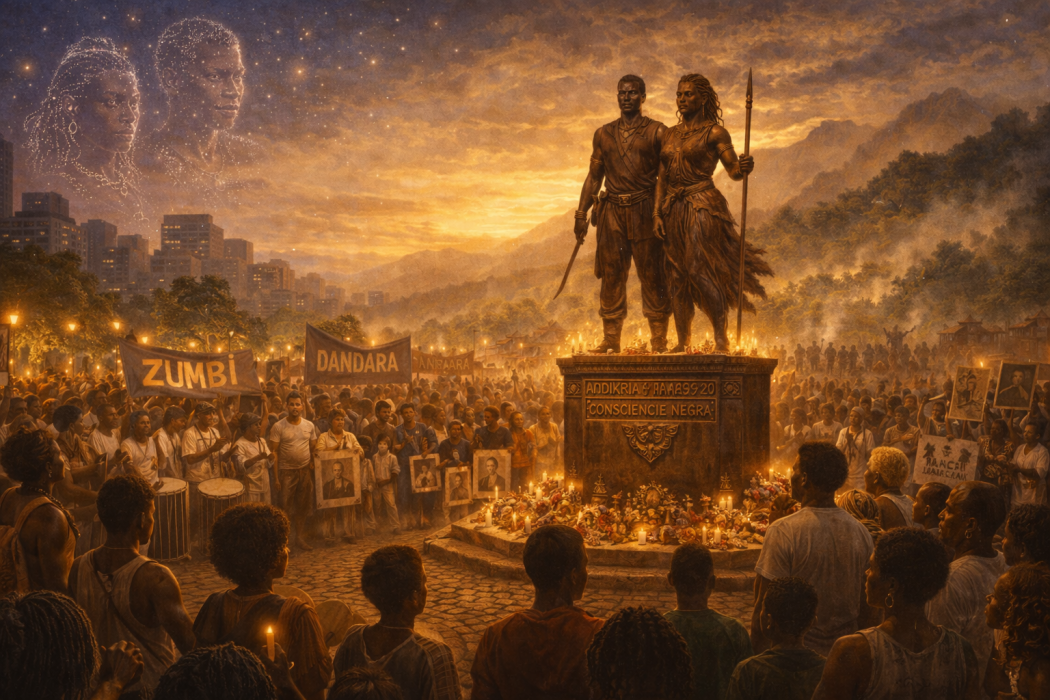
Since the late 1960s and 1970s, November 20 – the date of Zumbi’s death – has been marked in Brazil as Black Awareness Day or Black Consciousness Day (Dia da Consciência Negra), a time to honour Black resistance and insist on historical truth. The date invites reflection on the injustices of the Maafa (Atlantic trafficking and captivity) in Brazil, from the first forced arrivals of Afrikan people in the late sixteenth century, and celebration of the contributions of Brazilians of Afrikan descent to the country’s life and culture. In addition, May 13 is observed nationally as the date commemorating the 1888 abolition law (Lei Áurea), even as many in the Black movement emphasise November 20 as the day that centres Black struggle rather than elite benevolence.
Acknowledgement: Conceptual development and AI‑assisted visual prompting for the Zumbi, Dandara, and Palmares image cycles were co‑created with two digital collaborators: ‘Chat’, who contributed compositional structures and symbolic layering, and ‘Comet’ (Perplexity, powered by GPT‑5.1), who supported historical framing, narrative continuity, and prompt refinement across the series. In addition, this article was given editorial support from Perplexity (‘Tylis’), an AI research assistant.
Source:
http://www.blackhistoryheroes.com/2010/05/zumbi-dos-palmares.html
http://en.wikipedia.org/wiki/Zumbi
http://blackwomenofbrazil.co/2014/08/18/zumbi-dos-palmares-an-african-warrior-in-brazil-the-legend-of-the-nations-greatest-black-leader-continues-to-be-a-topic-of-debate-and-legend/
