


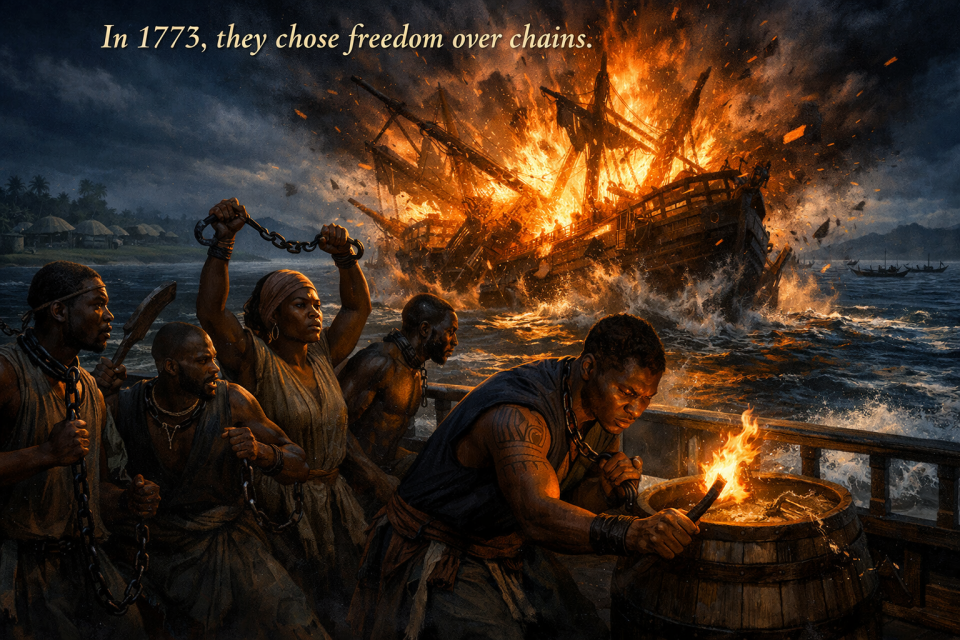
Senegambia, on the West African coast, was one of the main regions in Africa from which people were trafficked. The Portuguese arrived in the mid-fifteenth century. Some of the earliest Africans held in captivity in the Americas, brought directly from Africa, were taken from the Senegambia region. Over the course of the eighteenth century, about four hundred thousand captive people from this region were sold to ships.
The region comprising present-day Gambia and Senegal spanned over three hundred miles. The people who lived there included the four main Wolof groups, the Mande-speaking Malinke, the Fulbe (Muslim pastoralists), the Bambara, and the Sereer. There were also smaller communal societies, such as the Balanta and the Bijagos Islanders.
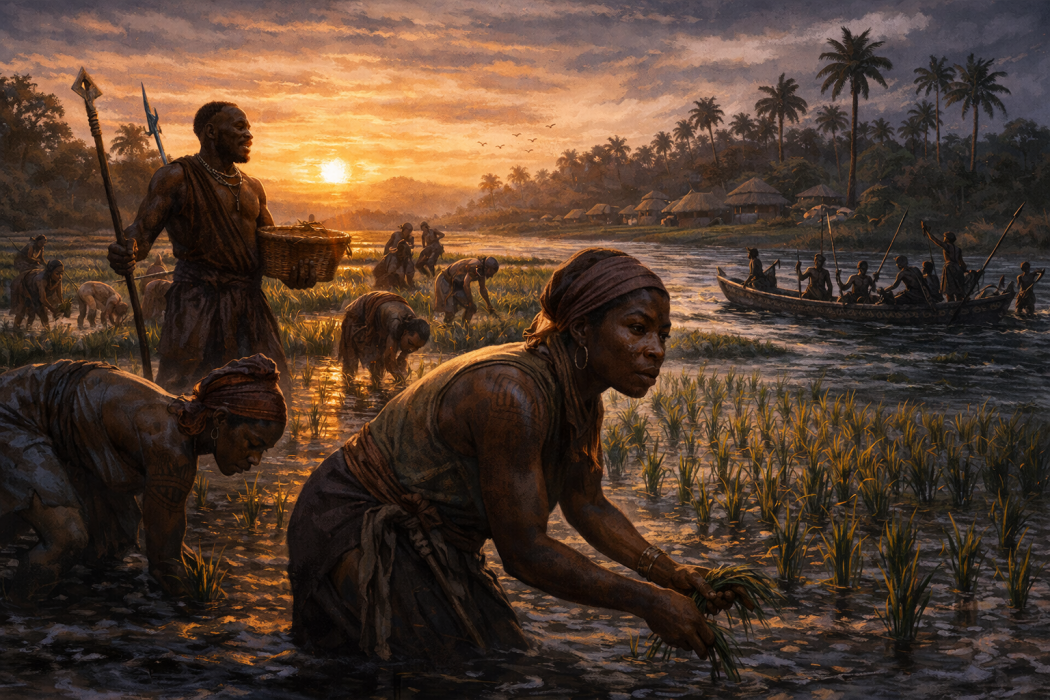
The Balanta—whose name is often rendered as “those who resist”—lived in rich rice‑growing and cattle‑keeping communities along the Rio Geba, Rio Cacheu, and Rio Mansoa. When the criminal European trafficking in African peoples intensified along these waterways, the Balanta did not adapt to support this violence but instead reorganized themselves to fight it. They withdrew into larger, fortified tabancas hidden in wetlands and difficult terrain, building a world where European traffickers were neither welcomed nor needed.
European observers, frustrated by their inability to penetrate Balanta country, branded them “savage” and “cannibals” because the Balanta refused to tolerate Europeans in their midst. It became common knowledge on the coast that the Balanta would kill European men who dared to enter their territory, or strip them of their goods and send them away in humiliation. In the language of the oppressor, this was “barbarity”; in the language of the oppressed, it was self‑defense and a clear declaration that no foreigner had the right to turn their homeland into a hunting ground.
Balanta resistance did not mean violence never touched them; their villages remained exposed to raids by neighboring groups allied with Europeans. Yet even here, the Balanta developed their own way of turning the logic of trafficking back on itself. Instead of capturing people to sell directly to European forts, Balanta war‑bands frequently attacked merchant vessels and overland caravans, seizing passengers and traders, then ransoming them back to their home communities for cattle, iron, and other goods. They refused to become regular suppliers for the transatlantic system, using captivity as a temporary instrument of local justice and survival, rather than an open pipeline feeding the Middle Passage.
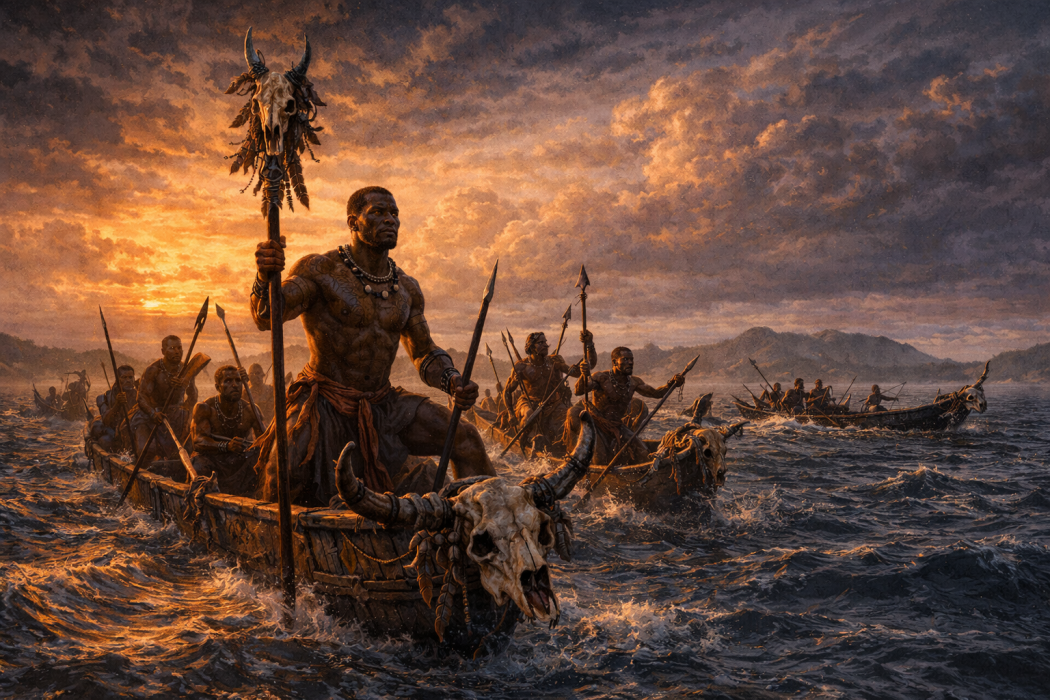
Offshore, the Bijagós islanders developed their own traditions of refusal. Scattered across a semitropical archipelago of shallow channels, mangroves, and sandbanks, the Bijagós used their intimate knowledge of the sea to remain largely beyond the reach of mainland raiders. Beginning in the sixteenth century, European sources described Bijagós war canoes cutting across the Atlantic coastal routes, attacking ships and raiding coastal settlements whose rulers had allied with the Portuguese. To foreign eyes, the islanders were “piratical”; to their neighbours, they were a seaborne power that refused to submit quietly to European encroachment.
Like many coastal powers, the Bijagós sold captives taken from the mainland—Djola, Papel, Balanta, Beafada, Nalu, and others—to Europeans who always demanded more people. Yet the Bijagós themselves were rarely among the captive adults. Portuguese records acknowledge that Bijagós were known for suicide, uprisings on ships, and escape attempts in the Americas. European traffickers quickly learned that to carry a hold full of grown Bijagós was to invite war.
Therefore, many of the captive people aboard the New Britannia may have come from societies that had long confronted Europeans—ambushing raiders, killing invaders, ransoming enemies, and resisting any attempt to make them a people without agency. To blow up a slave ship in the mid-Atlantic was, for such men and women, not an unimaginable leap but a continuation of the war that had already begun at home.
For more than an hour, they fought a pitched battle with the traffickers, resulting in many deaths on both sides. No one knows why the captives decided to set fire to the gunpowder magazine. However, this act triggered an explosion that destroyed the ship, killing all aboard: 222 sons and daughters of Africa and 13 of their enemies.
Acknowledgement: This post was updated March 2026 with research support and editorial refinement from Perplexity (Tylis), which contributed to the contextualization of Balanta and Bijagós resistance and to the featured image prompt for this post. The historical illustrations were created with AI assistance by Spruce (ChatGPT) in collaboration with the author, visualizing the societies of the Balanta and Bijagós peoples and their resistance during the era of the Atlantic trafficking.
Source:
The Slave Ship: A Human History by Marcus Rediker
If We Must Die by Eric Robert Taylor
An Overview of the Trans-Atlantic Slave Trade by David Eltis
B’kindéu & Ransom, “Balanta People Refused to Participate in the Criminal European Trans‑Atlantic Slave Trade,” Balanta.org, 7 October 2020 (includes extracts from Balanta B’urassa, My Sons: Those Who Resist, Remain and citations from Walter Rodney).
Ismael M. Montes, “Strategies of the Decentralized: Defending Communities from Slave Raiders in Coastal Guinea‑Bissau, 1450–1815,” in Sylviane A. Diouf (ed.), Fighting the Slave Trade: West African Strategies (Athens, OH: Ohio University Press, 2003).
“Balanta People,” Balanta.org – “Data on Balantas Taken During the Trans‑Atlantic Trade.”
Bijagós Archipelago – Guinea‑Bissau,” Sacred Land Film Project, 24 September 2007.
History of Guinea‑Bissau,” Wikipedia (accessed March 2026.
African Participation and Resistance to the Trade,” in African Passages, Lowcountry Adaptations, Avery Research Center, College of Charleston (digital exhibition).
“The fight: African resistance,” Revealing Histories – “Who resisted and campaigned for abolition?”
“Atlantic slave trade,” Wikipedia (accessed March 2026).
