


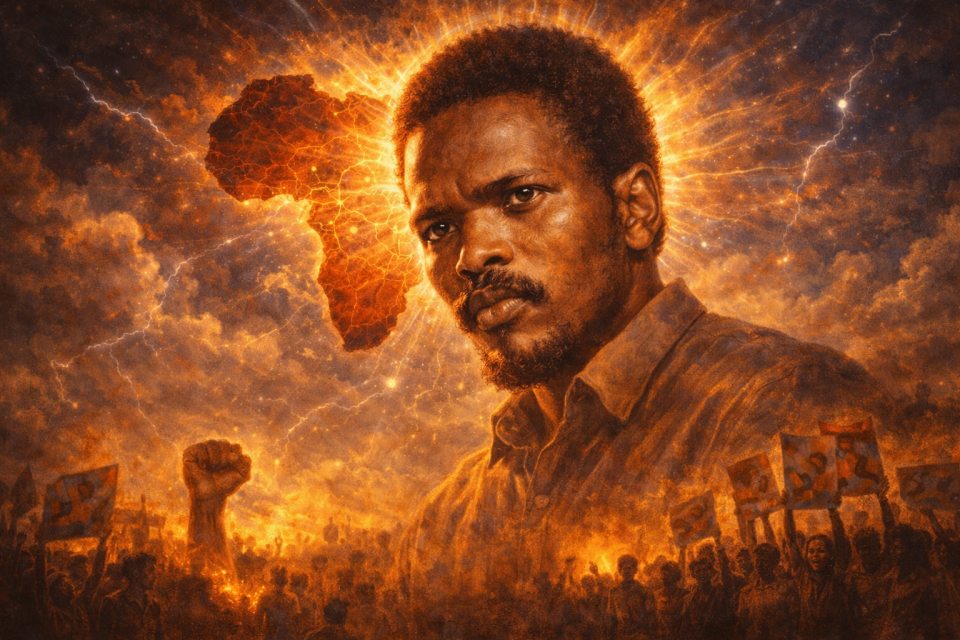
Stephen Bantu Biko (1946–1977) was a prominent South African anti-apartheid leader and revolutionary philosopher who is widely regarded as the “father” of Black Consciousness. Through the philosophy of Black Consciousness, Biko called on African people to “come to themselves,” exposing the psychological scars of European oppression while rooting resistance in African culture, spirituality, and the ethic of Ubuntu. His life was cut short before he turned thirty, yet his words continue to ignite movements for freedom across the globe
This biographical overview traces Biko’s journey from his childhood in Ginsberg to his formative years as a student activist, the birth of Black Consciousness, his synthesis of religion and African humanism, and the practical community projects that sought to embody self-reliance. It also explores his intellectual influences, the contradictions and warmth of his personal life, the brutal state repression that culminated in his murder in police custody in 1977, and the enduring legacy that continues to shape struggles for decolonisation today. In following the arc of his life, we encounter Biko not only as a martyr of hope but as a voice still urgently speaking to our present, reminding us that the most potent weapon in the hands of the oppressor remains the mind of the oppressed.
Early Life and Formation of Consciousness
Stephen Bantu Biko was born on 18 December 1946 in Tylden in the Eastern Cape and grew up in the township of Ginsberg near King William’s Town. He was the third child of Alice and Mzingaye Biko; his father, a court clerk studying law, died when Steve was four, leaving his deeply religious mother to raise the family. His middle name, “Bantu,” meaning “the one for the people,” proved prophetic for the role he would come to play in South Africa’s liberation struggle. As a boy, he was remembered as humorous, sociable, and a barefoot street‑football star, yet his political consciousness began to stir early.
Biko attended Forbes Grant Secondary School and then the historic Lovedale Institution in Alice, where an expulsion in August 1963—because of the activism of his elder brother Khaya rather than his own actions—marked a turning point. This injustice “awakened the giant,” sowing in him a lifelong “healthy disregard for authority.” He later matriculated at St Francis College in Mariannhill, a Roman Catholic school whose relatively liberal atmosphere allowed him to thrive intellectually and personally.
Student Activism and the Birth of Black Consciousness
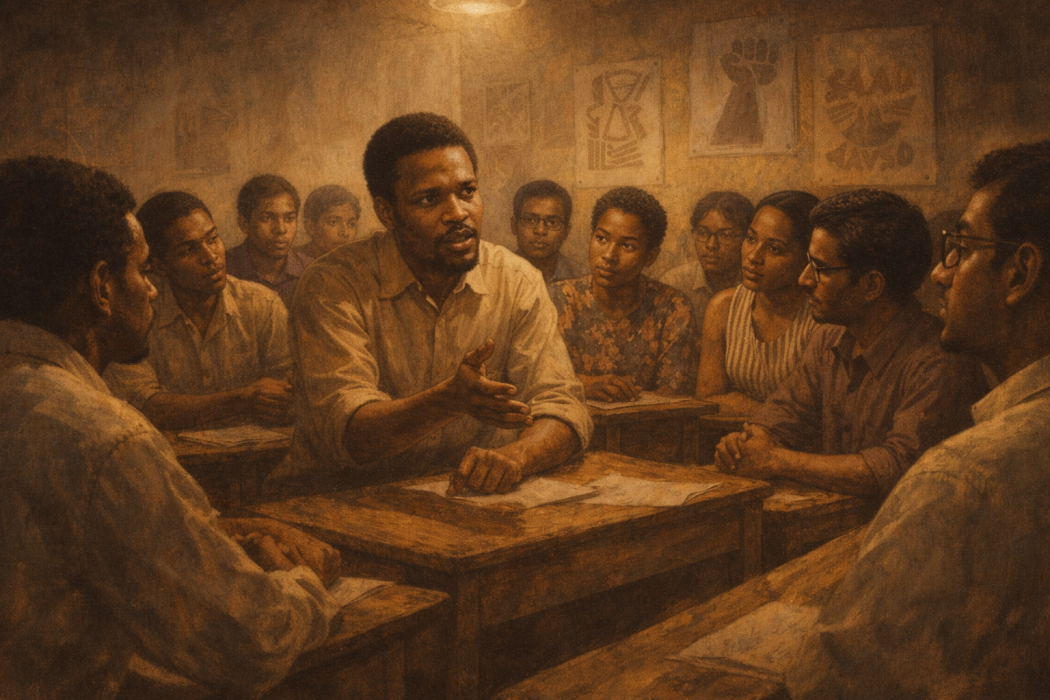
In 1966, Biko enrolled at the “black section” of the University of Natal Medical School in Durban, then one of the few institutions where African, Coloured, and Indian students could gather in large numbers. He first became involved in the National Union of South African Students (NUSAS), a largely European liberal organisation which, despite its opposition to apartheid, remained tied to the privileges.
A decisive moment came at the 1967 NUSAS conference at Rhodes University, when Black delegates were refused accommodation in campus residences and pushed into township church halls under the Group Areas Act. Biko concluded that liberals could not lead a struggle whose central problem was racism, and in 1968, he led a walk‑out that created the South African Students’ Organisation (SASO), serving as its first president in 1969. SASO became the seedbed of the Black Consciousness Movement, and Biko redefined “Black” as a political identity embracing Africans, Indians, and Coloureds who were oppressed by apartheid, insisting: “Black man, you are on your own.”
The Philosophy of Black Consciousness
Biko described Black Consciousness as “an attitude of mind and a way of life,” centred on the recognition that Black people had to organise around the source of their oppression—racism—and free themselves psychologically before they could win physical liberation. He argued that 300 years of colonisation had produced a crippling “inferiority complex,” turning the Black person into a “hollow shell” who associated goodness with “whiteness” and despised their own identity.
The movement’s slogan “Black is Beautiful” affirmed blackness as a standard of dignity and beauty, rejecting skin‑lightening, hair‑straightening, and cultural mimicry as symptoms of internalised self‑hate. Biko envisioned liberation as a two‑phase process: first, psychological emancipation through conscientisation and the recovery of pride; second, the struggle for structural and political change. For him, the most potent weapon of the oppressor was “the mind of the oppressed,” and the first task was to “pump back life into his empty shell,” restoring a sense of self‑worth and collective power.
Religion, Black Theology, and African Spirituality
Raised in an Anglican home and deeply influenced by his mother’s faith, Biko never repudiated Christianity, but he fiercely criticised the “Black church” for preaching a theology that sanctified European authority and ignored systemic injustice. He argued that missionary Christianity had become “the ideal religion for the maintenance of the subjugation” of Black people, obsessed with “moral trivialities” while silent about the “major sins” of oppression, starvation, and state violence.
Black Theology, as Biko understood it, was a situational interpretation of Christianity from the standpoint of the oppressed, designed to eradicate the “spiritual poverty” produced by oppression. It proclaimed that “it is a sin to allow oneself to be oppressed” and insisted that God is a “fighting God” who does not leave lies unchallenged. Intertwined with African spirituality and the philosophy of Ubuntu, this theology joined biblical liberation with indigenous understandings of a God who walks with people in every aspect of daily life, turning faith into a resource for psychological and political resistance.
African Culture, Ubuntu, and the Vision of a New Society
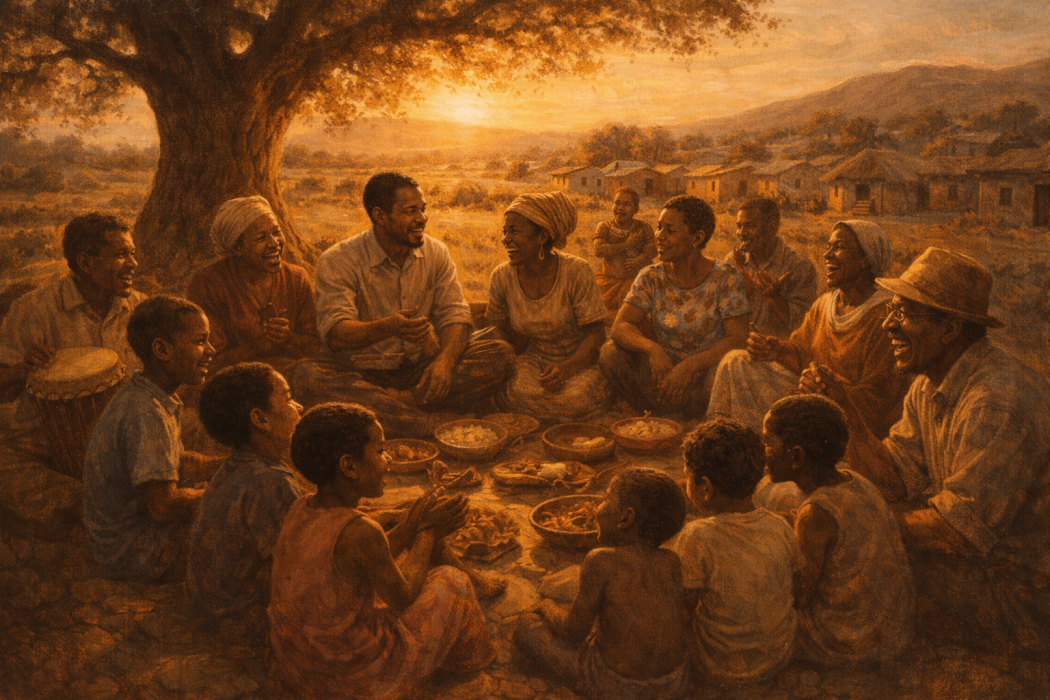
Biko placed African culture at the centre of his political project, seeing it not as a relic of the past but as a living reservoir of values capable of humanising a deformed society. He contrasted the “individualistic cold approach to life” of Anglo‑Boer culture with an African, “man‑centred” ethos that prized human relationships over material accumulation. In traditional communities, land was held communally, farming was a joint effort, and music, rhythm, and group song expressed shared burdens and joys.
Through Ubuntu—summarised in the maxim “I am because we are”—Biko envisioned a non‑racial, egalitarian “Azania” in which colour, creed, and race would no longer define a person’s worth. He believed Africa’s “great gift” to the world would be to give it “a more human face,” replacing power‑based domination with a social order grounded in sharing, communal living, human integrity, and dignity.
Organisational Leadership and Community Programmes
Beyond philosophy, Biko helped build a dense network of Black‑led organisations that embodied self‑reliance in practice. SASO unified African, Coloured, and Indian students, while the Black People’s Convention (BPC) served as an umbrella for Black Consciousness organisations after earlier liberation movements were banned.
Through the Black Community Programmes (BCP), Biko promoted projects that demonstrated African capacity to manage complex institutions without European supervision. He was instrumental in establishing the Zanempilo Community Health Centre and the Zimele Trust Fund, which provided healthcare and material support to communities and political prisoners’ families. For Biko, such initiatives were a form of “practical conscientisation,” proving that African people could be “their own authorities” and reject the “defeatist element” that assumed only Europeans could provide.
Personal Character, Habits, and Contradictions
Accounts from family and friends reveal a complex, often surprising portrait of Biko as a person. His sister Bandi affectionately described him as a “lazy boy” who was the life of street football games, and many recalled his quick humour and capacity to make others feel at ease. Physically, contemporaries spoke of his “liquid expressive eyes” and a powerful, “naked” presence that communicated integrity and warmth even before he spoke.
Biko often claimed, with characteristic understatement, that he did “very little reading” and “rarely finish[ed] a book,” preferring to mine texts like Stokely Carmichael’s Black Power or James Cone’s work for specific insights that complemented his own experience. Yet others regarded him as widely read in philosophy, literature, and global liberation struggles. Personally, he maintained friendships across racial lines, even as he fiercely criticised European liberalism; one famous story recalls him provocatively sitting with a European woman on his lap in a priest’s office to shock racist sensibilities.
Biko’s personal life was also shaped by the demands and strains of struggle, and his relationships carried their own complexities. In December 1970, he married Nontsikelelo ‘Ntsiki’ Mashalaba, later known as Nosizwe, and their home in King William’s Town became a hub of comradeship and family, where they raised two sons, Nkosinathi (born 1971) and Samora (born 1975), named in honour of Mozambican revolutionary Samora Machel. He was a devoted father who arranged his days so he could be home between 5:00 pm and 8:00 pm with his young sons. However, Biko also had a long‑standing relationship with fellow activist Mamphela Ramphele, with whom he had two children, and a relationship with Lorraine Tabane, with whom he had a daughter. These intertwined intimacies reveal him as a man whose profound public vocation coexisted with imperfect, intensely human attachments that his children and partners have each carried forward in different ways.
Intellectual Influences and Global Connections
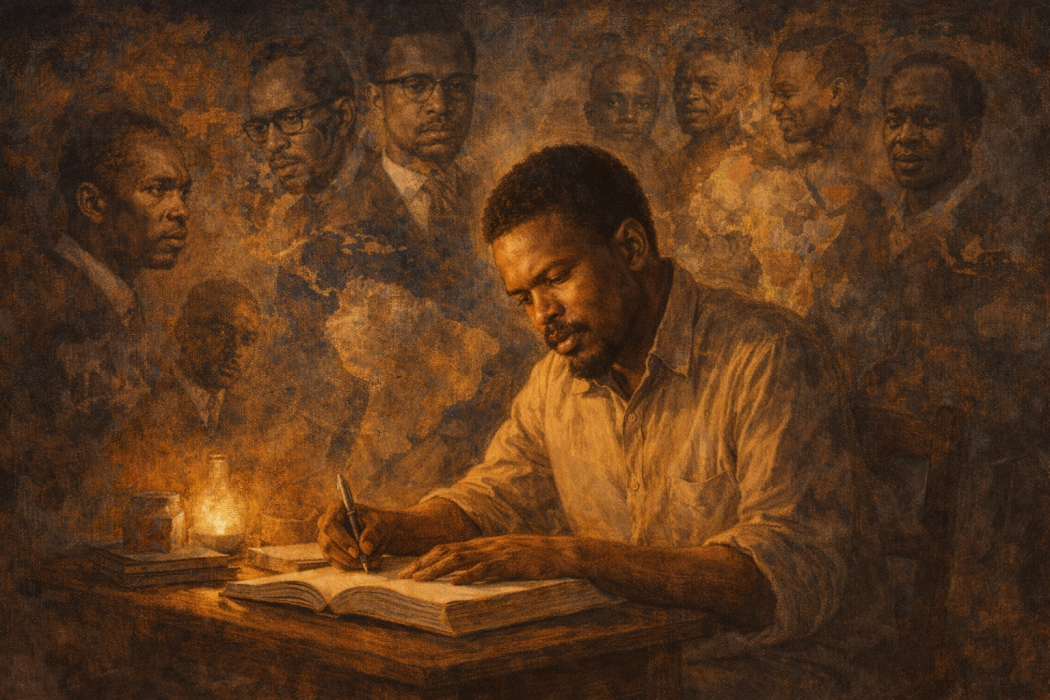
Biko’s thought emerged in dialogue with a broad spectrum of African, Caribbean, American, and South African thinkers. He shared with Frantz Fanon a focus on the “psychology of oppression” and the need to decolonise the mind, though—unlike Fanon—sources emphasise that Biko never explicitly espoused violence as a legitimate strategy. He engaged with the Negritude movement of Aimé Césaire and Léopold Senghor, drawing on their insistence that African experiences not be reduced to a footnote in European history.
He found inspiration in Pan‑Africanists such as W.E.B. Du Bois, Marcus Garvey, Kwame Nkrumah, and Julius Nyerere, whose writings on racial pride, African unity, and socialism helped shape his vision. Within South Africa, he stood in the lineage of Anton Lembede and Robert Sobukwe, sharing their doctrine of self‑emancipation and belief in the innate power of the Black person. Later narratives often place Biko alongside Nelson Mandela and Desmond Tutu: Mandela as the survivor‑statesman, Tutu as the prophet of reconciliation, and Biko as the “martyr of hope” whose death exposed the moral bankruptcy of apartheid.
State Repression, Banning, and Martyrdom
The apartheid state quickly recognised Biko as a serious threat. In March 1973, it placed him under a stringent banning order confining him to King William’s Town, forbidding him from speaking in public, addressing gatherings, or being quoted. Despite this, he continued to guide the movement and wrote his famous “I Write What I Like” columns under the pseudonym “Frank Talk.”
Biko suffered repeated detentions under the Terrorism Act, which allowed indefinite imprisonment without trial. On 18 August 1977 he was arrested at a roadblock near Grahamstown and taken to Port Elizabeth, where he was stripped, shackled, and subjected to prolonged interrogation and torture. After sustaining severe head injuries, he was transported naked and manacled over 1,100 kilometres to Pretoria; on 12 September 1977 he died from extensive brain damage in a prison cell. The authorities falsely claimed he had gone on hunger strike, but an inquest exposed the brutality of his treatment, while the Minister of Justice Jimmy Kruger’s remark that Biko’s death “leaves me cold” became emblematic of the regime’s cruelty.
Legacy and Contemporary Relevance
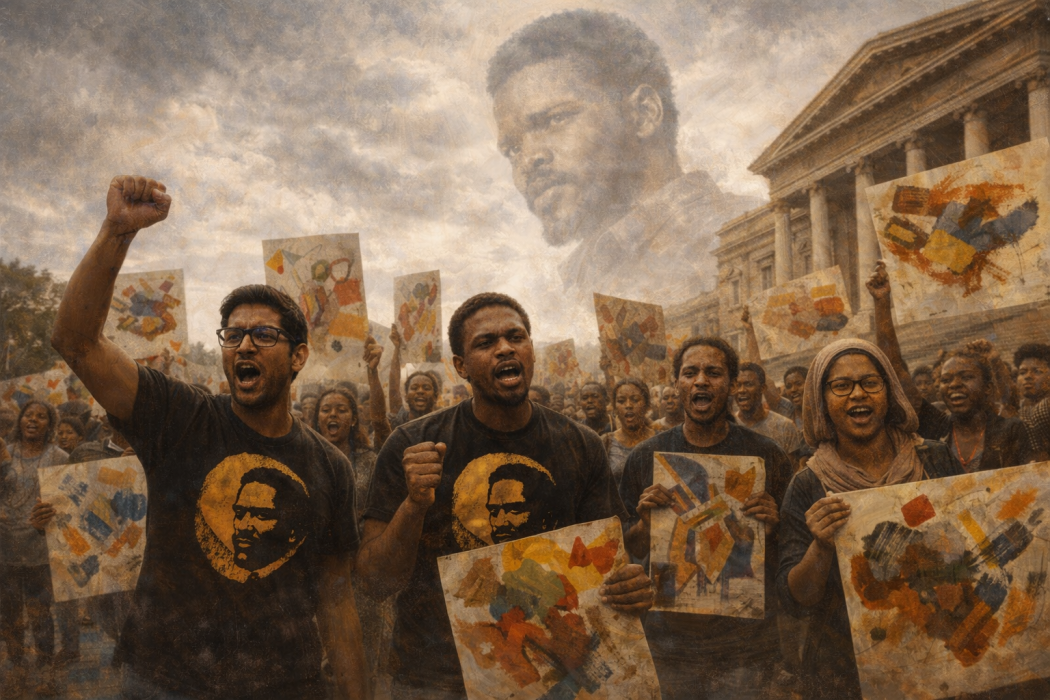
Biko’s funeral drew around 20,000 mourners and became a powerful public act of defiance that reverberated far beyond South Africa’s borders. His death turned him into an international symbol of resistance, and his writings and speeches continued to circulate clandestinely, inspiring activists through the final years of apartheid. His ideas profoundly shaped the climate leading up to the 1976 Soweto Uprising and later generations of student militants.
In post‑apartheid South Africa, Black Consciousness has found renewed life in movements such as Rhodes Must Fall and Fees Must Fall, where students deploy Biko’s language of decolonisation to challenge institutional racism and economic injustice. His insistence that liberation must begin with the mind, his integration of Ubuntu and African spirituality into political struggle, and his vision of a non‑racial, truly human society remain vital touchstones for contemporary debates on race, identity, and justice. Biko endures not only as an anti‑apartheid leader but as a revolutionary philosopher of human dignity whose call for psychological liberation continues to echo across the African world.
This post is dedicated to my friend and “brother from another mother”, Uchenna Edeh, who requested this biographical post on Steve Bantu Biko.
Acknowledgement: I used Notebook LM to synthesise and organise my research material. The biographical essay on Stephen Bantu Biko was supported by “Tylis” (Perplexity), who helped to organise the material, sharpen the thematic headings, and refine the narrative flow. Additionally, Tylis created the bespoke prompts that visualise Biko’s student activism, African culture and Ubuntu, his intellectual networks, and the ongoing legacy of his struggle for psychological and political liberation. The illustrations were generated by “Spruce” (ChatGPT) using these historical references and interpretive visual prompts.
Sources:
Kobe, Sandiswa Lerato (2022). “Steve Biko’s Black Theology of Liberation from the Perspective of Ubuntu.” The Ecumenical Review, 74(4): 589-599.
“Steve Biko and the Soul of Black Consciousness.” (A collection of excerpts examining Biko’s life, intellectual legacy, and global impact).
Historical and Archival Records (al2460_tut_02.13.pdf). (Contains historical notes on the Black Consciousness Movement, SASO, and interviews with activists).
Dibiana, Edward. “Donald Woods and the Biko’s Story.” A Journal of Constitutional Development.
Ahmed, Ramy Magdy (2023). “Liberation and Consciousness: Reading Steve Biko’s Struggles Against Inferiority Complex.” ASRIC Journal on Social Sciences and Humanities, 4(2): 42-48.
Biko, Steve (2005). I Write What I Like. ProQuest LLC (Electronic File) / African Writers Series.
Bookey. “I Write What I Like Summary.” (Comprehensive summary and analytical content list of Steve Biko’s works).
Gerhart, Gail M. (1972). “Interview with Steve Biko.” Durban, 24 October 1972.
Biko, Steve. “Black Consciousness and the Quest for True Humanity.” (Original essay).
Lötter, H.P.P. (2012). “The Intellectual Legacy of Stephen Bantu Biko (1946-1977).”
Pityana, N. Barney. “Steve Biko: Philosopher of Black Consciousness.” In Pan-African Pantheon.
Biko, Steve (2002). I Write What I Like. University of Chicago Press (Reprint Edition).
Ṣóyẹmí, Ẹniọlá Ànúolúwapọ́ (2024). “Rightful Power and an Ideal of Free Community: The Political Theory of Steve Biko.” Political Theory, 52(3): 459–489.
Pityana, N. Barney (2012). “Black Consciousness, Black Theology, Student Activism, and the Shaping of the New South Africa.” Inaugural Steve Biko Memorial Lecture, Europe.
“The Betrayal of Steve Biko.” Law, Democracy & Development.
Apartheid Museum (2007). “The Quest for a True Humanity.” (Exhibition brochure commemorating the 30th anniversary of Biko’s death).
Biko, Steve (1987). I Write What I Like. Edited by Aelred Stubbs C.R. Heinemann / African Writers Series.
Conradie, Annemi (2020). “Sedition à la mode? The transfiguration of Steve Biko in post-apartheid fashion and décor design.”
