
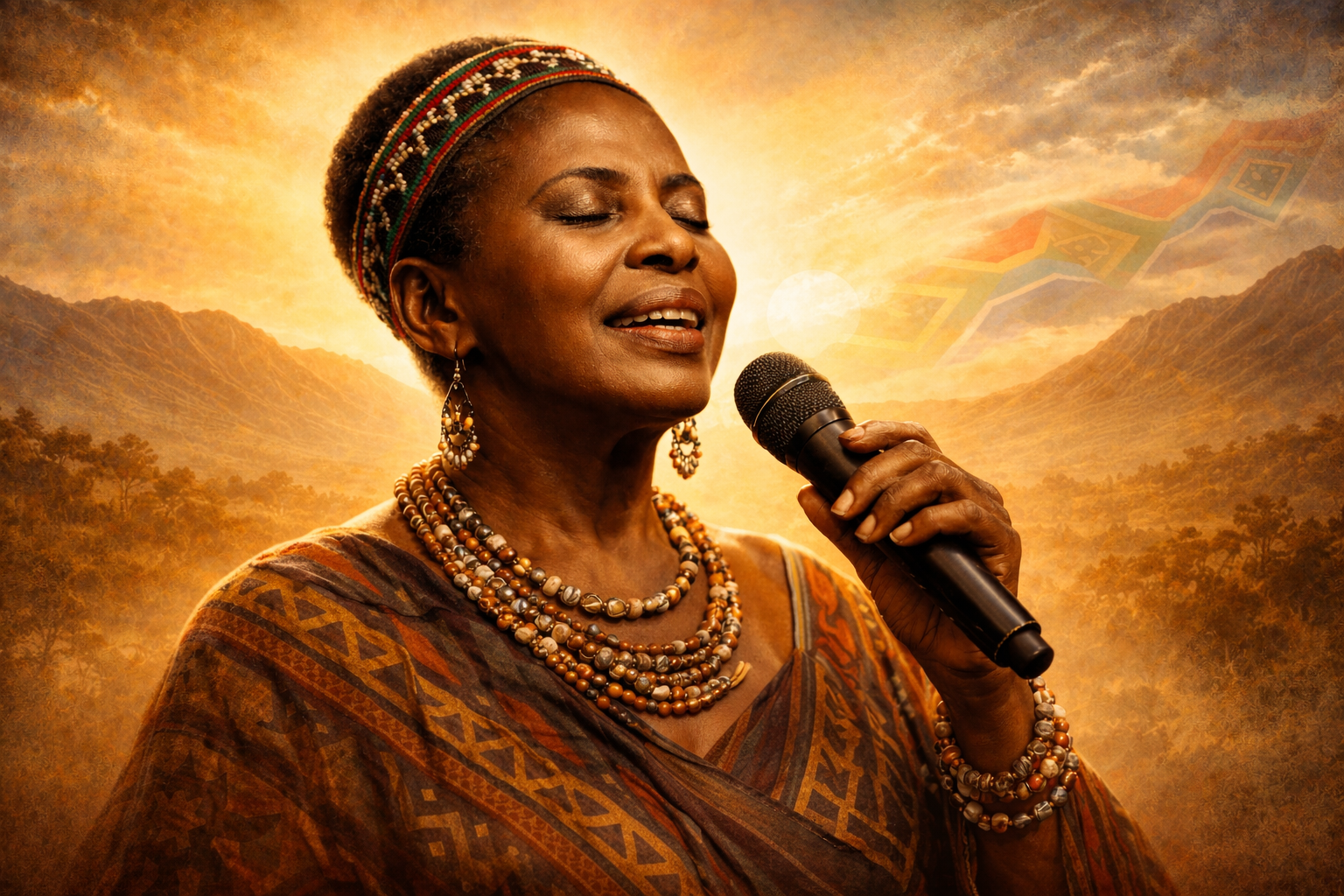
Miriam Makeba, lovingly known as Mama Africa, was a South African singer, freedom fighter, and cultural worker who turned her entire life into a testimony against apartheid and colonialism. Born Zenzile Miriam Makeba on 4 March 1932 in Prospect Township near Johannesburg, she entered the world under the sign of repression: as an infant she spent six months in prison with her mother, who had been arrested for brewing traditional beer to support the family. From those beginnings, her voice—first nurtured in church and school choirs—grew into a force that carried African languages, stories, and rhythms onto the world’s stages.
Makeba’s journey from local choirs to global icon passed through 1950s Johannesburg dance halls, where she performed with the Manhattan Brothers and the all-women Skylarks, blending jazz, township sounds, and indigenous melodies. A role in the 1959 anti-apartheid film Come Back, Africa propelled her onto the international scene, and through that platform she met Harry Belafonte in London, who helped open the doors to the United States. Her early success in America—with appearances on television and a residency at the Village Vanguard—was soon shadowed by punishment from the apartheid regime, which revoked her passport in 1960 and condemned her to three decades of exile after she tried to return home for her mother’s funeral.
Exile did not silence Makeba; it sharpened her insistence on truth-telling. She stood before the United Nations in 1963 and 1964 and described South Africa as a “huge prison,” demanding a complete boycott of the apartheid state and calling for an end to arms shipments used against African women and children. In these speeches, and again in her later addresses in 1975 and 1976, she refused to separate her art from her politics, declaring that every song she sang was “bound up with the plight of my people.” Her global fame—amplified by songs like “Pata Pata”—never displaced her deeper commitment to liberation, a commitment that led her to serve in the Guinean delegation to the UN and later as a goodwill ambassador for a democratic South Africa.
This post gathers some of Miriam Makeba’s most resonant words—on music, spirit, resistance, history, and womanhood—as a way of listening again to the philosophy beneath the voice. In her reflections, music becomes a kind of magic, the past remains alive with the presence of the Ancestors, and the struggle for dignity is inseparable from everyday images: the ant that refuses to be crushed, the bird that soars above injustice, the stream that wears down stone. Through these quotes, Makeba emerges as more than a celebrated performer; she appears as a thinker and spiritual elder who insisted that, in a world of oppressors and oppressed, she would be remembered not only as a singer, but as an activist and a fighter.
Here are Ten Empowering Quotes by Miriam Makeba
If given a choice, I would have certainly selected to be what I am: one of the oppressed instead of one of the oppressors. But in truth, I had no choice. And in a sad world where so many are victims, I can take pride that I am also a fighter. My life, my career, every song I sing and every appearance I make, are bound up with the plight of my people.
When a westerner is born, he or she enters a stream of time that is always flowing. When a point in life is passed, it is finished. When a Western dies, he or she leaves the stream which flows on without him or her. BUT, for us, birth plunges us into a pool in which the waters of past, present, and future swirl around together. Things happen and are done with, but they are not dead. After we splash about a bit in this life, our mortal beings leave the pool, but our spirits remain.
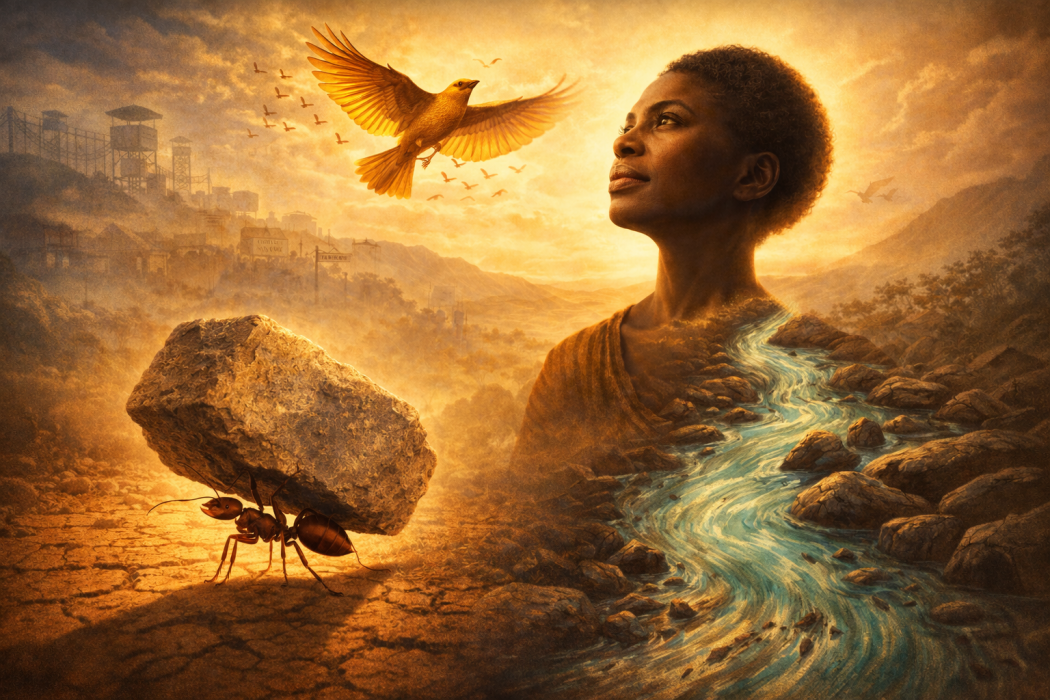
I look at an ant, and I see myself: a native South African, endowed by nature with a strength much greater than my size, so I might cope with the weight of racism that crushes my spirit. I look at a bird, and I see myself: a native South African, soaring above injustices of apartheid on wings of pride, the pride of a beautiful people. I look at a stream, and I see myself: a native South African flowing irresistibly over hard obstacles until they smooth and one day disappear.
If you believe, as I do, that every man and woman is an object of wonder and joy in the heart of the Superior Being, then it is not too much to expect that some day all wrongs will be righted and justice will prevail.
I have discovered that music is a type of magic. Music can do all sorts of things… Music gets deep inside me and starts to shake things up… Who can keep us down as long as we have our music?
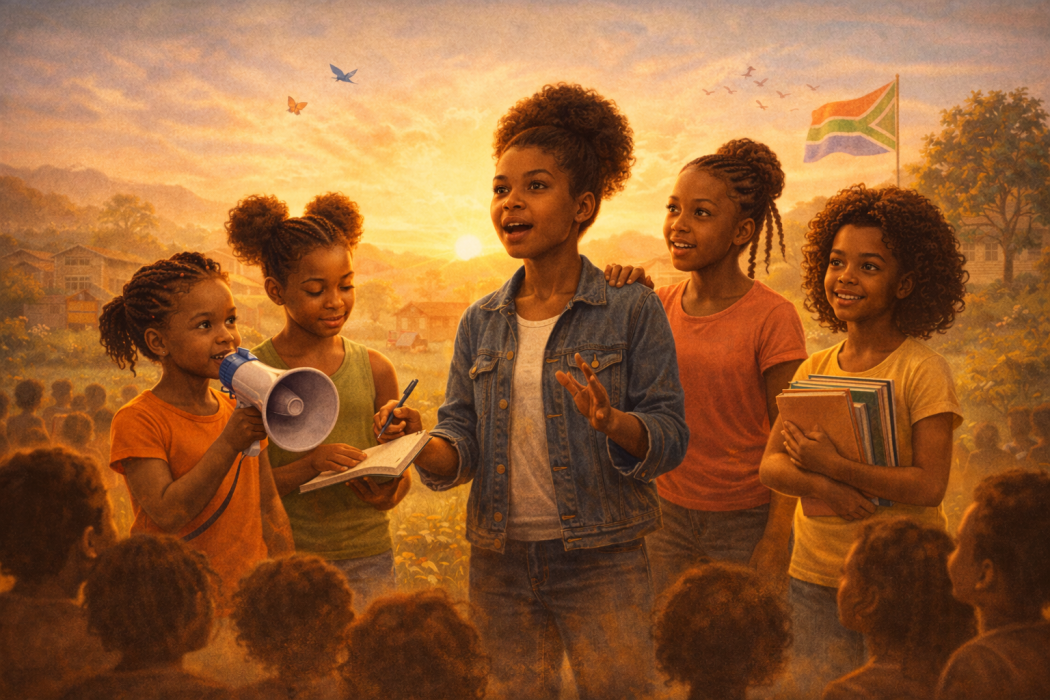
Girls are the future mothers of our society, and it is important that we focus on their well-being.
Age is getting to know all the ways the world turns, so that if you cannot turn the world the way you want, you can at least get out of the way so you won’t get run over.
You are damned and praised, or encouraged or discouraged by those who listen to you, and those who come to applaud you. And to me, those people are very important.
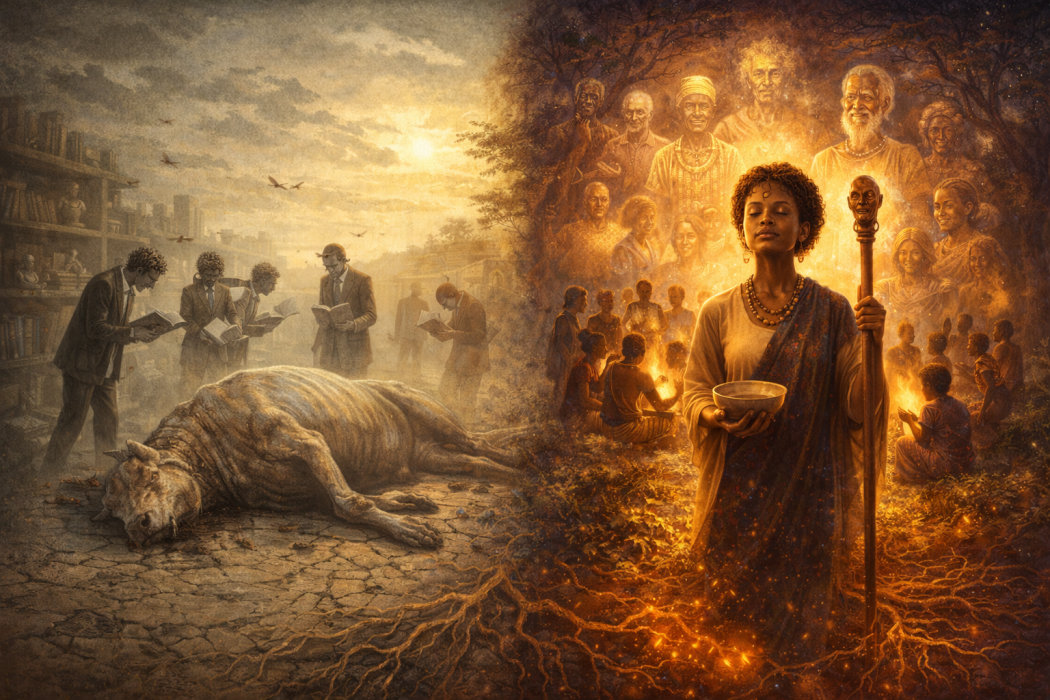
In the West the past is like a dead animal. It is a carcass picked at by the flies that call themselves historians and biographers. But in my culture the past lives. My people feel this way in part because death does not separate us from our Ancestors. The spirits of our Ancestors are ever present.
The conqueror writes history, they came, they conquered and they write. You don’t expect the people who came to invade us to tell the truth about us.
Acknowledgement:
I would like to acknowledge the generous support I received in shaping this post and its accompanying visual prompts, especially the collaborative assistance of Perplexity (Tylis). The portrait of Miriam Makeba and the accompanying symbolic illustrations inspired by her words were generated with the creative assistance of ChatGPT (“Spruce”). Through collaborative visual development and conceptual refinement, these artworks translate Makeba’s reflections on resilience, girlhood, leadership, and the ever-present Ancestors into painterly form.