
Marimba Ani stands as one of the most incisive and fearless architects of African-centered thought. As a scholar-activist, she transformed anthropology from a weapon of Eurocentric observation into a tool of Afrikan liberation. Formerly known as Dona Richards, she reclaimed the name Marimba Ani, marking a decisive spiritual and political break with an Eurocentric identity, signalling her commitment to an Afrikan worldview grounded in ancestral continuity and cultural sovereignty. Trained as a philosopher and anthropologist, with a BA from the University of Chicago and an MA and PhD in Anthropology from the New School for Social Research, she combined rigorous intellectual work with frontline organising in the Civil Rights Movement, including service with SNCC and participation in the 1964 Freedom Summer in Mississippi. She would go on to teach for twenty-five years as Associate Professor of African Studies in the Department of Black and Puerto Rican Studies at Hunter College, shaping generations of students into cultural warriors rather than passive observers of oppression.
Her magnum opus, Yurugu: An African-Centered Critique of European Cultural Thought and Behavior, exposes European intellectual traditions as a deeply flawed and incomplete “cultural disorder,” drawing on Dogon cosmology to name the violent, fragmenting impulse at the heart of Western domination. In Let the Circle Be Unbroken: The Implications of African Spirituality in the Diaspora, she articulates the inseparable unity of spirit and matter and shows how African spirituality functions as both the foundation of community life and a strategic defense against global European oppression. As co-editor of To Be Afrikan, she insists that Afrikan identity is not a flexible, location-based label but an enduring spiritual and biological essence that survives displacement and borders.
The ten “Yurugu” quotes gathered in this post are drawn from these three works—Yurugu, Let the Circle Be Unbroken, and To Be Afrikan—and are offered in honor of Marimba Ani’s March birthday as a small tribute to the vast scope of her genius. Together, they invite us to unmask the ideological systems that seek to define us, to reclaim the Circle of our spiritual continuity, and to arm ourselves with an African-centered cultural science capable of defending our minds, our communities, and our future.
I count myself deeply fortunate to have met Dr Marimba Ani and to have both Let the Circle Be Unbroken and Yurugu signed by her. In 2008, she inscribed Let the Circle Be Unbroken to me: “For Sister Meserette, ‘The Ancestors Love You’.” Later, in Yurugu, she wrote: “For Sister Meserette, ‘Think with your Afrikan Spirit. In Afrikan Victory’.” She may sign many books in this way, but for me, these words capture the precision and clarity of her mind: love of Ancestors, insistence on Afrikan spirit, and an uncompromising commitment to Afrikan victory as a civilizational project.
Here are Ten “Yurugu” Quotes by Marimba Ani
The continuity of our cultural identity has been interrupted cruelly and unnaturally by the experience of [the Maafa]. The term Maafa is a Ki-Swahili word for “disaster” that we are now using to reclaim our right to tell our own story. Maafa refers to the [captivity] of our people and to the sustained attempt to dehumanize us. Because the Maafa has disconnected us from our cultural origins, we have remained vulnerable in a social order that does not reflect our cultural identity.
Our cultural roots are the most ancient in the world. The spiritual concepts of our Ancestors gave birth to religious thought. Afrikan people believe in the oneness of the Afrikan family through sacred time, which unites the past , the present and the future. Our Ancestors lives with us. They created the first civilizations thousands of years ago and they suffered the pain of the Maafa. They were able to endure the most disastrous and dehumanizing circumstance ever to have been perpetrated against a group of people, only because of the power of the Afrikan spirit.
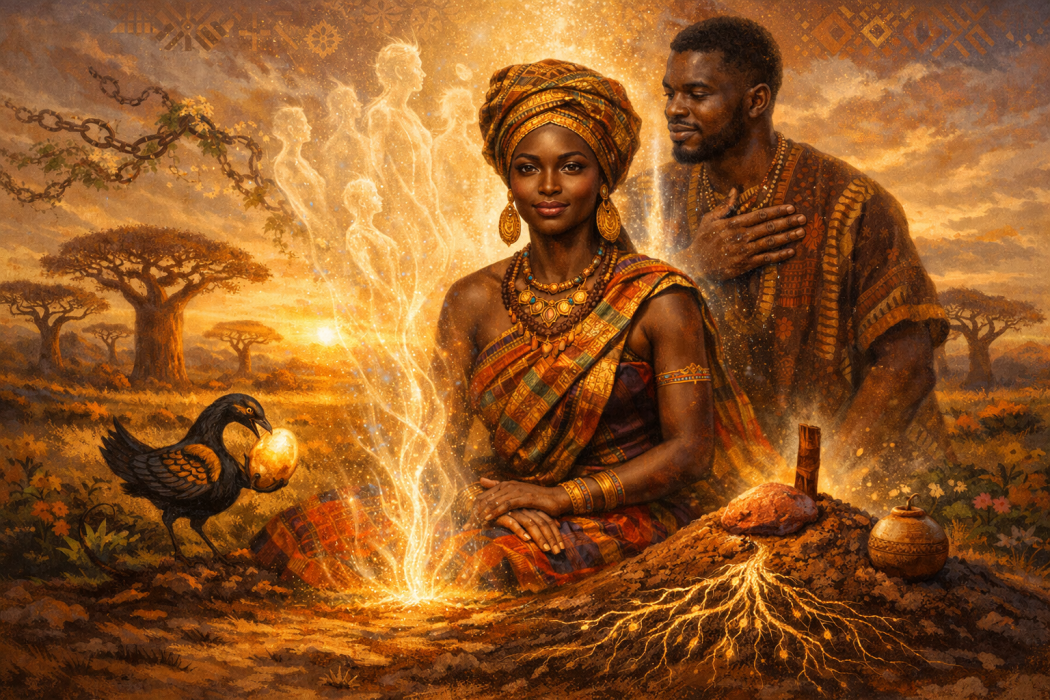
Marriage [for Black women] is choosing to take a partner in victorious struggle. Marriage is to share with a man the immense joy of being Afrikan. We must be sexually vibrant, sexually confident, and sexually clear. Marriage becomes the context for exercising the power to Rebirth (Afrika can only be reborn through the cooperation between a man and a woman). We must learn to listen to the Ancestors as they impart intense instruction, telling us how to live, how to struggle and how to become victorious. We welcome nourishment by a man’s spirit who becomes our partner in Nation-Building, and we, in turn, nourish him.
To be an Afrikan woman is to know that we, Afrikan men and women, are the mirrors of each other’s souls in which we find our ability to love and be loved. To be an Afrikan woman is to know that your man is the voice which affirms your womaness. It is to be able to feel him say “You are an Afrikan Woman”. To be an Afrikan Woman is to be the Memory of the Race, which makes Sankofa possible. It is to “bury the placenta” so that Afrika can be resurrected. To be an Afrikan Woman is to pick up the pieces of our Maafa-shattered lives and to make our people whole again. It is to Rebirth the Spirit of Afrika.
According to Leonard Barrett, the supreme value in terms of the Afrikan world-view is “to live life robustly.” That is, to live life with as much energy and as forcefully as we can. Much of African religious activity, therefore, involves the attempt to strengthen our force vitale or “life force.” It is the spirits (aspects of the Deity), and the ancestors, who have the spiritual power to strengthen our force vitale, and so through sacrifice, offering, and ritual, we ask them to help us in this way.
Until an Afrikan can say and mean that there are no European people on earth that he or she can trust, they will never be psychologically liberated.
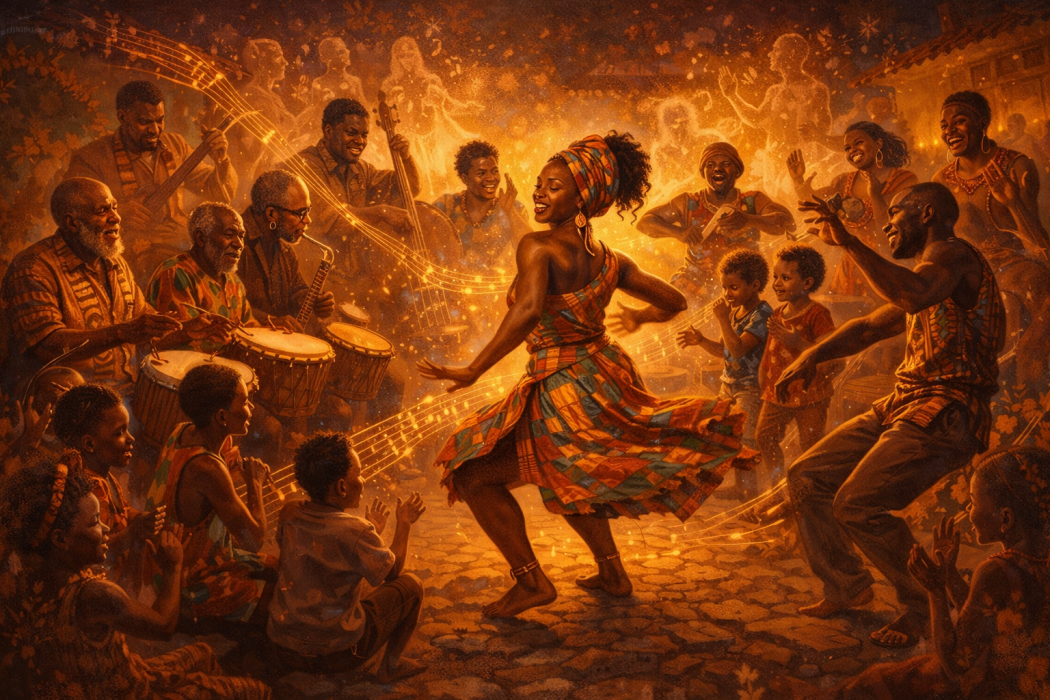
Our deepest feelings are expressed through music, dance and song; our most brilliant conceptions. Our profound and complex philosophy of life is expressed through these vehicles, and that is because we express ourselves, our essence, our souls through music, dance and song.
In European culture, the outward ideological thrust, the aggressive stance, is developed more intensely than in any other culture. As we examine the culture, we find that its dominant modes of expression reveal an almost fanatically political or confrontational consciousness in which all cultural phenomena that are “other” or different are considered hostile to the group’s interest.
The African worldview and the worldviews of other people who are not of European origin all appear to have certain themes in common. The universe to which they relate is sacred in origin, is organic, and is a true “cosmos.” Human beings are part of the cosmos and, as such, relate intimately with other cosmic beings. Knowledge of the universe comes through a relationship with it and through the perception of spirit in matter.
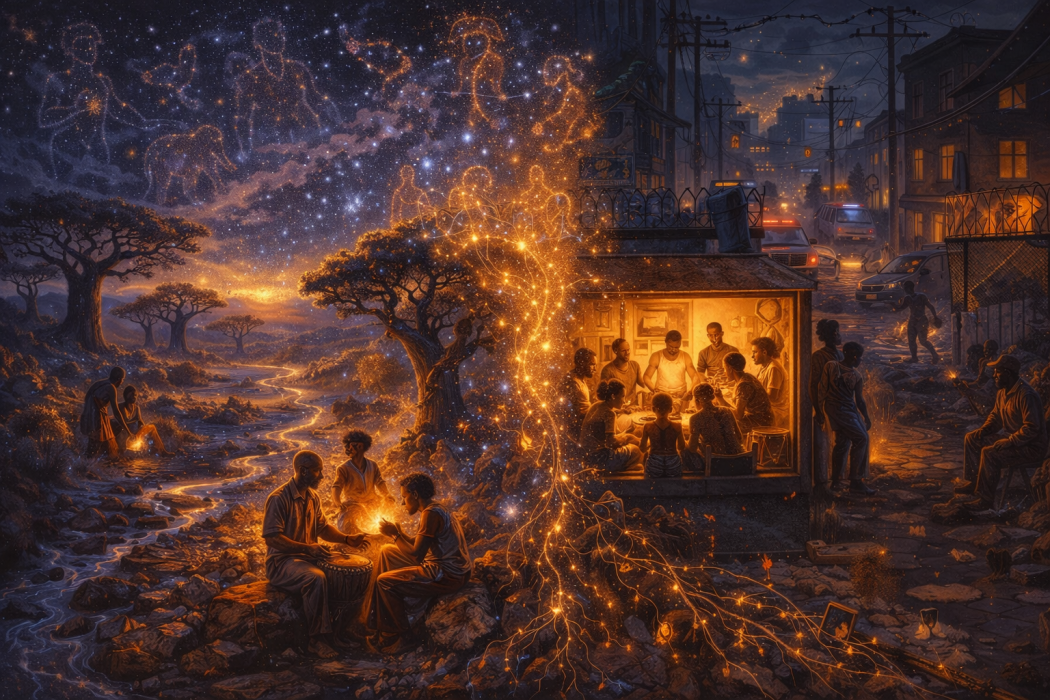
We live in the chaos of [the Americas], and so we lack the discipline inherent in traditional Africa. Yet, through all of this, we have not become European. Even in our dehumanization, our ethos is African. We are a spiritual people, living in a profane society. The question is, which is more powerful, the mode or our spirituality?
Taken together, these ten reflections from Yurugu, Let the Circle Be Unbroken, and To Be Afrikan reveal the wholeness of Marimba Ani’s vision: the Maafa as both wound and warning; Afrikan spirituality as the source of our force vitale; the Afrikan woman and man as mirrors and co-creators of a reborn nation; and our people as an unbroken family of the living, the “dead,” and the yet unborn. They remind us that even in the chaos of the Americas, our ethos remains Afrikan, our music and dance still carry our deepest philosophy, and our task is to discipline that spiritual power into conscious struggle. To sit with these words is to be called back into the Circle, to remember that we have not become European—and that our liberation depends on trusting the enduring strength of the Afrikan spirit.
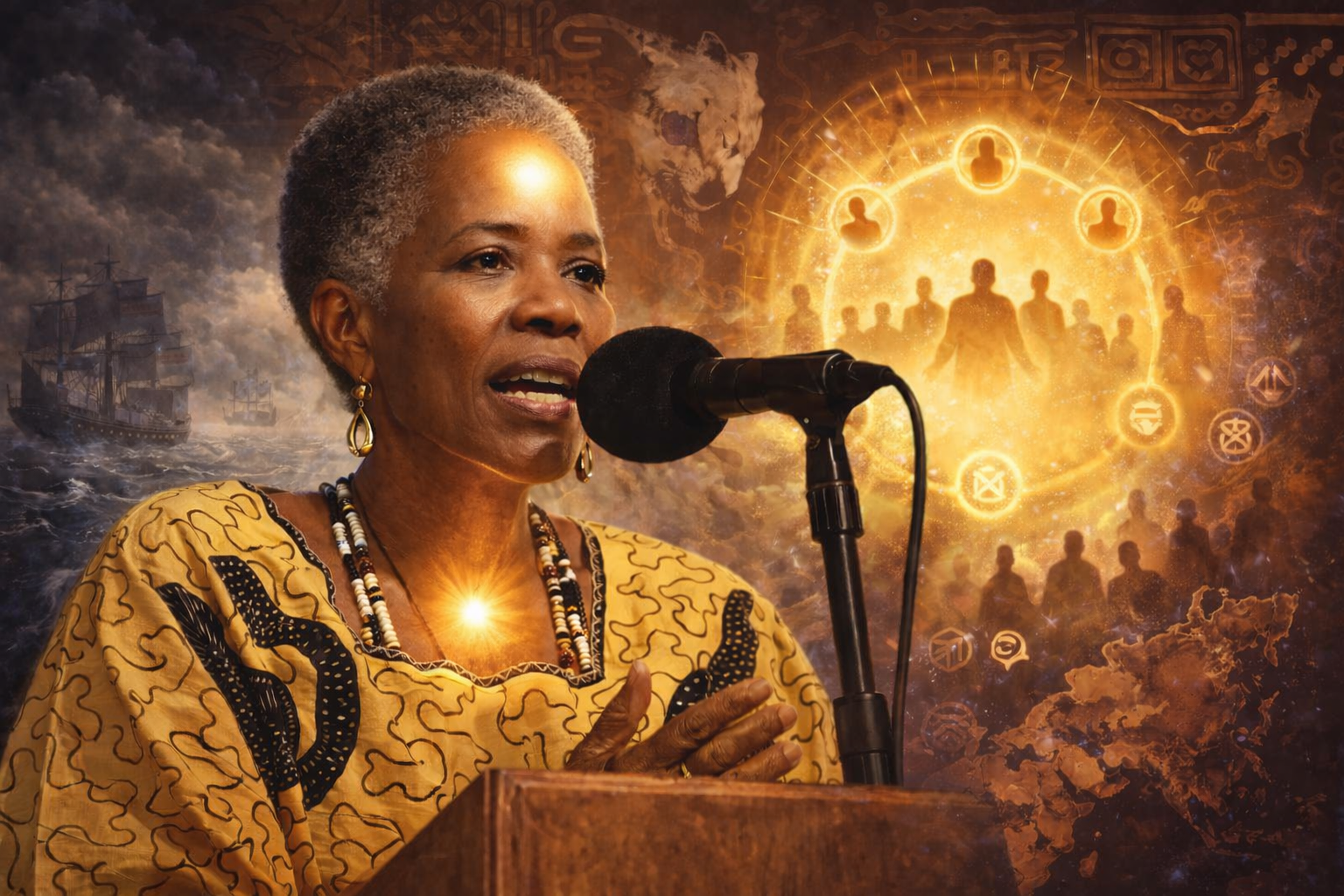
Acknowledgment: The portrait of Marimba Ani was created as a visual tribute. It was conceptually developed in collaboration with ChatGPT and generated using OpenAI’s image-generation system. The artwork seeks to honour her intellectual labour and spiritual clarity by rendering her as a steady, luminous presence positioned between histories of rupture and traditions of continuity. The stormed Atlantic evokes the Maafa; the radiant ancestral circle signifies Afrikan cosmology and intergenerational coherence. Subtle Dogon-inspired symbols and the fractured fox motif allude to the critique of incomplete cultural logic explored in Yurugu.
The three visionary artworks in the posts were also generated in collaboration with ChatGPT and are presented as original, symbolic visual interpretations of Afrikan cosmology, diasporic continuity, and communal philosophy expressed through sacred relationship, music, and lived spirituality. Each image embodies layered historical memory, intergenerational transmission, and the enduring sacred ethos of Afrikan-descended people across time and geography. The compositions integrate cosmological symbolism, ancestral presence, relational balance, and spiritual resistance within carefully constructed 16:9 cinematic landscapes. These works were generated as intentional, reverent visual renderings designed to translate philosophical and cultural concepts into cohesive, emotionally resonant imagery.