
This essay explains how the term Maafa is used across Kentake Page.
The term Maafa was introduced by Marimba Ani in her 1988 book, Let the Circle Be Unbroken, to capture the 500-year—and continuing—catastrophe of Atlantic trafficking and captivity. In Kiswahili, Maafa means “great disaster” or “terrible occurrence.” Ani’s use of the word provides an Afrocentric framework for naming our collective historical experience, moving away from borrowed terms such as “African Holocaust” or dehumanizing European descriptors like “slavery.”
When I use the term Maafa on Kentake Page, I am naming a vast, interconnected catastrophe: from the initial kidnappings and forced marches, through the ships and plantations, and into the enduring afterlives of racism, colonialism, and neo-colonialism. It is a word that gathers centuries of terror and resistance into a single, heavy breath: “mah-AH-fah.” It is not only a word, but a lens through which I read and write history.
The term “slavery” itself is not exclusive to Afrikan people—Europeans, including those in Western Europe, were also enslaved by Arabs and Muslims, and vice versa. As Orlando Patterson notes, “there is no region on earth that has not at some time harbored the institution,” though not always as chattel slavery. Yet, through racialisation, this term has come to signify primarily Afrikan suffering in the global imagination. Even here, language can obscure more than it reveals. Phrases like “slave trade” or “triangular trade” center commerce over the lives stolen. Maafa, by contrast, centers the catastrophe as experienced by Afrikan people themselves.
The Maafa, like the Atlantic Ocean, is expansive. It encompasses not only the capture, confinement, and forced transport of millions of Africans, but also the countless deaths on land and at sea, and other systems of trafficking such as the Trans-Saharan, Indian Ocean, and Red Sea routes. It extends into the colonial occupations of Afrika and, crucially, into their afterlives: segregation, apartheid, lynching, prisons, police violence, economic dispossession, and the global structures that continue to shape Black life today.
For Marimba Ani, the Maafa did not end with legal emancipation in 1888. It persists as a “psychic attack and cultural assault” that produces fragmentation, disorganization, and a weakened capacity for collective self-definition. The Maafa must, therefore, be understood not only historically but also culturally—as a systematic severing of African people from our historical consciousness, spiritual foundations, and organizing principles, leaving us vulnerable within social orders that do not reflect our values or worldviews.
This understanding resonates deeply with Miriam Makeba’s assertion that, for Afrika’s people, “the past lives.” In an Afrikan context, the past is not distant history or mere memory—it is a living presence. Death does not sever us from our Ancestors; they remain active within our world. The Maafa, then, is a continuation, surviving in our DNA, our communities, our spiritual practices, and our struggles.
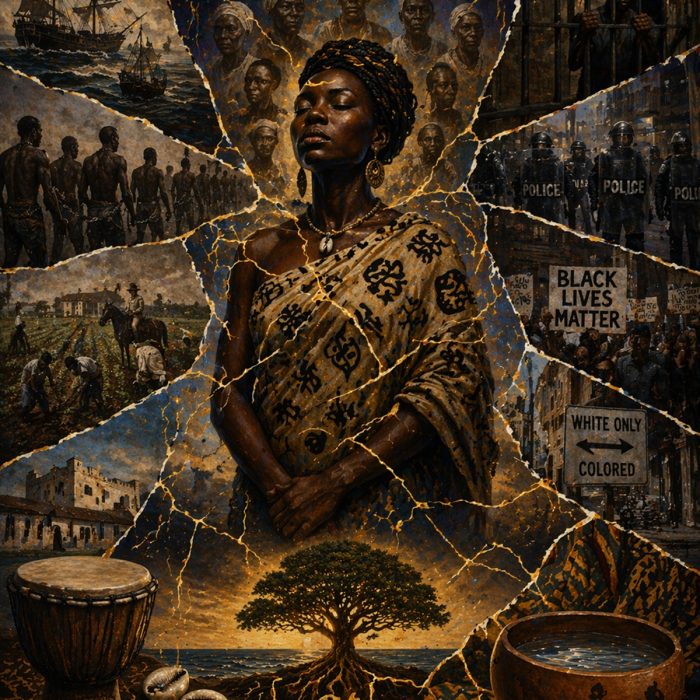
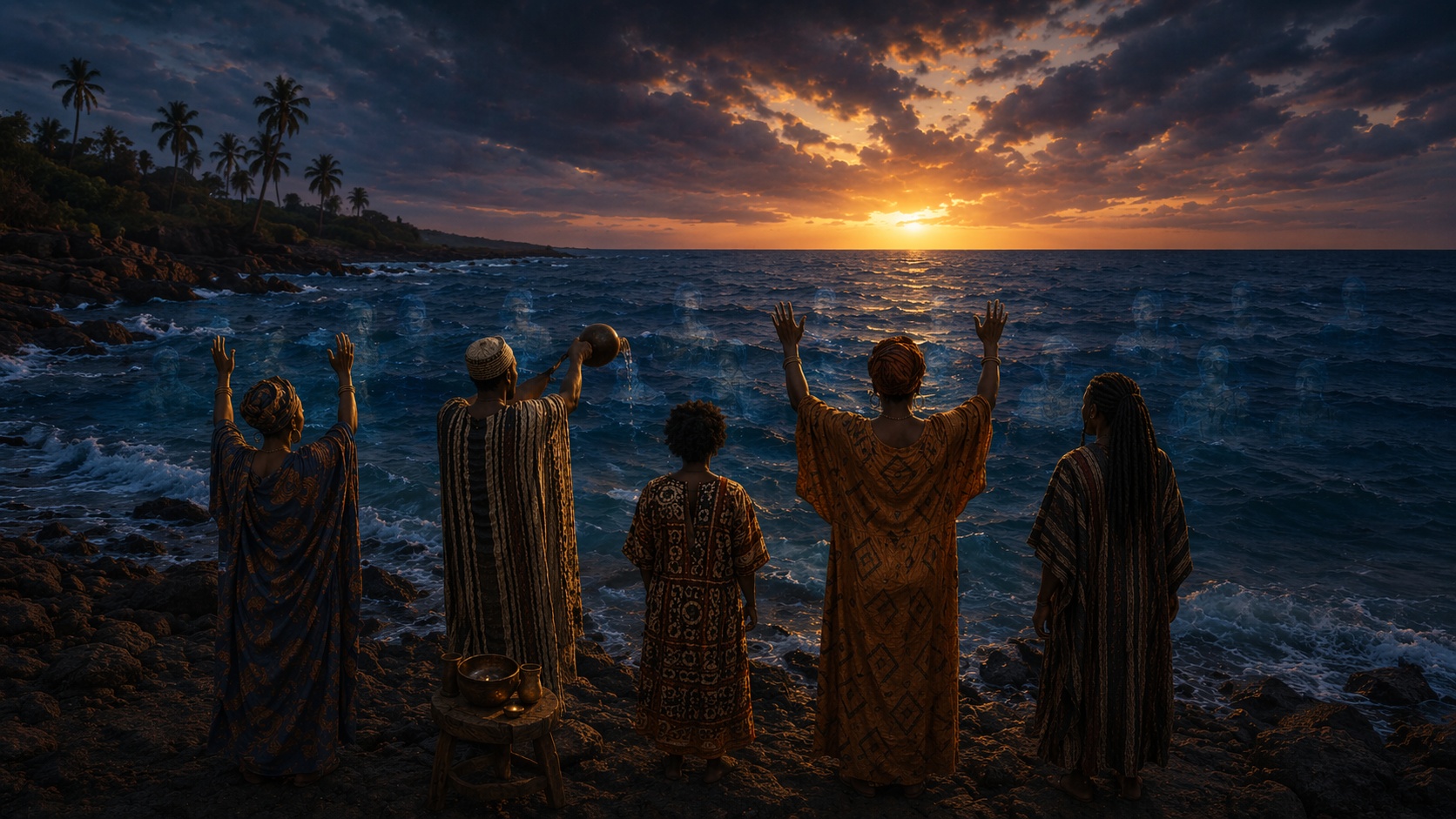
For this reason, I argue that the Maafa is both a historical condition and a spiritual wound. It extends into the realm of the Ancestors—millions who died on the continent, in the dungeons or baracoons, on the ships, and on plantations—many whose names we will never know, but whose presence we still feel. Across the diaspora, communities continue to honor this reality through acts of remembrance—libation, drumming, ceremonies by the sea—acknowledging both loss and continuity. These practices remind us that the Maafa is ongoing, but so too are the spiritual and cultural resources that sustain us.
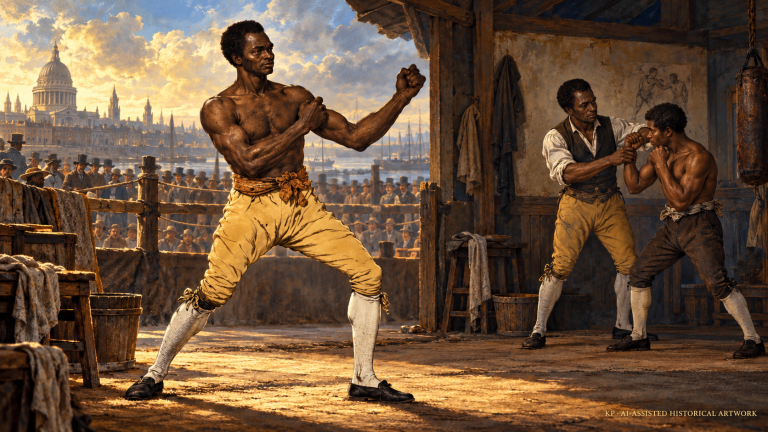
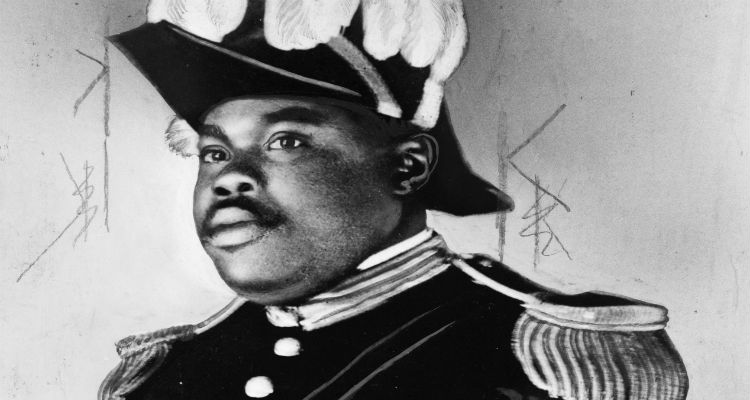
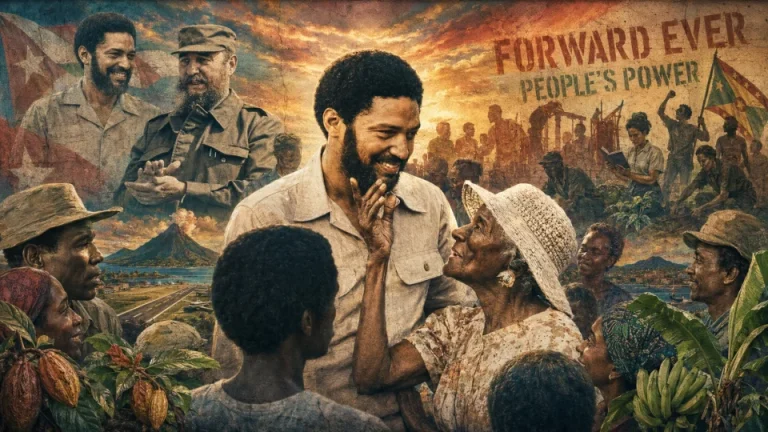
To speak of the Maafa is to speak of trauma, but also of resistance and survival. It is an incredibly painful history—one that many shy away from or feel shame about. Yet it is also a testament to extraordinary endurance, creativity, and will. In The Hero with an African Face, Clyde W. Ford writes that the Maafa is not only an account of victimization and an atrocity of racism and oppression, but also an epic journey of heroes and heroines. Indeed, there were those who were afraid and those who were brave. Some died, while others survived—so that you and I could be born into this world. Some chose to endure, some escaped. Some remained bound, yet others broke their chains. There were those who chose death over bondage, and those who lived through oppression so that we could become their “dreams.” After many hours of reading, I agree that only half the story has been told. Too often, the story of our ancestors’ creativity, resistance, and endurance is left untold or told without true significance, while blame, disloyalty, and betrayal are foregrounded. Yet, when one reads deeply and between the lines, there is a powerful esteem that one is crowned with.
Therefore, on Kentake Page, I choose to use Maafa rather than the term “slavery.” It is a word that holds the scale, depth, and continuity of this experience. Each essay may approach it from a different angle—through history, biography, ritual, or cultural analysis—but the word itself keeps the full horizon in view.
If this is your first encounter with the term, I invite you to sit with it. The Maafa is a difficult truth, but naming it clearly is part of how we honor our ancestors and begin to imagine freer futures.
Sources:
Marimba Ani, Let The Circle Be Unbroken: The Implications of African Spirituality in the Diaspora
Clyde W. Ford, The Hero with as an African Face: Mythic Wisdom of Traditional Africa
Orlando Patterson, Slavery and Social Death: A Comparative Study