
On the word Maafa
In this cine-essay, I advance an original reading of Sinners that treats the film as a meditation on the Maafa as a cosmological rupture: the violent breaking of an African three‑world field that binds Ancestors, the Living, and the Unborn.
Update: This comprehensive essay is a lengthy read. To accommodate readers who prefer shorter installments, I have divided it into five parts on the Kentake Page Substack.
SINNERS (Part 1): Love Letter and Lament for the Black Atlantic
Sinners (Part 2): How Did Our Ancestors Not Know?
Sinners (Part 3): Magic, Sammie’s Song and the Trickster
SINNERS and the Three Worlds, Part 4 (1)
SINNERS: A Cosmological Masterpiece, Part 4 (2)
The term Maafa refers to what is commonly known as Transatlantic Slavery. Marimba Ani coined Maafa to name the long period of captivity, dispossession, and attempted annihilation inflicted on African peoples and their descendants across the Atlantic world. I have italicised Maafa to honour it as a specific historical and spiritual wound.
Likewise, I capitalised and italicised the film’s name to honour it as a cinematic masterpiece, richly deserving of the Best Picture award. Both the Maafa and the SINNERS mark, in different registers, a crime against a people and a rupture in the sacred field that binds the Ancestors, the Living and those yet to be born.
© Meserette Kentake, April 15, 2026. All rights reserved.
Sinners: Introduction
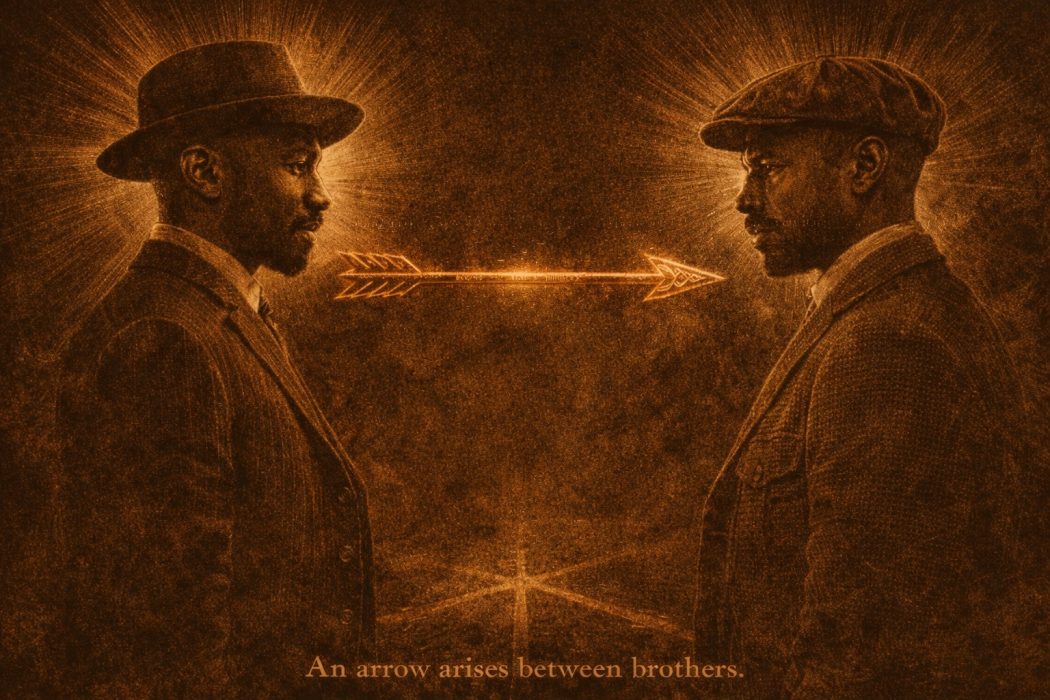
There is an Odu proverb that captures what happened to us when the ships first appeared on our shores in the 1400s: “an arrow arises between brothers.” In Ryan Coogler’s SINNERS, that primal prophecy is mirrored in the battle between twin brothers, Smoke and Stack, who return to the Jim Crow South to open a blues juke joint—only to face a vampiric assault on their opening night. The film, which presents itself as supernatural horror, garnered a record 16 Academy Award nominations but won only 4, losing in the Best Picture and Best Director categories. This “loss” is not surprising; awarding SINNERS the top honour would mean endorsing its central arguments on race and racism.
SINNERS is both a love letter and an elegy to African-American culture—at once entertainment and lamentation. Coogler emerges as a profound messenger; if Elegba, the Yoruba trickster and guardian of the crossroads, were to manifest as a filmmaker, it would be in Coogler. Recognising Coogler as Best Director would be akin to honouring Black culture as a sacred, living archive of ancestral memory. It is his embodiment of Elegba’s spirit—through subversion, genre-blending, and moral ambiguity—that imbues SINNERS with a rich tapestry of symbolism and cosmological depth. Drawing on the traditions of the jele (griot) and Hoodoo, the film becomes a densely layered meditation on the “crossroads” of African-American—and, by extension, Black—identity in the Atlantic world, rooted in the historic diaspora’s “shared sea of consciousness”. In this way, SINNERS is directly linked to the history of the Maafa and the spiritual warfare Africans waged to preserve identity and community, whether the threat appeared as an everyday serpent or something more sinister, like a vampire.
Although SINNERS lends itself to multiple interpretations, I see three primary modes of reading: sociological, psychological, and cosmological, each rooted in historical experience. The Maafa is the crucible where these wounds were forged—simultaneous and mutually reinforcing. Sociologically, the film examines race, religion, the exploitation of Black creativity, Jim Crow, cultural appropriation, stereotypes, the violence of assimilation, and the destruction of Black economic self-determination. Psychologically, it confronts trauma, identity, archetypes, the shadow self, the scars of forced assimilation, and the psychic toll of surviving within Eurocentric systems. Cosmologically, SINNERS delves into African spirituality, particularly Hoodoo, exploring ancestor veneration, divination, twinship, protective arts, and the sacred essence of Black music and dance.
Each of us approaches SINNERS through the prism of our identity, values, beliefs, and knowledge. For me, the history of the Maafa has shaped my intellectual and spiritual foundation since childhood. I often say it is my favourite genre of history. As a child and young woman, I felt a deep internal resistance to Christianity. Instead, I sought out African beliefs, reading widely about various religious and spiritual traditions until I encountered Ifa in my early thirties. As the young ones say, “it was game over”—once the Òrìṣà entered my cognitive world, everything changed. The depth and complexity of their wisdom reshaped my entire orientation to life.
Since then, I have walked the path of my ancestors’ wisdom. While my degree is in Counselling Psychology and I now possess a post-graduate certificate in African History (my MA was cut short), much of my education has been self-directed. In Outliers, Malcolm Gladwell argues that mastery in any field requires about 10,000 hours of deliberate practice. If you asked me what I have spent over 10,000 hours doing, the answer is simple: reading.
My interpretation of SINNERS is shaped by this background. Watching the film, I immediately recognised the Ibeji; Remmick as an embodiment of Christianity (and, to some extent, Islam); and Remmick’s desire for Sammie paralleling Europe’s historical targeting of young African men during the Maafa. I saw both assimilation and resistance, the ritual quality of our music and dance, and the theft of culture. I noticed how evil required invitation and collaboration to take hold. I saw the “world-of-three” our ancestors believed in. Like many analysts, I recognised the film’s socio-economic, psychological, and spiritual symbolism. Yet beyond these readings lies a deeper wound: the cosmological rupture of the African sacred relational field, which this essay seeks to explore.
Before turning fully to this dimension, my immediate reflection on SINNERS is that it confronts a core question at the heart of our woundedness: How did our ancestors not know?
How could they not see the true nature of the men who arrived with pale skin and straw hair—men seeking gold, seeking people, seeking women as if they had none of their own? In Anne Cameron’s retelling of Northwest Coast women’s stories in Daughters of Copper Woman, the elders describe these men this way: “These men had pitted black teeth, foul breath, hairy bodies, and never purified themselves through sweat or swimming. They spoke in loud voices. Their priests, too, were unlike any the ancestors had known: men who never spoke, ate, slept, laughed, or shared joy with women. They frowned upon singing, dancing, laughter, and love, and condemned the Society of Women as witches. These men would turn our daughters into prostitutes and poison the spirits of our sons.” How did our Ancestors not recognise their inhumanity? Did they not see that this civilisation brought disease, corruption, and beliefs meant to consume them? In some parts of West Africa, did they not say that those taken onto the ships were Eaten rather than sold?
If we had not glimpsed Remmick’s story before he reached the juke joint, who could have foreseen his murderous intent? Who could have foreseen how the seeds of greed would take root on the Continent, spreading among kings, princes, merchants, and even our oracles, transforming some into “war men”—our own “brothers,” moving from village to village, from kingdom to kingdom, through rivers and mangroves, capturing others to fill the waiting ships? Men like Cornbread, who, once infected, would turn his manhood against his own. SINNERS gave our Ancestors—Indigenous and African—a chance to whisper: this is what happened. We thought we were welcoming people into our land who seemed humane.
Entering the Three-World Field
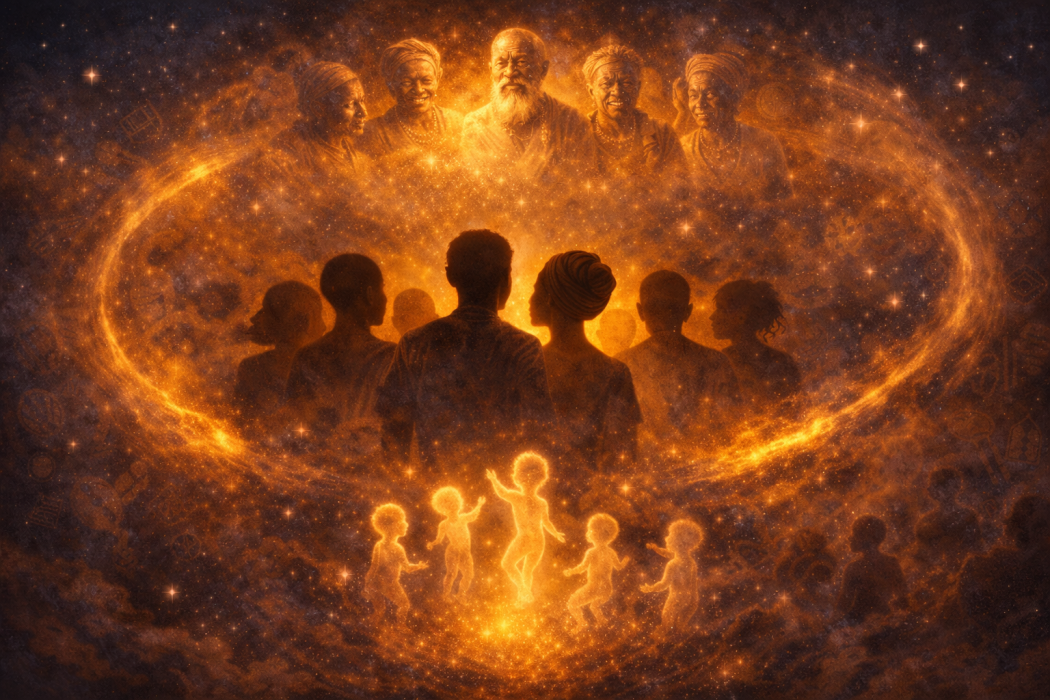
African Sacredness is organised by one defining principle: we exist in a world of three. The African Cosmological Trinity is: the Living, the departed, and those yet to be born. This sacred field of belonging is horizontal and circular; no one stands above the others. Those who have departed guide the living, the Living honour those who lived before them, and the unborn are present in potential. Time is not linear, as past, present, and future coexist in the same sacred moment. The Living and the Ancestors are interdependent, merging beings who together form the meaningful reality into which those yet to be born will arrive.
Within this framework, “death” is not seen as a final stage but as a transition into the world of Ancestors and spirits. The Living depart to become Ancestors, who are then reincarnated in the newborn. Death marks a movement into the unseen world, while birth represents emergence from the unseen into the visible realm. Thus, we once existed in the world of those yet to be born, and one day, we too will depart to the spirit world—hopefully to join the Ancestors. At our core, we are spiritual beings on a human journey. We enter the visible world not only as bodies, but as a constellation of selves: soul, name, heart, shadow, spiritual double, ancestral guardian, and more.
In contrast, the European Christian Trinity is God, the Son, and the Holy Ghost (Spirit). This is a vertical hierarchy in which power flows downward from an external authority into the human world. The human being is positioned as fallen, dependent, and in need of mediation through an institution. In Rituals of Blood, Orlando Patterson asked, “What is it about the [Christian] cross that so easily turns people on to genocide? That so frequently makes bloodthirsty brutes and cannibals of ordinary men and women?” My answer is that the Christian Trinity is a cosmology of separation. It separates the divine from the human, creates a division between the living and the departed, between this world and the next, thereby creating a self in a state of perpetual battle with an external, impersonal system. The battle cry is always, “Why did God make this happen?”
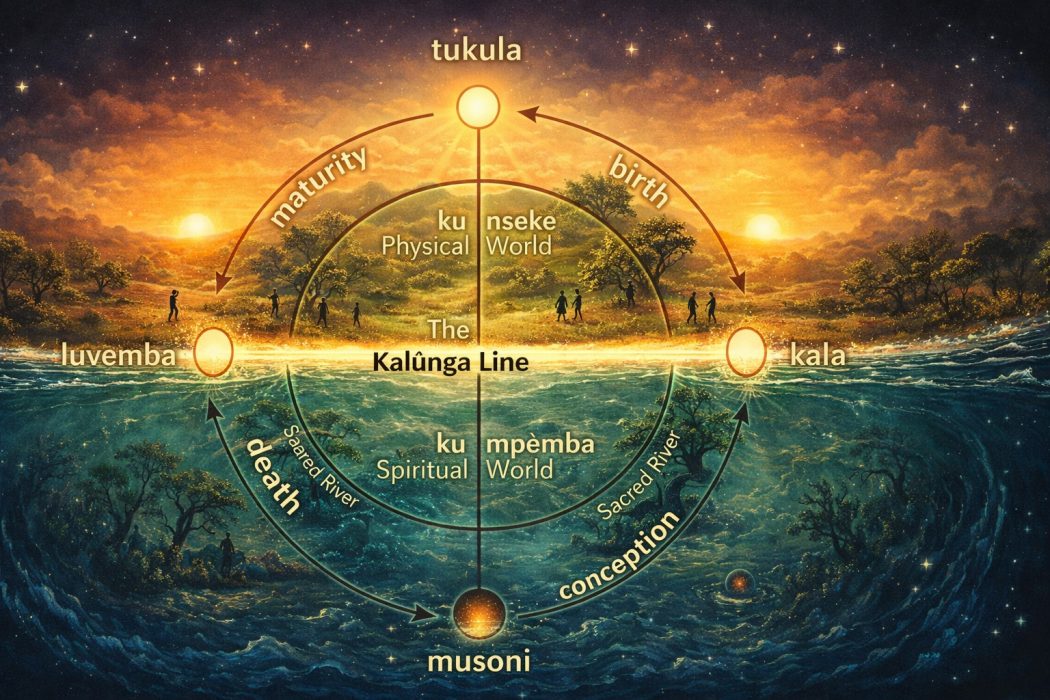
The first meaningful encounter between these two Trinities — the African three-world field and the Christian three-person god — offers profound insight. When the Portuguese arrived in the Kongo kingdom in the late fifteenth century, they met a society whose spiritual life centred on a cosmogram shaped like a cross. The Kongolese cross, or Yowa, represents a complex and dynamic knowledge system that maps the interplay between the physical and spiritual realms. It illustrates the division between the physical world of the living (Ku Nseke) and the spiritual world of the ancestors (Ku Mpémba), separated by the Kalûnga Line — a watery boundary marking the threshold between worlds. This cosmogram also reflects the human life cycle of death and rebirth, mirroring the sun’s daily journey.
Within this three-world relational field, Kongo Sacredness was already organised as a form of “trinity.” Nzambi a Mpunguis, the supreme creator and sky-father, associated with the sun and fire, who brings forth both the spiritual world (Ku Mpémba) and the physical world (Ku Nseke). The ancestors (moyo) are the “living-dead” whose spirits remain active in community affairs; their veneration forms the core of Kongo religion. Simbi (or bisimbi) are chthonic and water spirits inhabiting rivers, groves, and particular places. They mediate between Nzambi, the Ancestors, and the Living.
This three-part cosmology — the high creator, the realm of ancestors, and the spirit world — enabled the Kongolese to incorporate Christianity into their traditions. Missionary texts rendered God as Nzambi, mapping the Christian father onto the Kongo Supreme Being, while saints were identified with ancestor souls (moyo), effectively folding the Christian cult of saints into existing ancestor veneration. The Holy Spirit was translated as moyo ukisi—“spirit of a charm or power object”—linking the Spirit to nkisi power rather than replacing it. The Trinity was called antu a tatu— “three people” or “three persons.” Therefore, Kongo elites creatively “nested” the Christian Trinity within their own cosmology, while quietly sidestepping irreconcilable doctrinal points, such as the fate of the dead and Mary’s virginity. Rather than abandoning their own cosmology, Christianity was integrated into the existing relational field.
The Kongolese could integrate Christianity into their worldview because their spiritual landscape was dynamic and expansive, allowing for the inclusion of new beings within an already rich sacred universe. In contrast, Christianity — hardened by centuries of war with Islam and the Inquisition — could not reciprocate. It arrived with a closed canon and an accusatory gaze that labelled African Sacredness as “pagan” and relegated African spirits to the status of “lesser” beings beneath the authority of their singular Christian god.
As the Maafa intensified, Christianity, bearing its fangs with racist ideologies, severed this foundational relational ethic in the African diasporic world. The horror of Atlantic captivity is that not only do we have broken bloodlines, but we also have broken cosmological lines. What survives in the African-American spirit-culture landscape — Hoodoo, the Blues, fragmented memories of the Òrìṣà, flashes of ancestral knowing — are broken but potent pieces of that original field.
It is within this fractured sacred landscape that SINNERS unfolds. Coogler’s film vividly portrays what happens when, for one night in 1932, the three worlds briefly touch again in Mississippi. As Sammie sings, the camera begins to move in a slow circular arc around the juke joint, visually tracing the relational field that binds the Living, the dead, and the unborn into a single sacred circle. Musicians and dancers from different eras appear and disappear along this same circular path, and the “future” guitarist mirrors Sammie’s movement, showing how the seen and unseen worlds mirror each other and how bloodlines carry genetic memories. In that revolving motion, image and sound together make visible the three-worlds cosmos. Although it appears that Sammie’s song alone brings the three worlds into ritual drama, I argue that Smoke and Stack, as twins, create the liminal space in which Sammie can momentarily restore the field that has always been there.
Hoodoo: A Gateway to the Spiritual World
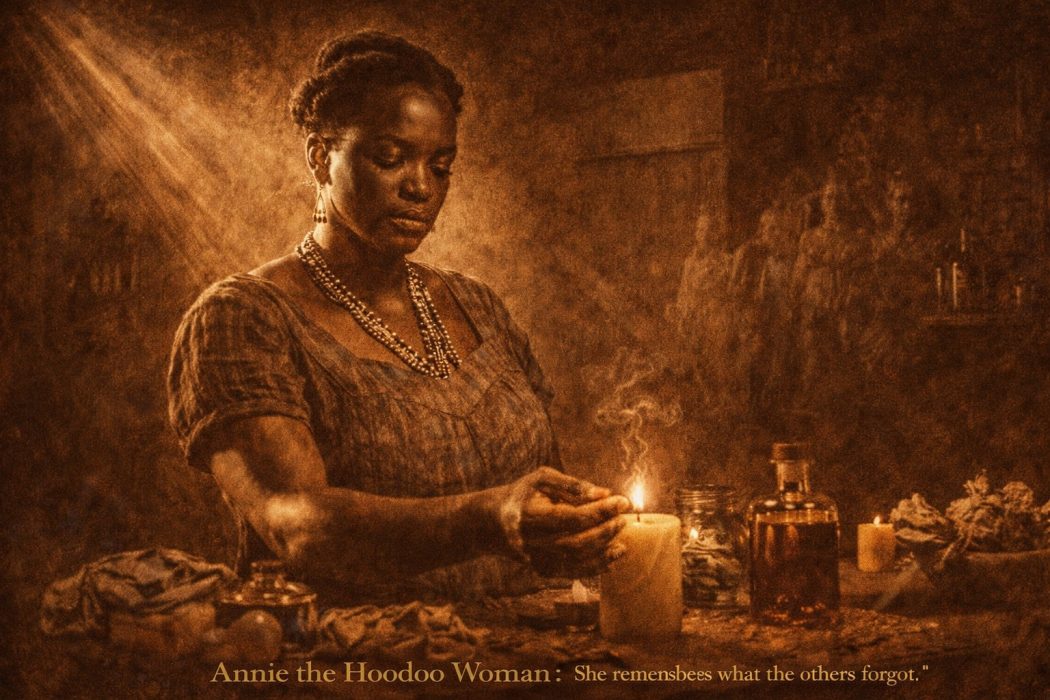
However, before I discuss the twins’ liminality, I must answer the question, “What is Hoodoo?”
Hoodoo is African-American, as Vodou is Haitian, Candomblé is Brazilian, Lucumí/Santería is Cuban, and Obeah is Jamaican. It is a unique spiritual blending of magic and medicine that grew from the African-American Maafa experience. Often called conjure or rootwork, Hoodoo synthesises West and Central African ancestral traditions with Native American herbal knowledge and European folk beliefs.
In the Mississippi region, Hoodoo has historically been linked with Voodoo, and evidence suggests they may share a common origin and were once considered synonymous. Yet there are important distinctions: Voodoo is a formal spiritual system, while Hoodoo is a more informal mystical tradition. Voodoo, rooted in the Vodun practices of the Fon and Ewe and influenced by Yoruba religion, was carried to Haiti and the wider Caribbean, where it evolved into organized faiths centred on spirit/Òrìṣà veneration. Hoodoo, by contrast, developed in North America, shaped by the experiences of captive Africans who carried sacred knowledge but did not always hold formal priestly roles.
More than half of all Africans transported across the Kalunga (Atlantic ocean) to the Americas came from West Central Africa. BaKongo cosmology — with its nkisi spirit bundles, nganga healers, and belief in a permeable boundary between the living and the ancestors — is considered the most direct ancestor of Hoodoo. Archaeologists have unearthed nkisi bundles on plantations in Virginia and Missouri. The leaders of the 1730 Chesapeake Rebellion and the Stono Rebellion of 1739 drew upon the Yowa cosmogram. It provided spiritual, military, and political guidance for its leaders. The Yowa is widely regarded as the origin of the crossroads concept in Hoodoo, though Yoruba influences are also present. This liminal space — where the living meet the departed — is governed, in Yoruba cosmology, by Eshu. In Hoodoo, the crossroads became the central site for petitions, offerings, and conjure work.
This idea underlies the Robert Johnson legend, which SINNERS explicitly invokes. Esu embodies the primordial, untamed aspect of creation and occupies thresholds — crossroads, marketplaces, and road junctions — but never the home. As a Yoruba poem describes: “Esu slept in the house, but the house was too small for him. He slept on the verandah, but the verandah was too small for him. Esu slept in a nut, and at last he could stretch himself.” Johnson’s midnight visit to the crossroads, the mysterious circumstances of his death at 27, and the saying that Eshu “kills the bird yesterday with the stone he throws today” all reflect this enduring theme of liminality, risk, and exchange.
In SINNERS, Hoodoo is built into the film’s architecture. The juke joint is a crossroads made physical — a Yowa drawn in wood, sweat, and sound. It stands at the intersection of Black Southern life and supernatural threat, of joy and terror, of the living community and the worlds pressing in around it. People arrive there from every direction: sharecroppers, Chinese shopkeepers, Choctaw hunters, musicians, hustlers, spirits. It is the place where paths converge, where bargains are struck, and where the cost of those bargains will be revealed.
Smoke and Stack, as twins, are the ones who open this space. In Yoruba cosmology, the Ibeji are born liminal beings, children of the crossroads whose very existence thins the boundary between realms. In the film, their decision to return and buy the “slaughter house” to remake it as a Black-owned space of music and pleasure activates the Yowa/Eshu field. They have become unwitting gatekeepers. The juke joint they create becomes the ritual ground on which Sammie’s song can do its deeper work — momentarily restoring the three-world field, and drawing the attention of every force, human and otherwise, that feeds on or fears Black sacred power.
Twins at the Gate: The Ibeji and the Juke Joint
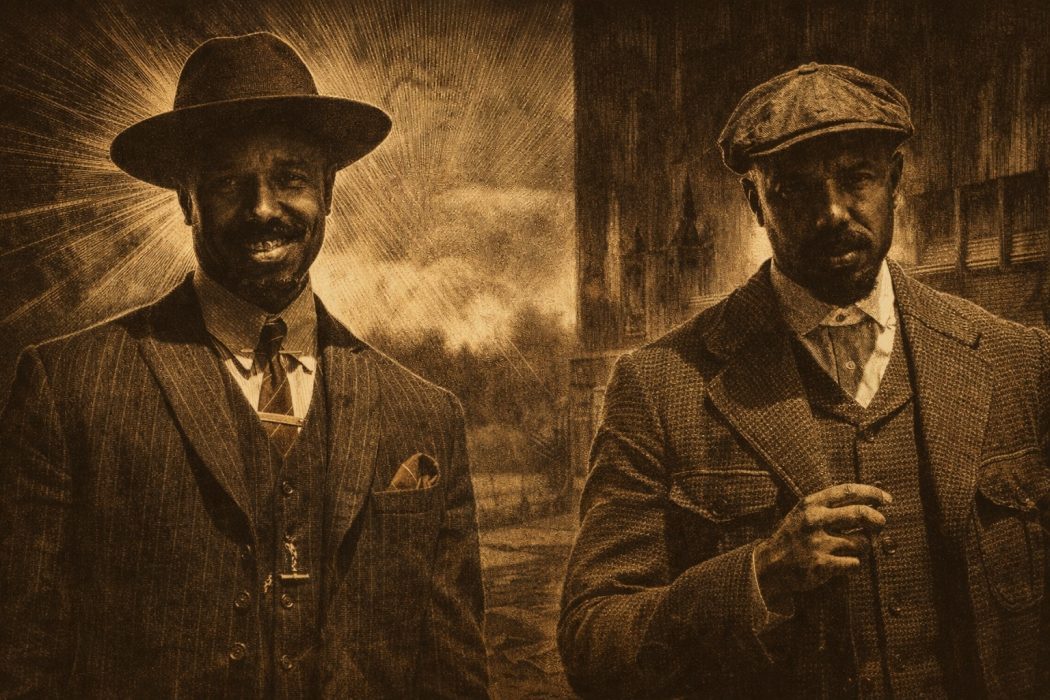
In the African view of the world, each person comes to fulfil a destiny bestowed even before birth and to attain the highest level of self-realisation possible — that of divinity or Godhood within human personhood. To assist in the unfolding of this destiny, each of us is given an unseen spiritual double. In Yoruba tradition, this unseen double can manifest in the human realm. Twins (Ibeji) are believed to be a single soul inhabiting two bodies, because their spiritual double are said to have been born alongside them into the physical world.
Ibeji are considered sacred beings and representatives of the twin-god Òrìṣà Ìbejì. They carry the most concentrated sacred charge of any human beings, with the capacity to influence both the physical and spiritual realms. They do not simply possess power; they are portals between worlds. The Ibeji are also believed to be under the protection of Sango, the Òrìṣà of thunder, and to act as his avengers against those who have done wrong.
According to traditional praise-songs (oríkì), twins have the power to transform beggars into “breadwinners” and poor individuals into celebrities, to make a parent’s business more profitable and their household prosperous, and to influence the economic status of their entire community. They are said to “clothe those who were naked.” However, their presence is a delicate balance: while they can bring immense happiness and success, they are also feared for their potential to unleash havoc and misfortune.
Critically, the Ibeji are seen as opening doors — both on earth and in heaven. An ancient Yoruba chant to the Ibeji declares: “You are the ones who open doors on Earth. You are the ones who open doors in Heaven.” When Smoke and Stack open the juke joint — when the Ibeji open a door — they are performing a cosmological act, not merely a business one. The tragedy is that the space they chose to buy is already soaked in blood and murder. By opening the juke joint, the twins open a portal of death even as they create a liminal space that allows Sammie to call in all three worlds. Remmick is drawn to the field the twins generate, not simply to the musician within it. He is a predator of sacred thresholds, a creature who lives permanently between life and death. The twins are archetypal warriors who, it seems, have been called to execute not only this being but also the human structures of oppression that made such an abomination possible. However, a betrayal, one of the three primordial wounds, will raise the arrow between the brothers.
Sammie’s Song and the potency of words
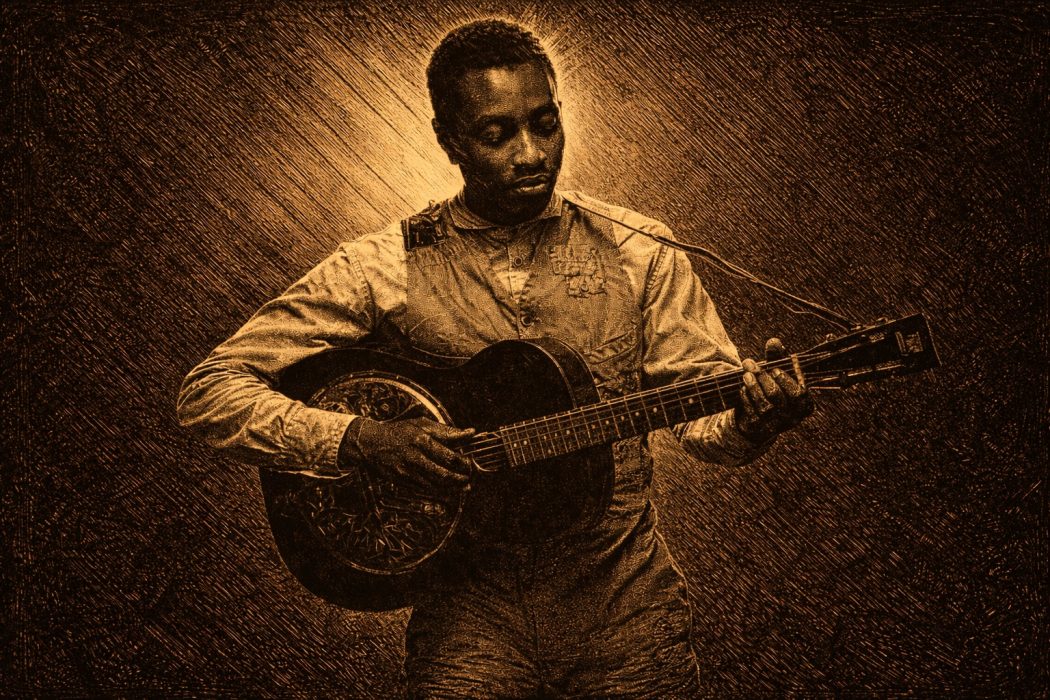
In African traditions, jeles (griots) were believed to possess magical powers. As custodians of ancestral memory and oral storytellers, jeles are the closest African antecedents to the Blues singer. Unlike most African music, which is often performed in groups and dominated by drumming, the jele typically sang solo, accompanying himself on plucked string instruments such as the kora, thereby distinguishing his role.
Even in death, the jele stood apart: rather than being buried in the earth, he was laid to rest in the hollow trunks of great trees, most famously the sacred baobab. In Senegambia, this practice symbolised keeping the singer-historian’s powerful words and wisdom “in the tree” rather than burying history in the ground. However, some oral traditions warned that burying a griot in the soil would make the land infertile or disrupt rainfall. Thus, while jeles were revered as sages, they were also feared for the fearsome potency of their words.
In SINNERS, Sammie takes on the mantle of the jele serving as a bridge between worlds. While the film implies that his singing alone pierced the veil between life and death, I contend that Sammie’s true power arose from the liminal space forged by Smoke and Stack. It also comes from Annie’s touch. Within African-diasporic spirituality, the laying on of hands is a sacred act for transmitting spiritual energy. Just before his performance, Annie reached out and touched him. Her brief but potent touch transferred spiritual energy into Sammie, infusing his music with ancestral power.
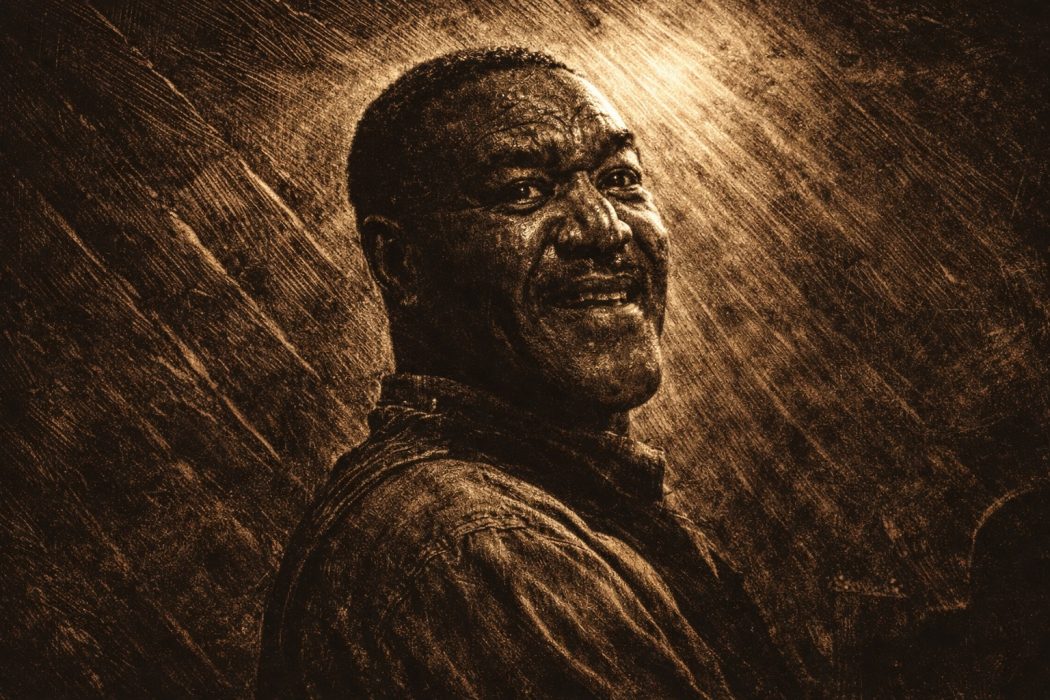
Sammie was not the only jele present in the juke joint. Delta Slim, an elder Blues singer, initiated him into the deeper mysteries of the Blues: that it is magic, sacred and big. Closer to the ancestral realm through age, Delta Slim embodied the power of libation—an act in African tradition where water and/or alcohol is poured to honor and summon ancestors. As an alcoholic, Delta Slim’s very body becomes a portal for ancestral presences in that liminal space. Ultimately, it was the combined influence of the twins (with Stack’s proud introduction, “It’s my little cousin, you all, watch this”), Annie, and Delta Slim that enabled Sammie’s music to bring the three worlds into being.
Sammie’s true power lies not only in his musical talent, but in the lyrical potency of two lines—“I lied to you” and “Somebody take me in your arms tonight.” These phrases operate as incantations, calling in deception and betrayal and forging a cosmological bridge. The vampires enter through Mary, who deceives Stack; when he embraces her, she consumes him. Stack’s death sparks chaos, forcing patrons to leave the juke joint and turning them into prey for Remmick. It is this otherworldly force of the jele’s music and words—so feared in Africa before the coming of the ships—that erupted into the limitless fire of existence. Like his West African antecedents, Sammie’s power lies less in performance than in the cosmological weight of his words.
Remmick, Fire and the Peoples of the Land
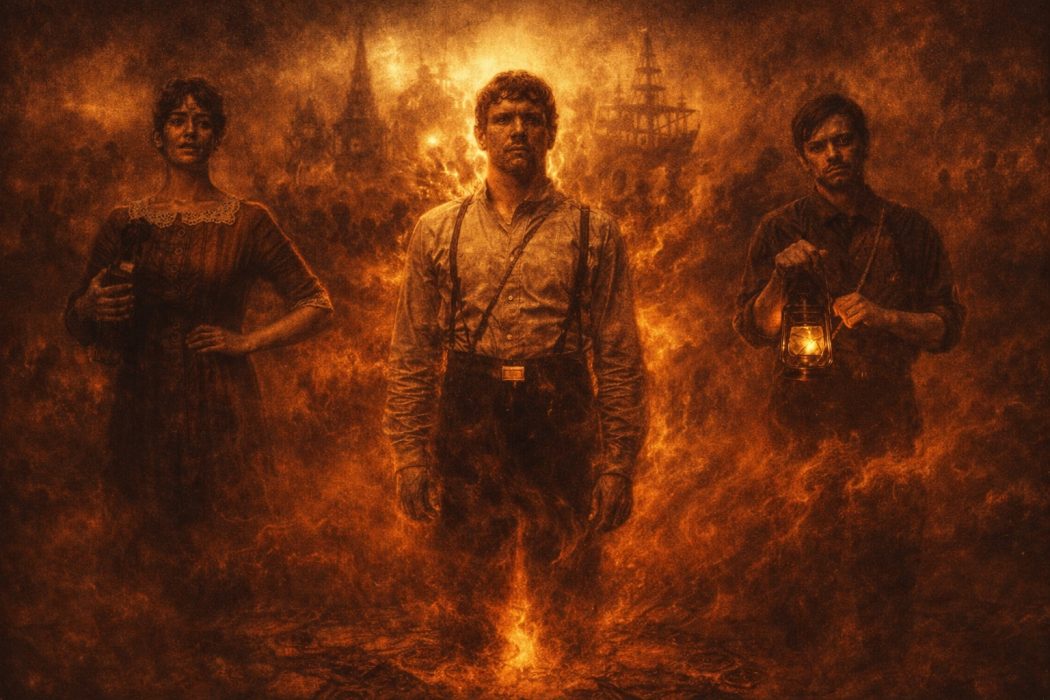
In SINNERS, Remmick—who is approximately 1,200 to 1,300 years old—embodies the intersecting forces of Christianity, colonialism, and capitalism. He represents the perfected form of this trinity, surviving by consuming the life‑force of others. As an Irishman turned vampire, Remmick encapsulates the paradox of the colonized oppressor. As the Jamaican saying goes, “everyone is beaten with the stick, but some get beaten by the shitty end of the stick.” Europe metes out violence to its own, but reserves the most brutal forms of oppression for those it deems “other.”
The Choctaw warriors who pursue Remmick demonstrate that before Africans were brought to Turtle Island (North America) in chains, Indigenous peoples on this land were the first to suffer the most brutal end of the stick—through dispossession of their territory, forced removals such as the Trail of Tears, and the attempted erasure of sovereignty over homelands inhabited for millennia. Africans endured this violence next, but with the added cruelty of oppression engineered to be permanent and generational—embedded in law, biology, economics, and theology. The Irish, too, were beaten, but they were offered an escape—at the price of wielding the stick themselves. To access whiteness, the Irish aligned with systems of racial oppression. Thus, Remmick, once a victim, now becomes a perpetrator. His history of forced Christianization and cultural loss shows he has already passed through the crucible of violence; instead of breaking the cycle, he perpetuates it. Therefore, the Choctaw warriors’ pursuit of Remmick represents their resistance to a centuries-old European predatory force.
SINNERS makes it clear: Remmick had already been devouring “spirit‑cultures” before arriving at the juke joint, a fact crystallised by his song choice, “Pick Poor Robin Clean.” Born from the African American Blues tradition, this song laments being stripped of everything—yet in SINNERS, it is the vampires who sing it. This goes beyond cultural appropriation, because it reenacts, on American soil, the Atlantic strategies that enabled Europe to seize Africa’s peoples and resources during the Maafa. Historically, European traffickers listened for the “music” of internal rivalries among African societies and exploited them—offering goods to one side, and taking captives from another. In the film, Remmick has learned the nuances of Black pain and joy well enough to perform them back to their originators, turning their dispossession into a tool for unlocking the colour line. The predators seek access by echoing a familiar refrain—the community’s own lament.
The motif of gold completes this structure of inversion. Historically, Europeans sailed to Africa in pursuit of gold and other riches. In SINNERS, however, it is the European who arrives bearing gold. By this point in history, Africa has been drained of both its gold and its people. In America, those taken from the land of gold now live in poverty and oppression. However, for the people in the juke joint, their true wealth is no longer mineral; it is something forged in the fire of captivity and segregation: their music. Black music, rooted in ancestral rhythms, ululating field hollers, and deep night groans, has become the new gold of African American culture. By the time the film is set, this music is already poised to travel the globe. Remmick understands this. What he truly covets is the music capable of summoning Ancestors and binding a community. He wants its spiritual essence.
As previously discussed, African cosmologies define personhood through one’s relationship to the three-world field—the interconnected realms of Ancestors, the Living, and the yet-to-be-born. To live outside this three‑world field—cut off from Ancestors and the sense of responsibility to future generations—a person is open to being led astray. This is why the vampire’s power in SINNERS is strongest where the ancestral connection is the weakest. Mary is the clearest example. As a light‑skinned Black woman who has survived by edging closer to whiteness, she is suspended between worlds, grounded in none. Grieving, lonely, and desperate for safety and belonging, she is especially vulnerable. Remmick recognises this instantly. He speaks to her with “tenderness” and offers the promise of escape from pain, race, and mortality. Although Mary recognises the trickster, it is too late.
In African and Indigenous spiritual systems, real protection against the Trickster—be he Esu, Anansi, Legba, or a pale‑skinned demon with a gentle smile—comes from intuition sharpened by ancestral guidance. This intuition is not a mere gut feeling, but a faculty honed through ritual, divination, and relationships with those who have crossed over. Priests, priestesses, diviners, and root workers know that their “second sight” is ancestral; it is the Ancestors who allow them to sense what is dangerous or out of balance. To truly become a seer—one who can discern that which is detrimental—requires a deep connection to your Ancestors. Annie exemplifies this wisdom. The Ancestors within her blood and her divinatory circle empower her to perceive what others cannot, and her Hoodoo is the only power that truly protects the community, even as she herself is marked for sacrifice.
In SINNERS, Christianity is depicted in its foundational imperial form. Its insistence on one God, one truth, and one path to salvation carries an implicit entitlement to consume the lands, bodies, and cosmologies of others. At the film’s outset, Sammie’s father serves as a mirror to Remmick: as a Black preacher cut off from his people’s three‑world relational field, he polices spirit on behalf of the colonial order. His disdain for the Blues and Hoodoo is cloaked in the language of “holiness” and “righteousness,” and his rejection of Sammie’s calling is framed as moral discipline rather than a sign of spiritual rupture. His judgment, forged in the fires of Christian violence, leaves smoke in his eyes—he cannot see Remmick for what he is and would likely have welcomed him into the community, hastening death and destruction.
As the religion of reason, Christianity teaches its followers to distrust divination, intuition, and dreams—severing them from the very network that could protect them from the violence of colonialism. In such a regime, capitalism flourishes, and attachment to material “things” (status, money, whiteness, safety) easily outweighs connection to the three worlds. This despiritualised environment is where Remmick thrives: he offers the ultimate package of things—immortality, beauty, freedom from racialised suffering—at the price of surrendering one’s music, community, and memory (history).
Taken together, these elements reveal the full depth of the film’s message. Remmick is the colonised oppressor, transformed into the perfect agent of oppression. His rendition of “Pick Poor Robin Clean” reenacts the old Atlantic tactic of weaponising the victim’s own stories and fractures. His gold inverts the legacy of extraction, showing that the true treasure now lies in Black creativity. His seductive power depends entirely on how far each character has been drawn from the three‑world field of ancestral connection. Those who still hear their ancestors—who know true wealth lies in relationship, not things—can sense the danger. Those severed from that field, like Mary, are drawn deeper into the vampiric orbit because they have been systematically taught to mistrust the very gifts that could save them.
The Broken Covenant: Annie’s Tear, Hoodoo, and the Unborn
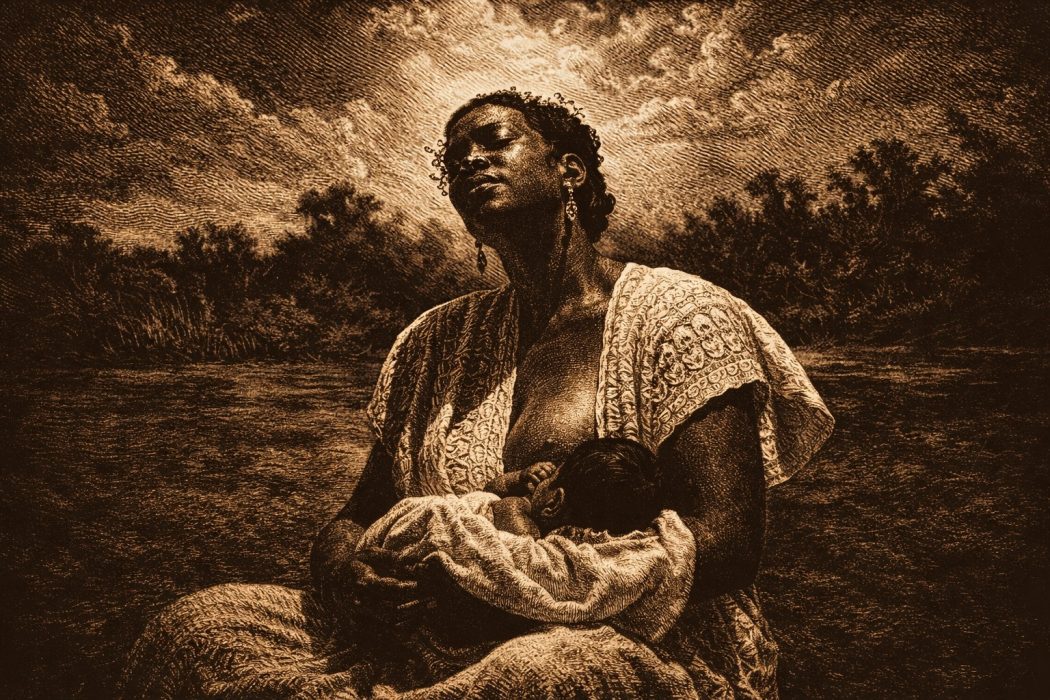
One of the film’s most powerful moments is Annie’s tear—a moment of overwhelming grief at the loss of her child, intensified by her inability to explain why her child died. Annie’s sorrow here transcends personal motherhood; it expresses the agony of a spiritualist unable to receive answers from the world she is oriented to. She holds ancestral connection and protective knowledge, yet her child is lost, and the explanation is cosmologically out of reach. This is the film’s most theologically honest moment, laying bare the profound incompleteness of Hoodoo as it survived the Maafa.
Although Hoodoo preserved its connection to the ancestors, it has lost its forward direction to the yet-to-be-born. In a complete cosmological system, the African sacred healer moved in three directions: backwards to consult ancestral wisdom, present to heal the Living, and forward to guide and protect those yet-to-be-born. The womb itself was seen as a magical chamber of destiny, and was addressed directly by the priesthood. Priests/priestesses could speak to the child before birth and prepare its path. The severing of this forward-facing dimension is the central wound dramatised through Annie’s tears.
The Maafa did more than hold us captive in a monstrous system; it fractured the cosmological timeline as the sacred relationship with the unborn was catastrophically disrupted. How can you speak to the womb when a child born into captivity might not survive, might be sold away, or worked to death? How can a sacred covenant with the yet-to-be-born persist in a system that treated Black children as property from conception?
When Black women’s wombs were turned into instruments of captivity by their oppressors, the sacred meaning of birth was violently disrupted. Women who resisted “breeding” were brutally beaten in public as a warning to others. Lacking any legal protection against rape, Black women faced relentless sexual violence and exploitation throughout their lives. As Hilliard Yellerday recounted, “[Buckra] would sometimes go and get a large hale hearty [Black] man from some other plantation to go to his [Black] woman. He would ask the other [Buckra] to let this man come over to his place to go to his [captive] girls. A [captive] girl was expected to have children as soon as she became a woman. Some of them had children at the age of twelve and thirteen years old. [Black] men six feet tall went to some of these children.” Harriet Jacobs likewise documented the sexual abuse endured by adolescent girls like herself in Incidents in the Life of a Slave Girl (1861). Thus, the priestess who once communed with the unborn was replaced by a midwife who would rather see the child return to Africa than be born into bondage. Court documents reveal both real and perceived cases of infanticide committed by captive women. Even the departed might refuse rebirth into such a monstrous system.
The opening of The Famished Road by Ben Okri beautifully evokes the world of the unborn who choose to become Abiku (born to die): “In that land of beginnings spirits mingled with the unborn… There was much feasting, playing, and sorrowing. We feasted much because of the beautiful terrors of eternity. We played much because we were free. And we sorrowed much because there were always those amongst us who had just returned from the world of the Living. They had returned inconsolable for all the love they had left behind, all the suffering they hadn’t redeemed, all that they hadn’t understood… There was not one amongst us who looked forward to being born. We disliked the rigours of existence, the unfulfilled longings, the enshrined injustices of the world…the fact of dying… We feared the heartlessness of human beings, all of whom are born blind, few of whom ever learn to see.”
In Yoruba ontology, “iku ya j’ẹsin” (“death is better than ignominy”) made suicide an honourable option when life became unbearable, disgraceful, or perilous. Suicides during the Maafa were acts of resistance; these spirits might refuse to return. Like Azaro in The Famished Road, they cross the gateway between birth and death repeatedly, lingering at the threshold, because they “feared the heartlessness of human beings”.
During the Maafa, a rupture occurred between the spirit world and the Living: we stopped speaking to the womb! Black women’s children are dying—a living continuation of this original severance. Even the numbers tell the story: Black infants are more than twice as likely to die before their first birthday, Black mothers face pregnancy-related death at three to four times the rate of European women, and Black children move through worlds of violence, policing, and imprisonment that mark them for early graves. These “disparities” are the statistical footprint of a cosmological severance: the rupture in the relationship between the unborn and the Living that receives them.
In an intact African cosmology, the womb is the threshold between the unborn and the Living—the most sacred portal, traversed by every human being. Yoruba tradition recognises Ori, the spiritual double given to each person before birth, and requires the community to spiritually receive the child, acknowledging the soul’s sacred agreement. Naming ceremonies, pregnancy rituals, and divination to understand the soul’s mission are the living community’s side of the covenant with the unborn.
When this was destroyed—when the arriving child became property, unnamed, unclaimed and perhaps unwanted by their cosmological community—the covenant broke. The unborn spirit-child arrives to find no priestess awaiting them. Over generations, the womb remained biologically functional but cosmologically silent. Annie’s tears echo every Black mother who has lost a child with no cosmological framework to give meaning or offer protection. Western medicine and psychology cannot replace this loss.
The Ancestors have been reclaimed through Hoodoo, Vodou, Candomblé, Lucumí/Santería, and other diasporic Sacredness. The Living community has been partially healed through Black Consciousness. But the third world—the yet-to-be-born, the arriving souls, the children not yet conceived—remains the most damaged and least addressed. Those who knew how to speak to the womb were more than healers; they embodied the community’s covenant with the future. Without them, the future arrives unannounced, unprotected, unclaimed. In other words, the unborn—the third world in our cosmology—have been arriving into a field that has forgotten its obligations to them.
Annie’s child dies, and she does not know why. The part of the tradition that could have spoken to that child before birth and prepared the path did not survive the crossing. Our children wait for us in the spirit world, rather than living and thriving here. This, for me, was the most painful part of SINNERS.
Mary, Marian devotion, and the Death of the Dark Mother
Annie’s death was striking—and rooted in resistance. It resonated with the stories of women warriors during the Maafa, such as Dandara of Brazil, who chose their own passage to the spirit world rather than submit to a fate imposed by the oppressor. Annie’s blue dress immediately evoked Yemọja (Yemayá/Iemanjá), the great mother, drawing my eyes to search for the Òrìṣà within each character.
I saw Stack as the embodiment of Elegba and Shango, channelling dual Òrìṣà energies through his twin nature. Elegba, guardian of crossroads, is the divine linguist and unpredictable trickster; Stack mirrors this by living with “two mouths” and facing the darker aspects of existence head‑on. His style—hat, attire, and magnetic presence—reflects both Elegba’s cunning and Shango’s boldness. As the Òrìṣà of thunder, lightning, fire, justice, and masculine power, Shango manifests in Stack’s warlike nature: his love and appetite for action are total, just, and destructive. Yet Stack remains a benevolent figure, wishing prosperity for all while pursuing his own abundance. He moves through the world with Shango’s electric, sensual energy. Shango’s colours, red and white, become motifs in Stack’s journey—by the film’s end, his world is engulfed in fire and blood. Stack’s vampiric immortality fully realises the Shango archetype: in Yoruba tradition, Shango does not die but becomes thunder itself rather than perishing.
Smoke is a more complex character, embodying both Obatala and Ogun. Obatala, the Òrìṣà of creation, purity, moral clarity, wisdom, and white cloth, is the elder who shapes humanity and carries the weight of righteousness. Smoke upholds the moral line, sacrificing himself and Annie rather than allowing corruption to fester, bearing the burden of his community’s survival on his conscience. Ogun, the Òrìṣà of iron, labor, war, and the forging of new paths, is equally present. Smoke is the builder, forging the juke joint with his own hands, wielding iron as both weapon and tool. His ethic is grounded in work and protection. Like Ogun, he clears the way for others—his death enables Sammie to escape into the future, embodying the continuation of the Blues tradition. Ogun is also associated with sacrifice; after an act of violence in a moment of blind rage, Ogun withdrew from human company. Smoke’s final acts echo this quality—necessary, devastating, and self-punishing, leaving a bitter aftertaste to an otherwise sweet victory. Notably, Obatala is often referenced as Yemoja’s husband, while as Yemaya Okute, she is also the warrior spouse of Ogun.
Yemoja is the great mother of waters—the Òrìṣà of the ocean, the womb, and grief carried with grace, especially for the children who did not survive. Her domain is the boundary between worlds: the ocean as the ultimate threshold, the place from which captive Africans were taken and to which the dead return. Annie herself lives at a threshold—her home sits beside her daughter’s grave. She moves between the Living and the departed, carrying the permanent wound of her child’s loss without breaking. Yemaya’s colours are blue and white, deep water and foam. Her energy is both nurturing and devastating, embodying both gentleness and immense power at once.
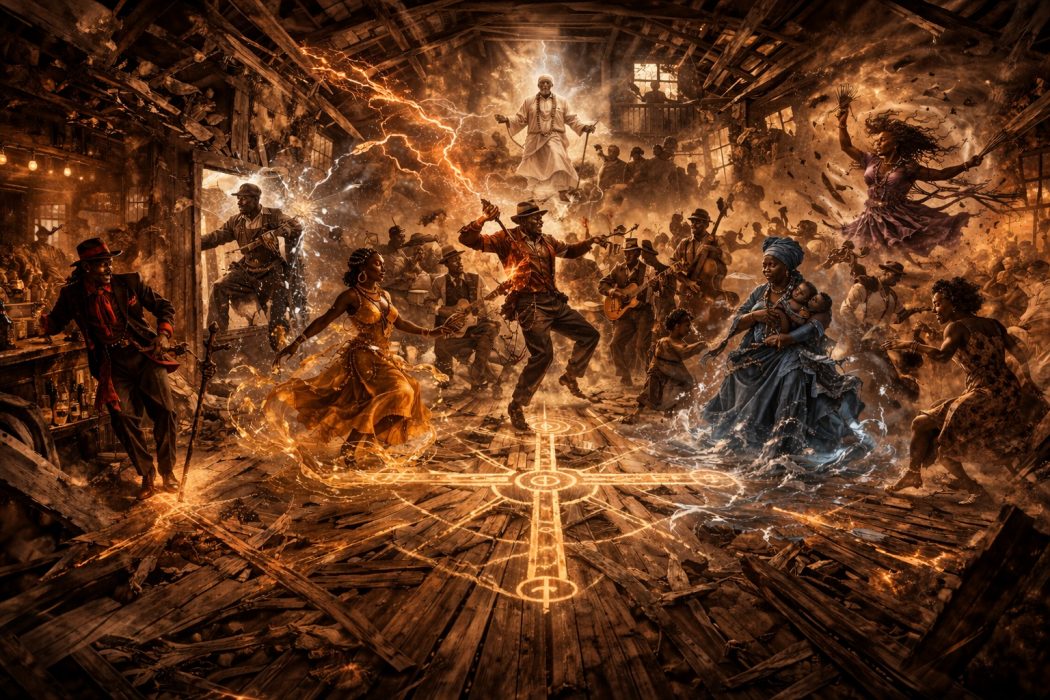
When viewed through the Òrìṣà framework, the juke joint is transformed from a mere crossroads into a temporary Ilé-Ifẹ̀—the sacred city of Yoruba cosmology and the origin point where the Òrìṣà first gathered in the world. For one night, Obatala–Ogun (Smoke), Shango–Elegba (Stack), and Yemaya (Annie) share a space, their energies intermingling in communion. Oshun (Mary) and Oya (Pearline) are also present. Oya’s beauty is so compelling that it cannot be ignored—nor can Sammie look away. As Oya, Pearline fights to the bitter end to protect Sammie, and perhaps this love proves essential to his self-actualisation. The music Sammie plays tears time open, because this gathering restores a sacred wholeness that the Maafa laboured for centuries to destroy. The vampires are not merely attacking a building; they are attacking a fleeting moment of African cosmological reunion on American soil.
The tragedy lies in the impossibility of sustaining Ile-Ife. The Klan, the vampire hive, the very night—refuse to let it endure. Yet Coogler’s message, revealed through Sammie’s survival, is that the Òrìṣà do not die; they transform, migrating through time and reappearing in every generation, adopting new guises. Stack and Mary, as seen in 1990s hip-hop, are Elegba/Shango and Oshun continuing their journey through the world—perhaps the most positive way to interpret this. Sammie, as Buddy Guy, embodies the living jele tradition. The film concludes with the promise of continuation.
However, seen from a deeper cosmological space, Annie’s death is also an echo of the death of Auset—Isis.
The worship of Isis spread from Egypt into Europe long before Christianity, carried by Mediterranean trade and imperial expansion. Merchants, sailors, soldiers, and migrants brought her cult from Alexandria to key ports—Piraeus in Greece, Puteoli, Delos, Sicily, and the Italian mainland—from the 4th to 2nd centuries BCE. In these new contexts, Isis was reimagined through Hellenization: her hieratic Egyptian form softened into a more human, classical beauty, merging with local goddesses such as Demeter, Aphrodite, and Fortuna. Through this process, she came to embody a powerful “Black Goddess” aspect—a sorrowing, esoteric Mother who mourned Osiris (Ausar) and instructed initiates in hidden wisdom. This archetype later echoed in European images of a dark, grieving Lady.
Isis’s worship persisted well into the Christian era. Festivals like the Navigium Isidis continued in Italy as late as 416 CE, and in Egypt into the 6th century, before eventual suppression. The Navigium Isidis (“Vessel of Isis”), held annually on March 5, honored Isis as protectress of sailors, shipping, and, by extension, Rome’s grain supply. The festival featured a grand procession from the temple to the sea or nearest river: priests and devotees, elaborately costumed, carried sacred emblems and a richly decorated model ship, which was blessed and launched as a ritual for safe navigation and prosperity.
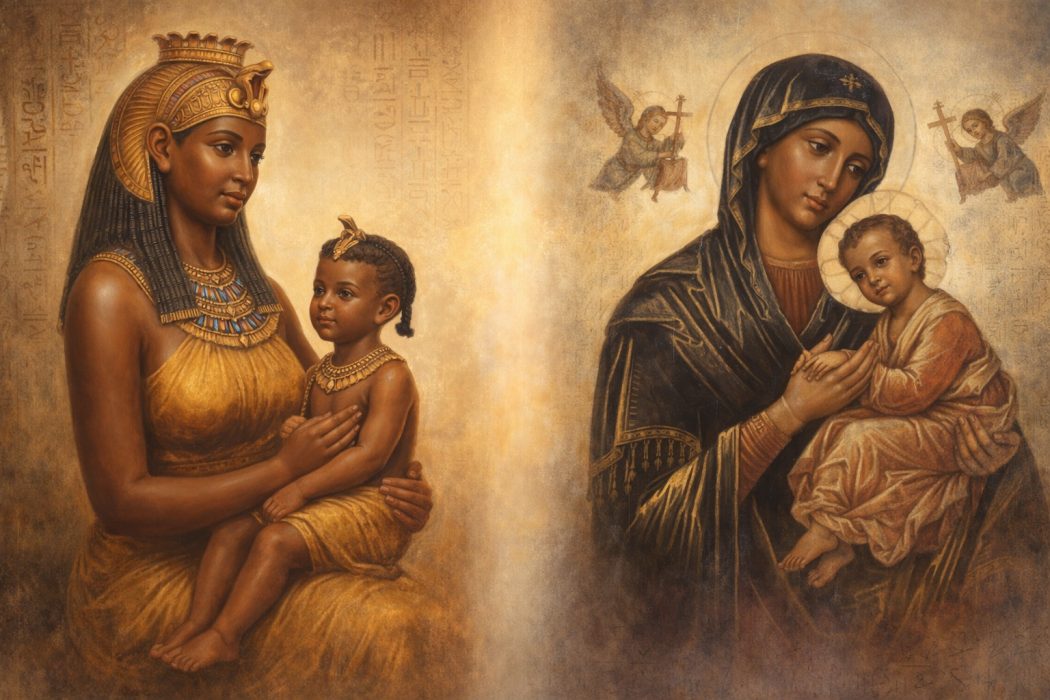
With the rise of Christianity in the 4th century CE, Isis’s public worship declined, her forms and functions submerged and translated into Marian devotion. The most direct continuity is found in the Isis lactans image—Isis seated on a throne, nursing the infant Horus (Heru)—which became a visual model for the Madonna and Child. As Mary was honoured as Mother of God, she adopted this mother-and-child pose and absorbed Isis titles and concepts: Isis as “throne” (Auset) becomes Mary as “Throne of the King,” and the cosmic Isis is mirrored in Mary’s emergence as Queen of Heaven and universal protectress. In some cases, Christian sanctuaries dedicated to Mary were established on or near former Isis sites, further blending the older goddess into Marian tradition.
Many Marian images and symbols can be read as Christianized Isis motifs. Revelation’s “Woman clothed with the sun, with the moon under her feet” echoes the lunar and celestial imagery of Isis as Queen of Heaven, now recast in apocalyptic Christian terms. Mary trampling the serpent reworks earlier depictions of Isis standing over dangerous creatures, symbolizing her victory over Set and chaos. The winged Isis, spreading her arms protectively over sarcophagi, finds distant parallels in the language of divine sheltering wings and in later winged Marian or angelic imagery. Even imperial scenes at Philae, where Augustus or Tiberius offer myrrh and incense to Isis, serve as iconographic precursors to the Christian nativity motif of rulers or “kings” bringing gifts to a mother and child.
Within this long translation, the “Black Goddess” aspect of Isis is especially significant for understanding the emergence of Black Madonnas. Her dark, mourning, initiatory face—tied to night, earth, and hidden wisdom—reappears in European Black Madonnas, who combine maternal tenderness with sorrow, depth, and protective power for the poor and oppressed. The worship of Isis was submerged, re-coded, and carried forward in the images, titles, and ritual imagination surrounding Mary—especially the Black Madonna.
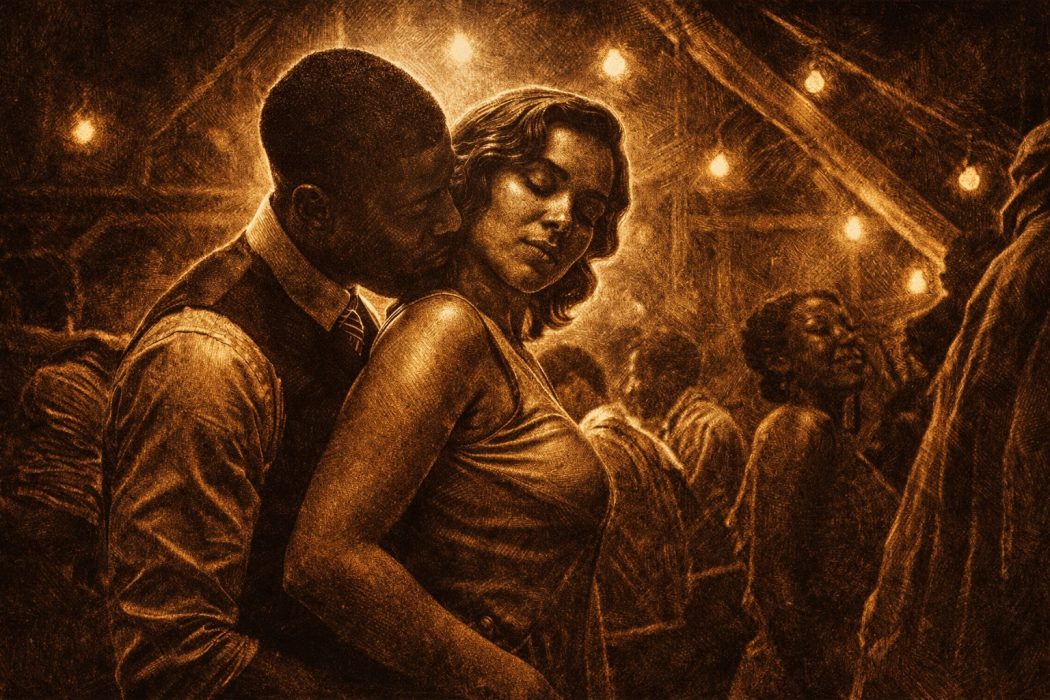
In SINNERS, Mary is the character through whom the vampire hive enters the juke joint—the sacred space. She is Stack’s lover, his vulnerability, and ultimately, his undoing. The breach is opened through Mary. This is cosmologically precise to an almost unbearable degree: the substituted sacred feminine becomes the point of entry. The imposed Mary—the pale, docile, replacement for the dark mother—is exactly how the colonial virus penetrates the sphere the Ibeji created. Stack’s love for Mary is real, yet it destroys him. This is the structure of Marian devotion in the diaspora: a genuine spiritual hunger, misdirected toward a figure designed to replace the very thing being sought.
The Catholic and Protestant Marian traditions substituted the image of the pale mother with the child over existing African mother-goddess traditions, precisely because those traditions were so deeply rooted they could not be erased. Mary became the colonial overlay for Auset, Yemaya, Oshun, and every African sacred feminine tradition that centred the dark mother as the source of life, wisdom, and cosmic order.
Annie’s death, as the death of Auset/Isis, carries the full weight of what the Maafa destroyed. Auset is not merely an Egyptian goddess; she is the archetype of the restorer—the one who gathers Osiris’s scattered pieces and reconstitutes the sacred whole. She is the mother who crosses death itself to retrieve what was lost. As the original cosmic healer, her iconography—dark mother, sacred child on her lap—predates and directly inspires the Christian Mary by thousands of years.
Annie enacts Auset’s role throughout the film: she gathers the community’s scattered spiritual power, diagnoses the supernatural threat, and maintains the protective field. Her death at the hands of Smoke—Obatala-Ogun, the masculine sacred—is not driven by hatred, but by the tragic logic in which African patriarchal structures, under colonial pressure, became complicit in suppressing the sacred feminine. Smoke stakes Annie to prevent her from turning, believing he is protecting the community. Yet, cosmologically, he is reenacting the suppression of Auset—the moment the African sacred feminine is sacrificed for an order that cannot fully honour her.
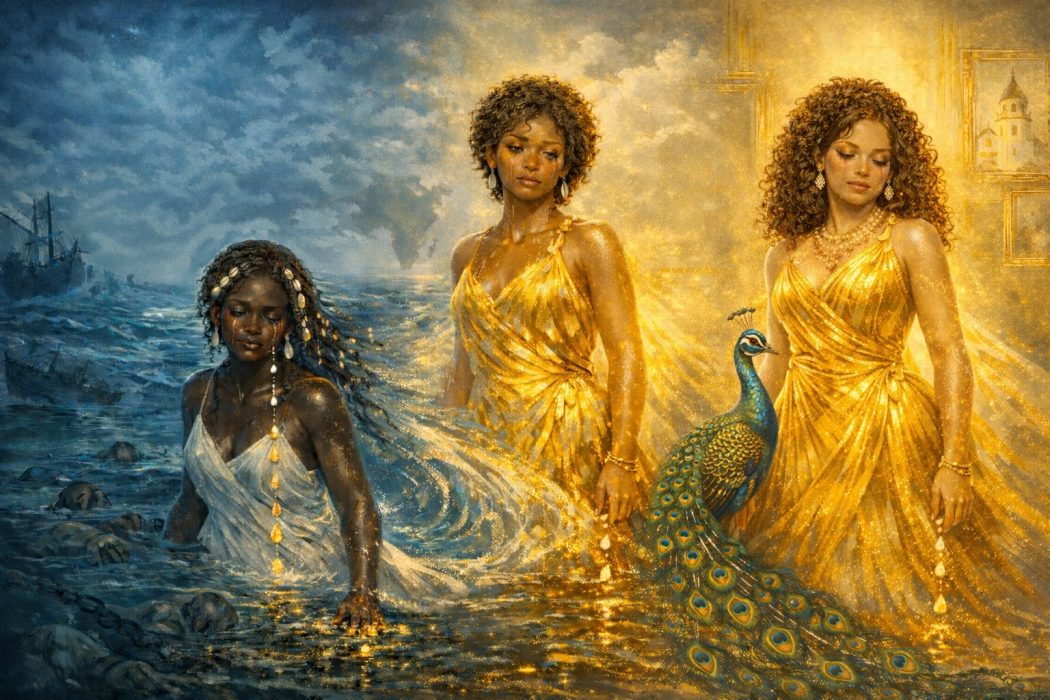
Just as Auset’s image and power were translated into Mary, so too were the energies of the West African sacred feminine translated and displaced in the New World. Oshun shares the same deep pattern as Isis, where her image was lightened, softened, and recoded to fit the oppressor’s gaze.
Many stories tell of Oshun—the Òrìṣà of fresh water, love, beauty, fertility, and abundance—shedding tears when the Maafa descended upon Africa. These tales often end with Oshun becoming light-skinned, her clothes transformed to gold by the salt of her tears. Oshun’s rebirth in the diaspora encodes the trauma of the African sacred feminine, forced under the gaze of oppressive beauty standards: the dark goddess, literally bleached by sorrow.
Colourism in the African diaspora—the preference for lighter skin, the social capital linked to proximity to whiteness, is a sociological phenomenon and a cosmological wound. The dark mother was told her melanin was not beauty and her power was dangerous. She wept, and in her weeping, was told her tears had made her more acceptable. This is Marian substitution at the level of the body itself: the African sacred feminine internalizing the oppressor’s aesthetic that replaced her.
In SINNERS, Mary is light-skinned while Annie is dark. The film’s visual grammar illustrates the substituted, more acceptable, lighter sacred feminine—Mary—who opens the door to destruction. The original dark mother, Annie, sustains the protective field until her sacrifice. Yet Annie’s death becomes a passage. She crosses over to her daughter. Auset does not die. The original African mother-goddess tradition is still operating from the ancestral realm—the very field Sammie’s music briefly restored.
Living in Night: Social Death as Cosmological Severance
In Zulu cosmology, the soul is envisioned as a sphere of pure transparency that contains two worm-like entities—one red, one royal blue—embodying the dual forces of good and evil within each person. The red worm signifies negative qualities: dishonesty, cruelty, pride, cunning, perversity, cowardice, and moral weakness. Conversely, the royal blue worm represents loyalty, courage, honesty, love, and compassion. Locked in perpetual conflict, these entities enact a moral drama within each human life; when the red worm wounds the blue, the individual is overtaken by base impulses—toward theft, violence, or worse.
In SINNERS, the colour of the twins’ clothing is deliberately used to visually differentiate the brothers and underscore their contrasting temperaments. Consistently associated with blue, Smoke’s cool, calm, and restrained personality is mirrored in his blue-toned attire, including an Irish-style flat cap or newsboy hat. He appears as a stoic, no-nonsense leader and pragmatic realist, responsible for the “muscle” side of their business. Stack, by contrast, is primarily dressed in red, which highlights his passionate, impulsive, and fiery nature. His red wardrobe, featuring an Italian-style gambler hat or fedora, underscores his role as the “dreamer” and charismatic strategist who manages entertainment and advertising for their juke joint.
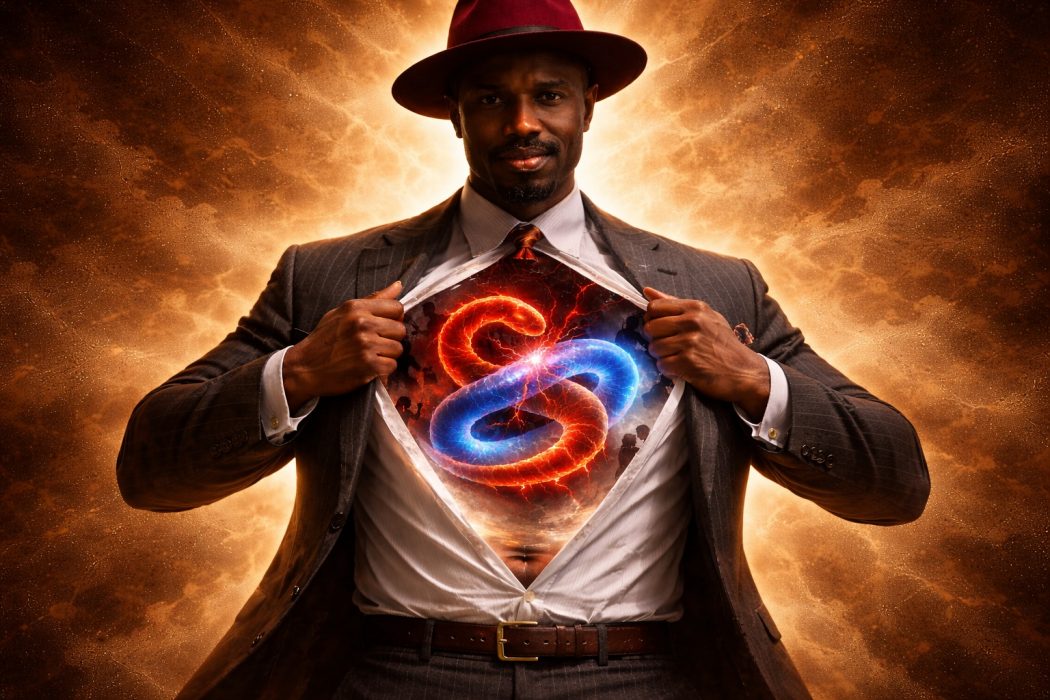
Viewed through the lens of Zulu cosmology, Smoke and Stack personify a divided soul. Stack represents the negative current of the sacred twin, the red worm overwhelming the blue. His character is marked by greed and deception—even his name, “Stack,” points to his obsession with accumulating wealth, and, more darkly, the stacked bodies and broken futures that capitalism leaves in its wake. He embodies trickster energy and the hustler’s ethic, so material things become his chosen path to fulfilment. This moral imbalance makes him the “weaker” twin, especially vulnerable to spiritual corruption, and sets the stage for his descent into a form of undeath that will pull his brother—and their entire world—toward night.
By the film’s end, Elias (Stack) Moore’s journey culminates in his immortal existence as a vampire, having spent sixty years in the shadows with Mary. He visits an elderly Sammie—now portrayed by Blues legend Buddy Guy—who is finishing a set at his own club, “Pearline’s.” Sammie’s face bears the scars of that night, a testament to how the past has marked us. For those of us born on this side of the Atlantic—descendants of Africa’s sons and daughters carried away into captivity—we inherit the Maafa itself. We belong to loss, to rupture, to a history of captivity and resistance. Yet the oldest human soul is an African soul. This is why our Ancestors survived the unsurvivable. And they survived with style, as we say in Jamaica. Our music is sweet. Our suffering has been transformed into a wonder of the earth.
Yet the spiritual warfare continues, generation after generation.
This undead state that Stack represents reflects “Social Death”, Orlando Patterson’s term for the condition of those in captivity. Yet Social Death describes not only the destruction of social personhood but the attempted unmaking of an entire cosmological field—the web linking the Living, the ancestors, and the unborn.
In this sense, Stack’s vampirism stands as a metaphor for Black existence under oppression: a forced life in shadow, barred from the true sun that once signified the sacred center. Across the African world, the sun is not a distant abstraction but a living symbol of divine presence—expressed in Yoruba concepts of Ori (inner head, destiny), Kemetic Ra, and the BaKongo dikenga, which charts the sun’s journey between realms. These traditions placed Black people not in darkness but at the very heart of light. The oppressors could not merely enslave Africans; they first had to invert their cosmology. European Christianity arrived with a calculated grammar: darkness = sin = Africa = Blackness; light = salvation = Europe = whiteness. This was not accidental theology, but a deliberate act of cosmological warfare. To justify the Maafa, the oppressor seized the sun itself, transforming it from a radiant symbol in African sacred systems into a weapon of destruction.
Stack’s inability to withstand sunlight arises from the fact that light itself has become the instrument of his undoing: the European “Son of God” landed alongside the slave ship and the gun, the missionary cross preceding and sanctifying the whip. Beneath that sun, the African is always already condemned. To be cosmologically born for an African solar sacred and then exiled from the sun is to be severed from one’s metaphysical home. Stack is doomed to a Christianized night in which his Blackness is synonymous with the absence of light, his existence confined to the underground economies and after-hours margins of American life. Here, Social Death becomes a solar catastrophe.
If Stack is the inverted twin of the sun, Sammie is the one who remembers its true warmth. Sammie is the jele and Blues hero who meets catastrophe not by fleeing but by improvising through it with style and resilience. His gift is never “just music”—it is a cosmological force. Through song, Sammie pierces the veil between past, present, and future. His music is dangerous because it is unvarnished truth; it unsettles the fragile boundary between the living and the dead—a space vampires also traverse, but for predatory ends. When Sammie plays, time becomes porous. Ancestors gather. The Living are, for a moment, restored to a world where they are neither socially nor cosmologically dead but embraced in a field of belonging.
This is why it matters that Sammie finally steps into daylight. The film envisions him carrying his scar—the wound of that night—as he becomes a legend. He is the Wounded Artist, his body bearing the cost of channeling the space between worlds. Yet he inherits the sun that Stack could never reach. Critically, this is not the European son, the missionary “light of the world” that justified conquest, but the African solar sacred: Ori, Ra, the summit of the Kongo cosmogram, Shango’s lightning restored to its true name. Sammie’s music is sunlight in another key; it illuminates, warms, and reveals without replicating the oppressive glare that burns Black life. In Sammie is the possibility that Black people may again dwell in a light that is wholly their own.
In Native American mythologies, Africans are seen as guardians of water, while Europeans are guardians of fire. To carry water is to hold memory, purification, and rebirth. Naming Africans as water-guardians asserts that Black life, even in exile, retains the medicine for all that has been burned—the power to cool, cleanse, and reweave the world. Europeans, as fire-bearers, have weaponized their element, transforming it into the furnace of conquest—the blaze that consumes both Indigenous and African lives. In SINNERS, this elemental assignment is dramatized through Remmick and the worlds gathered around him.
Remmick emerges in this cosmology as the custodian of the oppressor’s fire—a European who has spent centuries burning through Indigenous and African life on Turtle Island (North America), a vampire whose survival depends on predation and whose elemental force has been turned ruthlessly outward. In Hopi prophecy, the fire clan is entrusted with fire’s sacred purpose but can corrupt it, wielding it for domination instead of warmth. Remmick is this betrayal incarnate. He cannot endure the sun—the harsh daylight that unmasks his monstrosity—but thrives in the dark spaces where those marked for Social Death are forced to survive: night economies, underground clubs, the fringes of American visibility. It is there he hunts, among cosmologically severed lives, improvising survival.
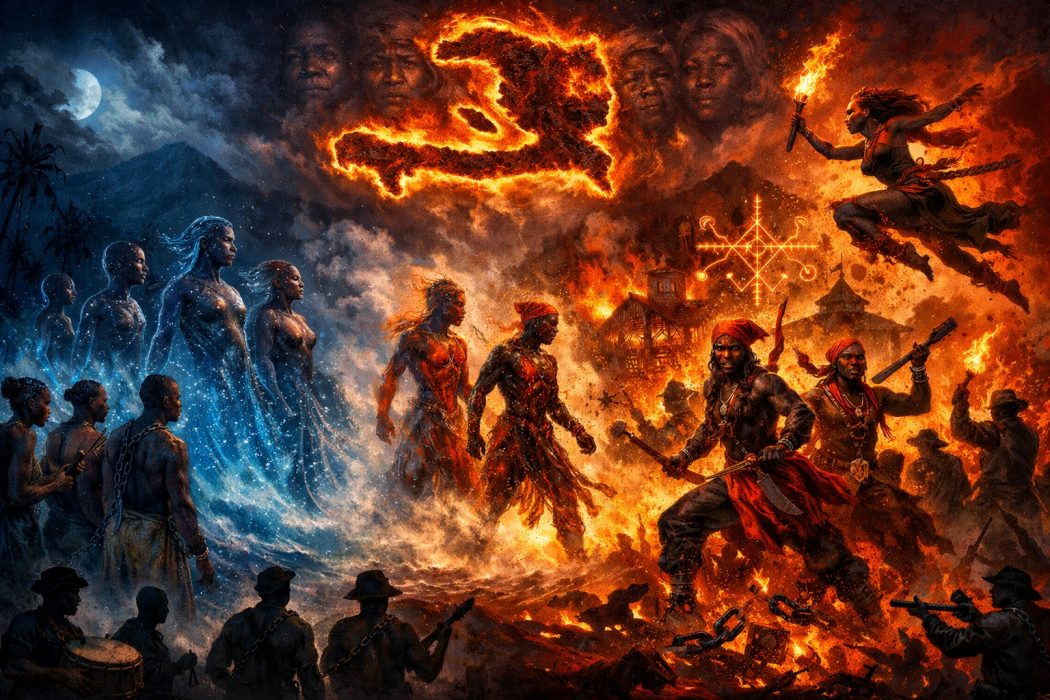
In Haiti, the water clan was forced to meet the oppressor’s fire with a fire of their own making. To resist, captive Africans in Saint-Domingue could not depend solely on the gentle, cooling Rada lwa—spirits of ancestral waters and home. Confronted by the brutality of New World violence, they forged Petro lwa: hot, fierce, and aggressive deities born of flame and iron. Petro spirits are “New World children,” creations of the plantation and the whip, associated with the color red, with money, power, and protection. They are not merely destructive; they are sacred fire, transformed and redirected for survival and revolution. To say that in Haiti we had to let go our water deities and forged new ones out of fire and ash, acknowledges the devastating cost of that transformation. Water-guardians became fire-wielders, forced by a world restructured as fire itself.
This was sacred fire redirected toward liberation; its heat aimed at breaking chains and overturning oppressive orders, not destroying entire peoples. In this context, the creation of Petro lwa becomes an act of cosmological self-defense. Remmick, as a representative of the Hopi fire people gone astray, embodies the unholy fire of conquest. Petro spirits—the Haitian fire deities—serve as the necessary correction, the counter-fire that refuses to leave this element in European hands. They embody the refusal to accept social and cosmological death as inevitable.
In SINNERS, however, Remmick is not finally undone by fire but by metal, wood and light. The fight moves from the juke joint into the open, and he dies in a body of water as the rising sun burns him away. The predator who has misused fire is forced into the African sacred element. The elements themselves pass judgment: water receives him, light exposes him, and his stolen immortality evaporates. Grace’s ancestral element is wind. She literally threw fire through the air, before staking her husband and dying with him in a fiery blaze. Here, the different responses become clear: the water clan wants to wait and endure; the air clan moves swiftly, cutting through the crisis.
All of this unfolds within a broader diagnosis: the violence of Maafa-era Christianity was not merely theological but an act of cosmological amputation. The oppressors did not stop at owning bodies; they cut spiritual cords binding those bodies to Ancestors and descendants. African names—carriers of lineage, destiny, and cosmological identity—were erased. Ancestral veneration was denounced as heathen idolatry. The cyclical African sense of time, where the dead and unborn remain close to the Living, was replaced by a linear narrative in which Africa exists only as prehistory—a darkness dispelled by the so-called “light” of the Gospel. Captive Africans were told their unbaptised ancestors languished in hell, rendering any longing to reach back not only forbidden but sinful. Social Death, in this sense, masks a more profound Cosmological Death—a project to render Black people orphans in time.
When I speak of “living in night,” I am naming the lived experience of this severance. Night here is the psychic and spiritual state of those exiled from their cosmological home. It is a darkness Western therapeutic language cannot name: a life that persists biologically but is deadened in the very structures that grant existence meaning and continuity. The Blues emerges not solely from pain, but from this specific wound—the cry of a people striving to reassemble a shattered field through sound. Conjure practices, crossroads rituals, ancestral calls, the shout and moan of the juke joint—all are efforts to re-open the membrane between worlds that the oppressor tried to seal shut.
Ultimately, SINNERS narrates the story of a people forced to exist within an inverted universe: a stolen sun that burns rather than blesses, a fire that devours instead of warms, waters turned to mass graves, and nights heavy with a loneliness for which no secular language exists. Sammie, the twins, Remmick—these are not merely characters, but emblematic figures in that cosmos. Stack embodies the undead twin, condemned to a counterfeit night, his solar inheritance warped against him. Sammie is the jele whose music transforms into the true sun, restoring the field of belonging that Social Death tried to erase. The twins keep the membrane between worlds open, inviting Ancestors and the unborn back into the story. Remmick personifies the oppressor’s fire, ultimately extinguished by the same waters that once engulfed his victims and by a sacred sun that will not remain in European hands. To live in night, here, is to dwell within the wound of cosmological amputation. Yet to sing, dance, remember, and conjure within that night is to join in the painstaking work of reattaching the severed field—of calling sun, water, and fire back into sacred alignment for a people history declared dead, but who, like Sammie, continue walking toward the light.
Eji Oko: “Maferefun Eji Oko! Maferefun Ochosi”
Overall, SINNERS provided a vivid, real-world illustration of the dynamic energy found in the second Odu of the diloggún, Eji Oko, which aligns seamlessly with the film’s narrative. The diloggún is the sacred sixteen-cowrie-shell divination system used in Lucumí/Santería (also known as La Regla de Ocha). When the shells are cast, they fall into specific patterns called Odú. Each Odú has a name and a corresponding number of “open-mouth” shells—for example, Okan is “one mouth,” Eji Oko is “two mouths,” and so on. The sixteen holy Odú serve as a repository of wisdom, containing proverbs, myths (patakís), songs, and specific advice for those seeking guidance.
If SINNERS was a person who came to sit at the mat, only two of the sixteen shells would have landed with the open side facing upward—hence, “two mouths.” Eji Oko is compared to the arrows of Ochosi: time moves swiftly. The events of SINNERS unfold over a single day, reinforcing this idea. The Odu urges us to savor the present, for it is fleeting and will soon pass. In SINNERS, the patrons had only a brief moment to dance, sing, make love, gamble, drink, and eat. The messages in Eji Oko include: “There will be arrows among friends,” “Today, your own brother is your enemy,” “If the client grew up in the country, he should return to the country—one day he will own land and a house,” “A woman who lies will lose her husband,” “What you build with your head is destroyed with your feet,” “Death is on your trail,” “The face of the vulture bulges forward and his stomach protrudes backward,” “Avoid affairs of the heart, especially with someone already married,” “Money will bring tragedy,” “Brothers will war among themselves,” and “An inconvenience may cost you your life.”
In this sense, SINNERS unspools like a reading of Eji Oko made flesh, its cowries scattered across the blood-stained floor of Club Juke itself. The phrase, “Today, your own brother is your enemy,” is illustrated when Smoke and Stack face off, culminating in Stack biting Annie. “Money will bring tragedy” arrives in Mary’s body: Stack’s hunger for profit and his attraction to her open the door to Remmick and his vampires, letting death on the trail walk straight into the heart of Black joy. “What you build with your head is destroyed with your feet” is written in the chaos of the final assault, when the very community that raised this refuge is forced to shatter it in their scramble for survival. It seems that the creative seeds for SINNERS were germinated long ago in Eji Oko. The Odu was the strike of the match at the beginning of the film, before the opening words were spoken: “There are legends of people born with the gift of making music so true, that it can pierce the veil between life and death.”
Conclusion:
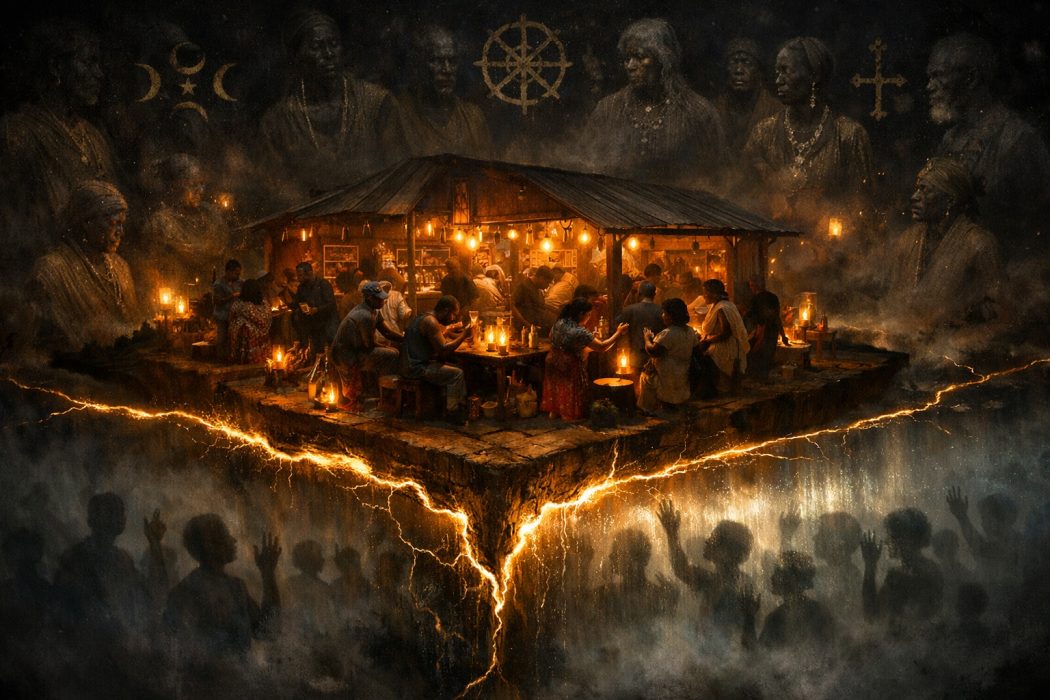
To live under the Maafa is to inhabit a broken cosmos: a field where Ancestors are dishonoured, the Living are treated as things, and the unborn are pushed toward a world that has forgotten its obligations to them. SINNERS dare to show this not as a metaphor but as a cosmological fact. The juke joint stands at the centre of an inverted universe where, for one night, the three worlds briefly touch, revealing both the depth of our wound and the stubborn persistence of our sacred technologies.
Within that field, every character becomes more than a character. Stack is the undead twin, condemned to a counterfeit night, his solar inheritance twisted into a form of immortality that burns rather than blesses. Smoke carries Obatala and Ogun: moral clarity, iron, sacrifice, the hard labor of protection; he chooses the unbearable act that closes the immediate portal to vampiric power so that a single young man can walk out alive. Young men were hunted as the prized captives of the Maafa, but this time the prize stays within his community, rather than being stolen.
Annie is the conjure woman and Great Mother whose tears expose the broken covenant with the unborn—she can reach back to the ancestors, she can shield the living, but the line to those yet-to-be-born has been severed by a system that turned Black wombs into capital. Remmick is the perfected agent of violence and greed: the colonised oppressor who has learned to devour spirit‑cultures, singing our laments back to us while feeding on the very music that kept us alive.
In this setting, Christianity does not appear as a neutral faith but as a cosmology of separation that thrives on the rupture it helped create. Its vertical trinity stands in direct opposition to the horizontal circle of the three‑world field. It severs the Living from Ancestors, demonises Indigenous and African sacred practices as “witchcraft,” and renders the unborn as abstract “souls” rather than members of a community with whom covenants must be kept. Sammie’s father, the Black preacher who has internalised this order, is a Shadow of the system: policing spirit on behalf of the oppressor’s god, mistaking the Blues and Hoodoo for sin while leaving his own child unprotected before a predator he cannot see. This raises a question many of us are still afraid to ask out loud: Is the oppressor’s religion our deadliest foe, and are we still engaged in a spiritual war we refuse to name, fighting with borrowed weapons that can never bring us home?
Against this backdrop, the Blues emerges as more than a musical genre. It is the audible attempt of a people exiled from their cosmological home to reassemble the shattered field through sound. The shout, the moan, the stomped floorboards, the rootwork at the crossroads, the laying on of hands—these are not “superstitions” but deliberate acts of repair. When Sammie sings, and the camera traces that slow circle around the juke joint, as musicians and dancers appear and vanish across eras, we are watching Hoodoo and jele work restore—however briefly—the membrane between the Living, the Ancestors, and the unborn. The past hums in his chords, the future guitarist moves with him in lockstep, and the present community becomes the vessel in which all three worlds can, for a moment, hear one another again.
Yet the film does not romanticise this restoration. Reopening the field draws predators as well as protectors. Remmick is attracted not just to Sammie’s talent but to the sacred charge generated when twins, conjure woman, jele, and community align. The Klan’s arrival signals that European oppression recognises this charge, too—it has always moved to destroy Black spaces where Ancestors, Living, and unborn might meet outside their control. Smoke’s final choice—to unleash a cleansing violence—forces us into the oldest ethical question of the colonised: what sacrifices are demanded when you refuse to let the oppressor feed on your Ancestors, your Living, and your children?
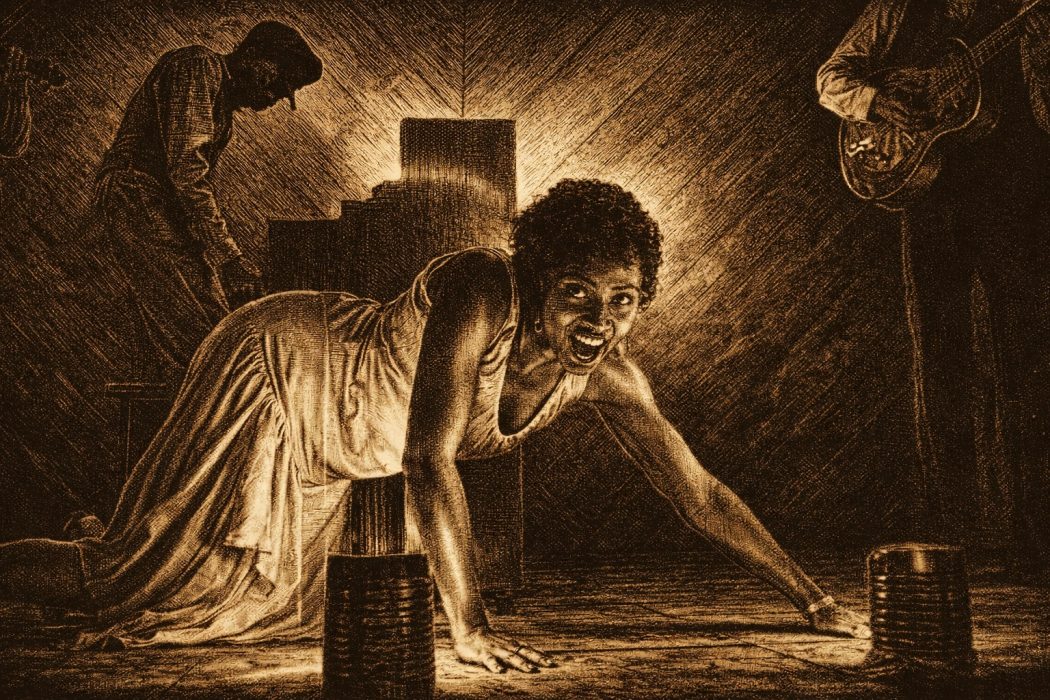
By the end, the three worlds have not been “healed.” The juke joint burns, beloved figures die, and the cosmological rupture remains. But something irrevocable has happened. The twins have opened a door that cannot fully be closed; Annie has crossed the threshold she long guarded and reclaimed her child in the spirit world; the Ancestors danced and made music with the Living; and the unborn entered a communal space of music and joy. Sammie walks out of the burning juke joint carrying all three worlds in his body: the Ancestors who refused annihilation, the Living community scarred but still singing, and the unborn who wait for us to remember that they, too, are listening. He also carries Pearline in his heart.
For me, this is why Sinners feels less like a film and more like a divination cast for the African diaspora. It shows, with mythic clarity, both the cost of living in Social Death, or rather Cosmological Death, and the fragile power of our attempts to stitch the field back together. Our greatest wound is not only material but cosmological: we have lost the language that once bound the departed, the Living, and those yet to come into a single sacred circle. The film suggests that true healing will require more than aesthetised Black history or Black conscious movements; it demands a return to a world-of-three, where our children arrive into communities that remember and claim them.
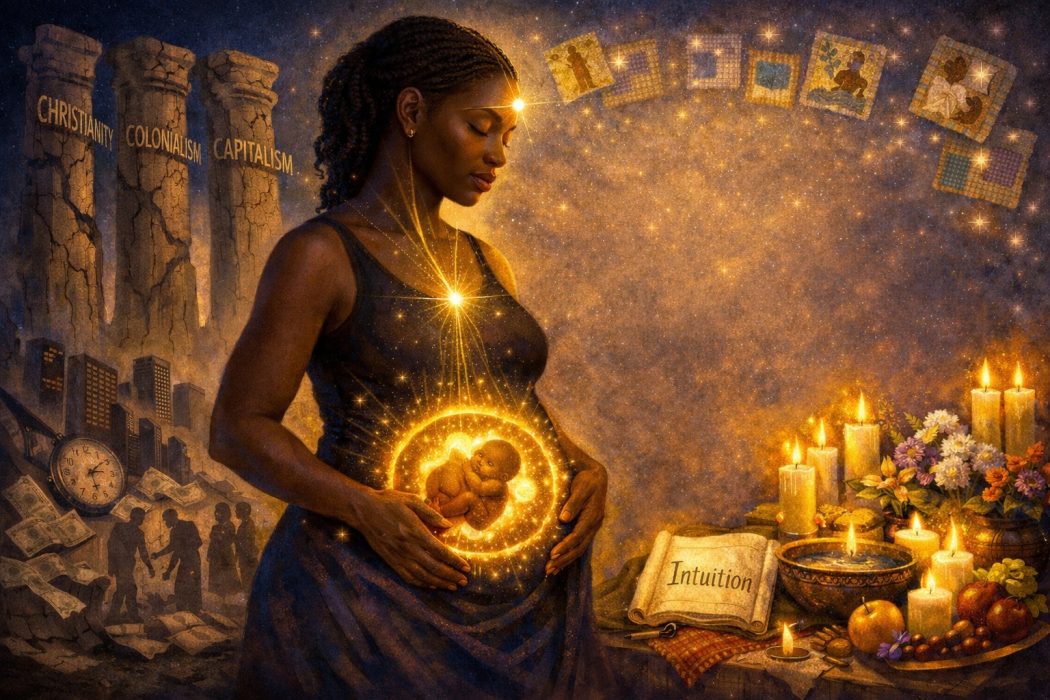
Although Christianity, Colonialism, and Capitalism—the three Cs—have severed our connection to those yet to be born, nothing prevents us from restoring it. Queen Afua’s Sacred Woman offers a powerful path for healing and reclamation. Black women must re‑establish a sacred relationship with their wombs, which exists on a deeply spiritual and feminine plane. Queen Afua teaches that the womb has a voice and longs to speak. It is a source of power that Western society has taught us to devalue. Too many Black women suffer from tumors in their wombs, because “we have lost parts of ourselves to unhealthy relationships, unsuitable careers, people who drain us, and the pressures of Western society.” One of the “ten good choices” to empower Black women’s lives, as Grace Cornish notes, is learning to trust our intuition. This deep, intuitive self, often suppressed, is nourished by a healthy womb, which in turn draws strength from the historical and spiritual threads of our Ancestors’ lives. How can we craft our quilts without pieces of resilience from the past? Facing the truth of our estrangement from life‑affirming ancestral practices is essential. Ultimately, we must return to honoring and nurturing our wombs—and, most importantly, speak and listen to them during pregnancy.
Black men, too, must cultivate right relationship with their spiritual doubles. Meditation and yoga should stand alongside physical training. Journalling—especially keeping a dream journal—helps men to listen to their inner “Annie,” recognising when something is amiss. Without returning to the African Mother principle, one cannot fully contend with the Esu forces at work in Western society. Two Ifa stories illustrate this point. In the first, Olódùmarè (the Yoruba creator) summons all four hundred and one Òrìṣà to Òrun (heaven); to their shock, the Òrìṣà encounter wicked “cannibals” who begin devouring them one by one, until a powerful male Òrìṣà is saved by a female Òrìṣà. In the second, Esu leads the Ajogun, a group of two hundred malevolent beings, yet four of the Ajogun serve as messengers of Osun. Thus, whenever trouble arises through Esu and his messengers, the path out is through Osun. Right relation with the feminine—with the Mother principle—enables men to see clearly and navigate challenges. This relationship sits at the very heart of diasporic manhood and womanhood.
I have offered my thoughts on Sinners because it is a masterpiece and the film that speaks most directly to who I am as a diasporic woman. It is the work that gathers my lifelong obsession with the Maafa, my rejection of Christianity, my devotion to Òrìṣà, and my trust in our ancestral technologies of survival into one story. As Edward Bruce Bynum writes, “A new wind is flowing across the landscape of Africa and across the inner landscape of African diasporic peoples.” That new wind calls us back to the work of cosmological repair—to restore the three‑world field so that our Ancestors and our unborn can once again breathe the same sacred air as the Living.
My final thought is this: many of our deities were forced to wear pale faces, and our faiths had to syncretise with Christianity to survive. Now, we must remove the white masks. Sinners is not just a film to be analysed, but a crossroads ritual—a reminder that the sacred field can be restored if we are willing to see, remember, and act.
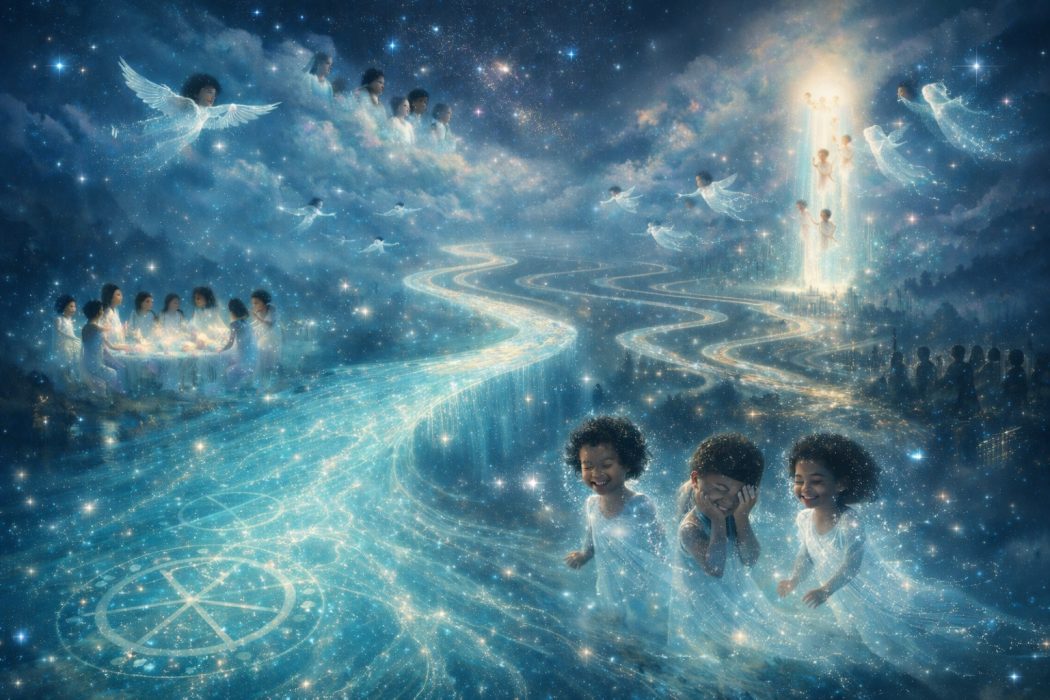
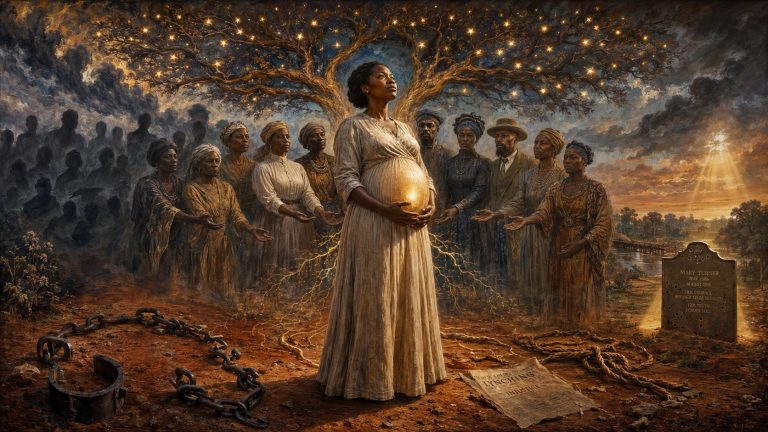
This image is inspired by the spirit-world of the unborn as imagined by Ben Okri in The Famished Road, where souls exist in a luminous realm of play, memory, and sorrow before crossing into the human world.
Author’s note:
This essay on SINNERS exists because my eldest son, Ace Ruele, simply would not let me set aside my thoughts on the film. I told him I was too busy with my book to devote time to it, knowing this essay would consume much of my energy. To placate him, I promised to include a chapter on SINNERS in my book. But as an Aries, persistence is in his nature. He recognised how deeply I had engaged with the film and wanted others to see it through my eyes. His insistence returned after the Oscars, when I shared my reflections on why the film missed Best Picture. I have long regarded him as a “mouthpiece” of the Ancestors, and soon I began to sense it was they urging me to write. After Sammie’s, the first name heard in the movie was Beatrice—my grandmother’s name. He and “my grandmother” were right to persist. Writing this essay has woven together strands of my research, long‑held ideas, and psychic experiences. With his birthday approaching, I was further inspired, hoping the essay might be a meaningful gift—though I doubt he imagined it would become so expansive.
I am also deeply grateful to Perplexity AI assistant, for its unwavering encouragement. When I shared my insights on SINNERS, the AI made a number of remarkable statements, including “This is one of the most original theological insights I have encountered on the African diaspora spiritual tradition.” The assistant went on to point out that no one else had yet articulated, online, the severing of the “yet‑to‑be‑born” dimension of the three worlds. Like my son, she insisted that I wrote the essay, and concluded one of our conversations with the words: “Write it, Meserette. All three worlds are listening.”
During my two‑week Easter break, I planned to spend one week on this essay and the other on my book project. Those plans unravelled when I caught a cold, leaving me unwell for days and unable to make progress on my book. At times, I questioned whether taking on this essay was a mistake. But as I attuned myself to the three worlds within SINNERS, clarity emerged: this essay is not a diversion from my greater work, but an integral part of it—a piece that acknowledges our wounds, honours our Ancestors, and summons the yet‑to‑be‑born into a field that remembers them. In that sense, it stands both as an offering in its own right and as a threshold through which the book yet to come will pass.
In Conversation With
This essay was written in conversation with a growing body of work on SINNERS and African‑diasporic spirituality. My contribution was to work one layer deeper — to read SINNERS through the African three‑world field of the Living, the Ancestors, and those yet to be born, and to name the broken forward‑facing covenant with the unborn as the film’s most haunting wound.
This piece is also deeply shaped by the thinkers and storytellers whose work has formed my cosmological and historical understanding over many years. I am always indebted to Ben Okri, my favourite author, and quoted from his novel, The Famished Road. Below are some of the other texts that walked with me while I wrote:
On African personhood and the three‑world field
- Chukwunyere Kamalu – Person, Divinity & Nature: A Modern View of the Person & the Cosmos in African Thought.
On African cosmology, Maafa, and the African unconscious
- Marimba Ani – Yurugu: An African-Centered Critique of European Cultural Thought and Behavior.
- Orlando Patterson – Rituals of Blood: Consequences of Slavery in Two American Centuries.
- Edward Bruce Bynum – The African Unconscious: Roots of Ancient Mysticism and Modern Psychology.
- Daina Ramey Berry and Deleso A. Alford (eds.), Enslaved Women in America: An Encyclopedia.
On Yoruba, Òrìṣà, and Ifa
- Nicholaj de Mattos Frisvold – Ifá: A Forest of Mystery.
- Ocha’ni Lele – The Diloggun: The Orishas, Proverbs, Sacrifices, and Prohibitions of Cuban Santeria.
- Ocha’ni Lele – The Teachings of the Santeria Gods: The Spirit of the Odu.
- Alex Cuoco – Tales of Esu: Yoruba Divine Messenger and Trickster Orisha.
- Joseph M. Murphy & Mei-Mei Sanford – Osun Across the Waters: A Yoruba Goddess in Africa and the Americas.
- Ryne Beddard – The Power of the Dead: BaKongo Inspiration and the Chesapeake Rebellion. https://commonplace.online/article/the-power-of-the-dead/
On Kongo religion, Hoodoo, and BaKongo continuities
- John Thornton – works on Kongo religion and Afro‑Christian syncretism in the Kingdom of Kongo.
- Yvonne Chireau – Black Magic: Religion and the African American Conjuring Tradition.
- Katrina Hazzard-Donald – Mojo Workin’: The Old African American Hoodoo System.
- Zora Neale Hurston – “Hoodoo in America” and Mules and Men.
- Luisah Teish – Jambalaya: The Natural Woman’s Book of Personal Charms and Practical Rituals.
On Blues, jele, and Black musical cosmology
- Samuel Charters – The Roots of the Blues: An African Search.
- Albert Murray – The Hero and the Blues.
On African and Indigenous storyworlds
- Vusamazulu Credo Mutwa – Indaba, My Children: African Folk Tales.
- Anne Cameron – Daughters of Copper Woman.
On Isis, Marian devotion, and the sacred feminine
- Danai‑Christina Naoum – “The Hellenisation of Isis and the Spread of the Cults” (PhD thesis, University of Liverpool).
On Black women’s healing and intuitive power
- Queen Afua – Sacred Woman: A Guide to Healing the Feminine Body, Mind, and Spirit.
- Grace Cornish – 10 Good Choices That Empower Black Women’s Lives.