
Solitude was born into the Maafa in Guadeloupe around 1772, the daughter of an African woman who was raped aboard a slave ship by a French sailor during the transatlantic crossing. Her very conception was an act of violence committed in the bowels of a trafficking ship — making her a child of the Maafa before she drew her first breath. For the first years of her life, she lived with her mother, who had fled the plantation and refused to work in bondage. When her mother died, Solitude was only about eight years old, and she was left alone among her captors.
The Making of a Maroon
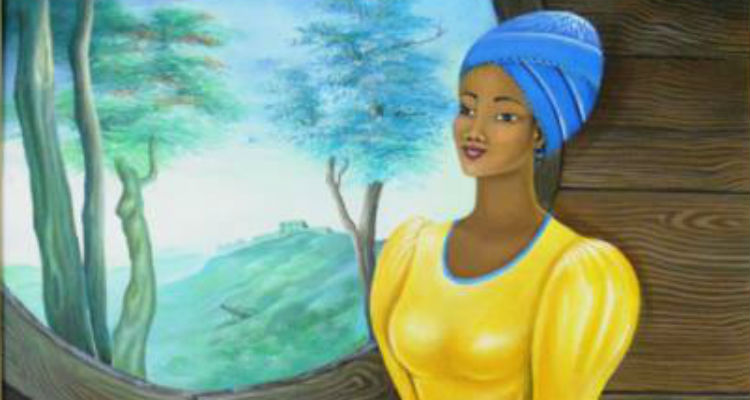
During her adolescence, Solitude escaped to the hills and joined the freedom community of La Goyave. It is believed she took the name “Solitude” during this period of resistance. She was described as a brown-skinned woman of striking, legendary beauty, with two eyes of different colors — a detail that made her unforgettable. It is alleged that her exquisite good looks led powerful békés (the Antillean Creole term for French colonizers) to fight one another with the hope of claiming her.
In 1793, an uprising began, forcing the French to turn to the British and invite them to occupy the island. Britain seized Guadeloupe in 1794, holding it from April 21 to June 2. When French Republican forces retook the island, they declared the abolition of the Maafa, and the people turned against the British, who controlled the sugar plantations. This first abolition of 1794 gave Solitude and thousands like her a brief, precious taste of legal freedom.
Napoleon’s Betrayal and the Call to Arms
But in 1802, Napoleon Bonaparte, threatened by the success of the Haitian Revolution and pressured by planters eager to restore their profits, issued decrees reinstating the Maafa throughout the French empire. The law was formally signed on May 20, 1802. French troops were dispatched to re-subjugate the Black populations of Guadeloupe, Martinque and Haiti. This act of betrayal ignited fierce armed resistance across the Caribbean.
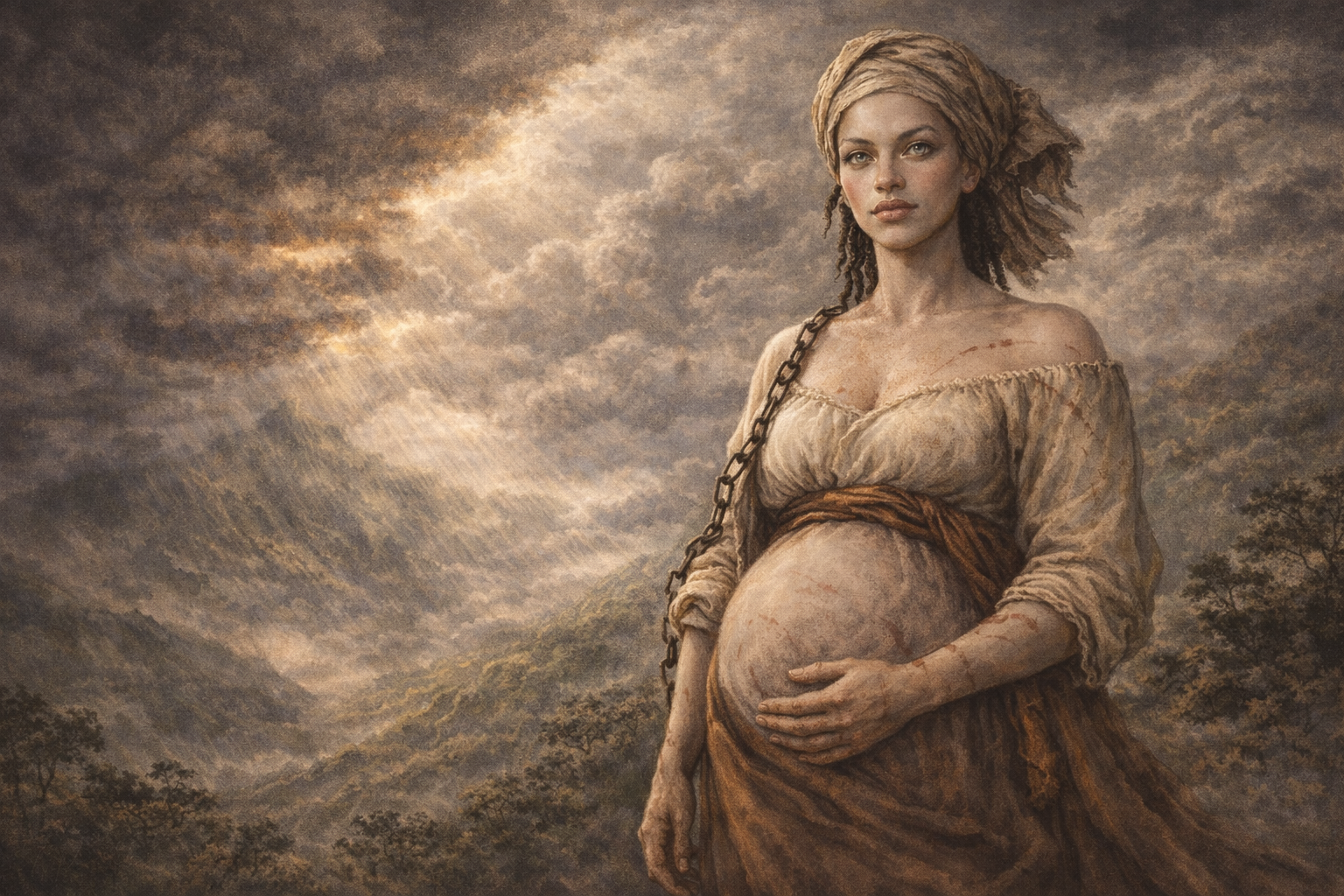
Black officers in the French Republican Army — most notably Louis Delgrès and Joseph Ignace — refused the order and raised an insurrection. Delgrès issued a ringing proclamation on May 10, 1802, titled “To the whole universe, the last cry of innocence and despair,” calling on all free people to resist. Solitude, though by this point several months pregnant, joined their ranks without hesitation.
The Fury of a Warrior Mother
Solitude is remembered as a fierce and fearless warrior, expertly wielding a machete against French troops. She fought with exceptional ferocity in the battles at Dolé, Trou-aux-chiens, Fond-Bananier, and Capesterre. Historical accounts describe how she “pushed herself and her belly into the heart of the battles,” fighting at every post alongside the freedom fighters, her pregnant body a testament to her refusal to submit. The sole primary historical source describing her — Auguste Lacour’s Histoire de la Guadeloupe — records her theatrically threatening prisoners with a skewer, promising them the same fate as a rabbit she had caught, her rage absolute and unyielding.
On May 22, 1802, French forces launched a furious assault on Fort Saint-Charles, forcing the resistance to retreat. The climax came on May 28, 1802, at the Battle of Matouba, where Delgrès and approximately 400–500 of his followers, cornered on the slopes of a volcano, chose collective martyrdom over surrender. They detonated their gunpowder stores, shouting “Live free or die!” — an explosion that killed hundreds of rebels and up to 400 French soldiers. Solitude was among those caught in the blast and was seriously injured. She was captured, imprisoned in Basse-Terre, tried before a military tribunal, and sentenced to death.
Birth, Death, and the Price of Freedom
Because Solitude was pregnant at the time of her sentencing, her execution was delayed so that the child in her womb could be born and claimed. She gave birth on November 28, 1802. The following morning — November 29, 1802 — one day after bringing new life into the world, Solitude was hanged. She was thirty years old. Her last recorded words were “Live free or die” — the same cry that had echoed at Matouba. No one knows the whereabouts of her child.
An Eternal Legacy
General Jean-Jacques Dessalines, the great liberator of Haiti, honored the Black heroes of Guadeloupe with the following lines from a letter he wrote — testimony to the solidarity and interaction between the revolutions in Haiti and Guadeloupe, a fact documented by Henri Bangou in his Histoire de la Guadeloupe:
“Wrecked and devastated Guadeloupe; its ruins are still smoking with the blood of children, women, and old men, felled by the sword; Pelage himself a victim of their tricks, after having cowardly betrayed his country and his brothers, the brave, immortal Delgresse was spirited away into the air along with the debris of his fort rather than accept the chains. Magnanimous warrior, your noble death, far from astonishing our courage, will merely tease the thirst in us to avenge or follow you.”
Solitude largely disappeared from official historical memory after her death, while male counterparts like Delgrès were commemorated. Her rediscovery came through literature: in 1972, the French-Jewish novelist André Schwarz-Bart published La Mulâtresse Solitude, an eponymous novel that traces the story from the abduction of her mother in West Africa through Solitude’s death. The novel is regarded as a landmark of Francophone literature and brought Solitude international recognition. Today, Solitude’s name graces squares, avenues, a library, and a museum room in Guadeloupe. She has been celebrated in songs, poems, and the musical Solitude la Marronne. UNESCO honored her in an educational dossier as a symbol of “Caribbean women and mothers who fought to protect the ideals of equality and freedom”. In 1999, a statue by sculptor Jacky Poulier was erected on the Boulevard des Héros in Les Abymes, Guadeloupe. A second statue was installed in 2007 in Bagneux, France.
Sources:
https://repeatingislands.com/2009-05-07/solitude-and-the-abolition-of-slavery-commemorative-art-in-guadeloupe-ii/
https://kathmanduk2.wordpress.com/2009/02/18/black-history-month-black-heroines-part-7-solitude-heroine-and-martyr-of-the-great-1802-rebellion/Sol