
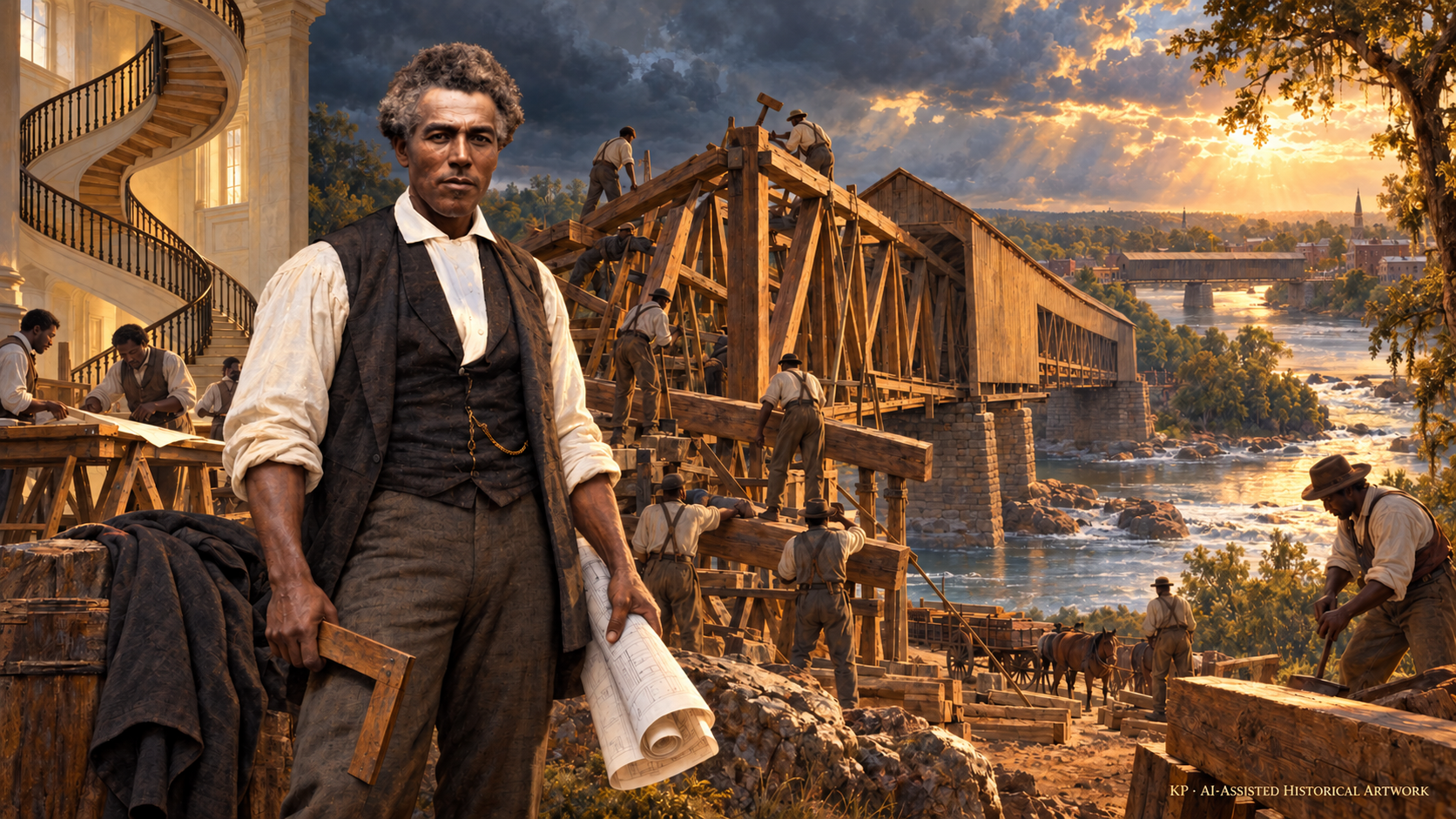
Horace King was an African American architect, engineer, master carpenter, and bridge builder. He became one of the most respected bridge builders in the nineteenth-century Deep South, constructing bridges and other substantial timber-frame works in Alabama, Georgia, and Mississippi. His legacy also survives in the celebrated circular staircases in the Alabama State Capitol at Montgomery, work widely attributed to him.
King was born into captivity on September 8, 1807, in the Chesterfield District of South Carolina. His ancestry included African, European, and Catawba forebears. Although the details of his early education are not fully documented, he became a highly skilled carpenter and mechanic at a young age. Records indicate that King spent his early years near his birthplace and was introduced to bridge construction in the 1820s.
In 1830, King, his mother, brother, and sister were trafficked to John Godwin, a contractor in Cheraw, South Carolina. King may also have had family connections to Godwin’s wife, Ann Wright. In 1832, Godwin received a contract to construct a bridge across the Chattahoochee River linking Columbus, Georgia, and Girard, Alabama—now Phenix City. The Godwin family and King moved to Girard, where they completed the bridge in 1832–33.
Although King remained in captivity, Godwin increasingly relied on his exceptional skill and judgment. King became central to the firm’s construction work, which included bridges, public buildings, residences, warehouses, and mills. The Dillingham Street Covered Bridge, connecting Girard and Columbus, is generally regarded as the first bridge constructed under their partnership and the first Alabama bridge associated with King. It was a major early crossing of the lower Chattahoochee River.
During the late 1830s and early 1840s, King’s reputation grew rapidly. By 1840, he was publicly described as a “co-builder” alongside Godwin—an extraordinary recognition for a captive Black craftsman and builder. He supervised construction of major toll bridges across the Chattahoochee at West Point, Eufaula, and Florence, Georgia. These were large private ventures, each costing close to $22,000, and their owners relied on tolls to recoup their investments.
By the early 1840s, King was designing and supervising major projects well beyond Girard, while Godwin often remained at home to negotiate contracts and manage business matters. King designed and oversaw bridges at Columbus, Mississippi, in 1843 and Wetumpka, Alabama, in 1844. Robert Jemison Jr.—a Tuscaloosa entrepreneur, legislator, and investor—became an important associate in these ventures. King and Jemison developed a long working relationship that continued for many years.
In 1845, King bridged the Tallapoosa River at Tallassee, Alabama. Later that year, he oversaw construction of three smaller bridges near Steens, Mississippi, where Jemison owned saw and grist mills. King’s technical mastery involved the demanding work of heavy-timber construction: erecting piers, building lattice trusses, shaping enormous hand-hewn support timbers, and joining the structure with large wooden pegs known as treenails.
King and Godwin also worked on public and commercial buildings. Their projects included the courthouses of Muscogee County, Georgia, and Russell County, Alabama, as well as warehouses and residences. Some accounts attribute the construction of numerous warehouses in Apalachicola, Florida, to the partnership. Claims that King attended Oberlin College in the mid-1830s, however, remain speculative and should be presented as such rather than as established fact.
In 1839, King married Frances Gould Thomas, a free Black woman of mixed ancestry. Her free legal status ensured that their children would be born free. The couple had four sons and one daughter: Washington W., Marshall Ney, John Thomas, Annie Elizabeth, and George. In later years, several of their children followed their father into construction and related trades.
Despite the remarkable latitude he was granted, King was not free. In February 1846, Robert Jemison Jr. helped guide a bill through the Alabama legislature that emancipated him. King later stated that he had purchased his freedom, perhaps using income earned through his work with Godwin, Wright, and Jemison. Alabama law normally required emancipated Black people to leave the state within a year, but a special legislative measure enabled King to remain.
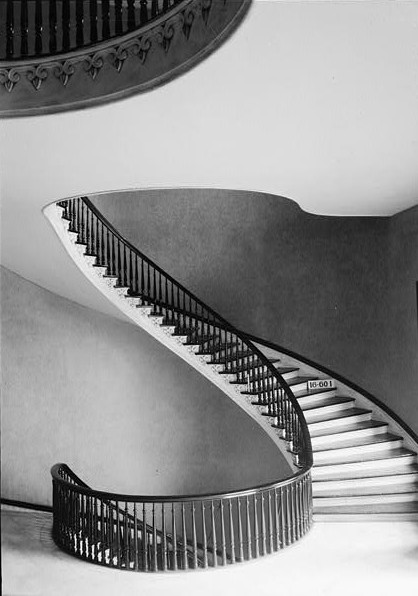
After the Alabama State Capitol burned in 1849, King participated in the construction of the new capitol building at Montgomery. During the early 1850s, he performed carpentry work on the structure, including the elegant circular staircases for which he is especially remembered. The twin spiral staircases are widely attributed to King and celebrated for their cantilevered construction, which makes them appear to float without a central supporting column. The precise division of work among King and other builders has not been definitively established, but his contribution to the Capitol’s timber work and staircases is strongly associated with his legacy.
In the mid-1850s, King built Moore’s Bridge over the Chattahoochee River on the road between Newnan and Carrollton, Georgia, near Whitesburg. Rather than accept only a conventional fee, he acquired a one-third interest in the bridge. By 1858, King had moved his family to Moore’s Bridge, although he continued to travel between that home and Girard. Frances King and their children collected bridge tolls and farmed there, while King continued to undertake significant construction work in Alabama and Georgia.
King was also engaged to bridge the Oconee River at Milledgeville, Georgia, in 1857. A dispute with investors interrupted the project; according to local historical accounts, King redirected timber already prepared for the Milledgeville bridge to Albany, where he was working on a crossing of the Flint River for entrepreneur Nelson Tift. Such episodes illustrate both the scale of King’s operations and the mobility of a free Black contractor whose work took him repeatedly across the Deep South.
As the Civil War approached, King later maintained that he had been a Unionist and had opposed secession. Nonetheless, Confederate authorities compelled him to undertake war-related work. He was pressed into service to obstruct navigation on the Apalachicola River and the Alabama River, and he built a large mill structure and supplied wood products for Confederate naval facilities in Columbus. His position was perilous: as a free Black contractor in Confederate territory, he had little practical ability to refuse such assignments.
During the war, King worked on projects connected to the Confederate naval-industrial complex at Columbus. His crews supplied lumber and timbers for naval facilities, and he contributed to mills and shipbuilding operations. Some accounts link him peripherally to the construction of the CSS Muscogee, though the exact extent of his involvement is difficult to document precisely.
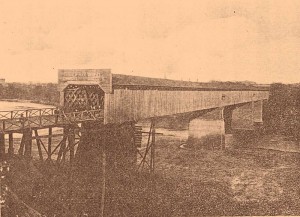
Many of King’s bridges were destroyed during the war. Union cavalry burned Moore’s Bridge in July 1864, eliminating an important source of family income. Frances King died in Girard about three months later, leaving King with their surviving children. In June 1865, he married Sarah Jane Jones McManus.
After the war, King resumed his work as a builder and contractor during the difficult years of Reconstruction. He helped rebuild bridges, mills, warehouses, and public buildings damaged or destroyed in the conflict. He focused especially on rebuilding wagon and railroad bridges, gristmills, textile mills, and cotton warehouses. He also built the first Lee County courthouse at Opelika, Alabama, in 1867.
King was elected as a Republican to the Alabama House of Representatives and served two terms from 1870 to 1874. Historical accounts characterize him as a moderate Republican who took a limited role in legislative proceedings, in part because his construction work demanded so much of his time. His election nevertheless remains historically significant: the formerly enslaved builder served in the legislature of the state whose capitol he had helped construct.
In 1872, King and his family moved to LaGrange, Georgia. There, he and his sons continued to build bridges, stores, houses, and college buildings. While King’s health declined during the 1880s, his children carried forward aspects of the family’s building work. Washington W. King, in particular, became a prominent bridge builder in Georgia; other family members became respected figures in LaGrange’s Black middle-class community.
Horace King died in LaGrange on May 28, 1885. His death prompted lengthy obituaries in white-owned newspapers in Atlanta, LaGrange, and Columbus—an unusual tribute to a Black man in the post-Reconstruction South and evidence of the esteem in which his work was held.
King was inducted into the Alabama Engineering Hall of Fame in 1989. He is remembered for his extraordinary engineering ability, his craftsmanship in heavy-timber construction, his entrepreneurial achievement, and his ability to build a distinguished career under and beyond the constraints of enslavement and racial exclusion.
Two important books have been written about Horace King: Horace King: Bridges to Freedom by Faye Gibbons and Bridging Deep South Rivers: The Life and Legend of Horace King by John S. Lupold and Thomas L. French Jr. The latter is particularly valuable because it distinguishes documented evidence from later local traditions that have sometimes attributed more structures to King than surviving records can securely confirm.
Sources:
http://www.blackpast.org/aah/king-horace-1807-1885
https://en.wikipedia.org/wiki/Horace_King_(architect)
https://encyclopediaofalabama.org/article/horace-king/
https://engrhof.org/aehofmembers/horace-king/
https://www.alabamaheritage.com/blog/2024/07/24/from-the-vault-horace-king-bridge-builder/
https://businessalabama.com/builder-horace-king-left-an-elegant-legacy-in-alabama/
https://commons.wikimedia.org/wiki/File:Alabama-State-Capitol-spiral-staircase.jpg