
Powhatan Beaty was a Black Union soldier, Medal of Honor recipient, actor, playwright, and civic figure whose life linked the Civil War struggle for emancipation with the cultural and political life of postwar Cincinnati. As First Sergeant of Company G, 5th United States Colored Troops, he received the Medal of Honor for leadership under fire at the Battle of Chaffin’s Farm and New Market Heights, Virginia, on 29 September 1864. After the war, he became active in Cincinnati’s Black theatrical world, appearing on stage with the celebrated actor Henrietta Vinton Davis and writing a drama about the transition from captivity to freedom.
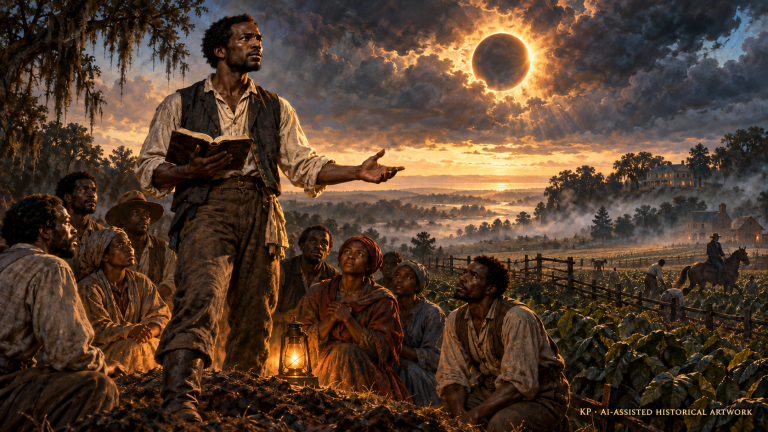
Beaty was born in Richmond, Virginia, probably on 8 October 1837, although some records give 1838 or 1839. He moved with his family to Cincinnati in 1849, where he spent most of his life. Later accounts state that he had been in captivity in Virginia and gained freedom after his family relocated to Ohio, a free state.
Before entering federal service, Beaty was associated with Cincinnati’s Black Brigade, an emergency force of Black men organized in 1862 to help defend the city during the Confederate threat to southern Ohio. In June 1863, at the age of twenty-four, he enlisted in the Union Army as a private. He was then a farmer, stood five feet seven inches tall, and joined Company G of the 5th United States Colored Troops—the regiment first organized as the 127th Ohio Volunteer Infantry. By the autumn of 1864, he had risen to the rank of First Sergeant.nps+2
The 5th USCT was one of the Black regiments sent to attack Confederate fortifications north of Richmond during the larger Battle of Chaffin’s Farm and New Market Heights. These operations formed part of General Ulysses S. Grant’s wider Petersburg–Richmond campaign, which aimed to stretch and weaken Confederate General Robert E. Lee’s defensive line around the Confederate capital. The Union attack of 29 September 1864 placed Black troops against entrenched Confederate positions defended by abatis, earthworks, artillery, and concentrated musket fire.
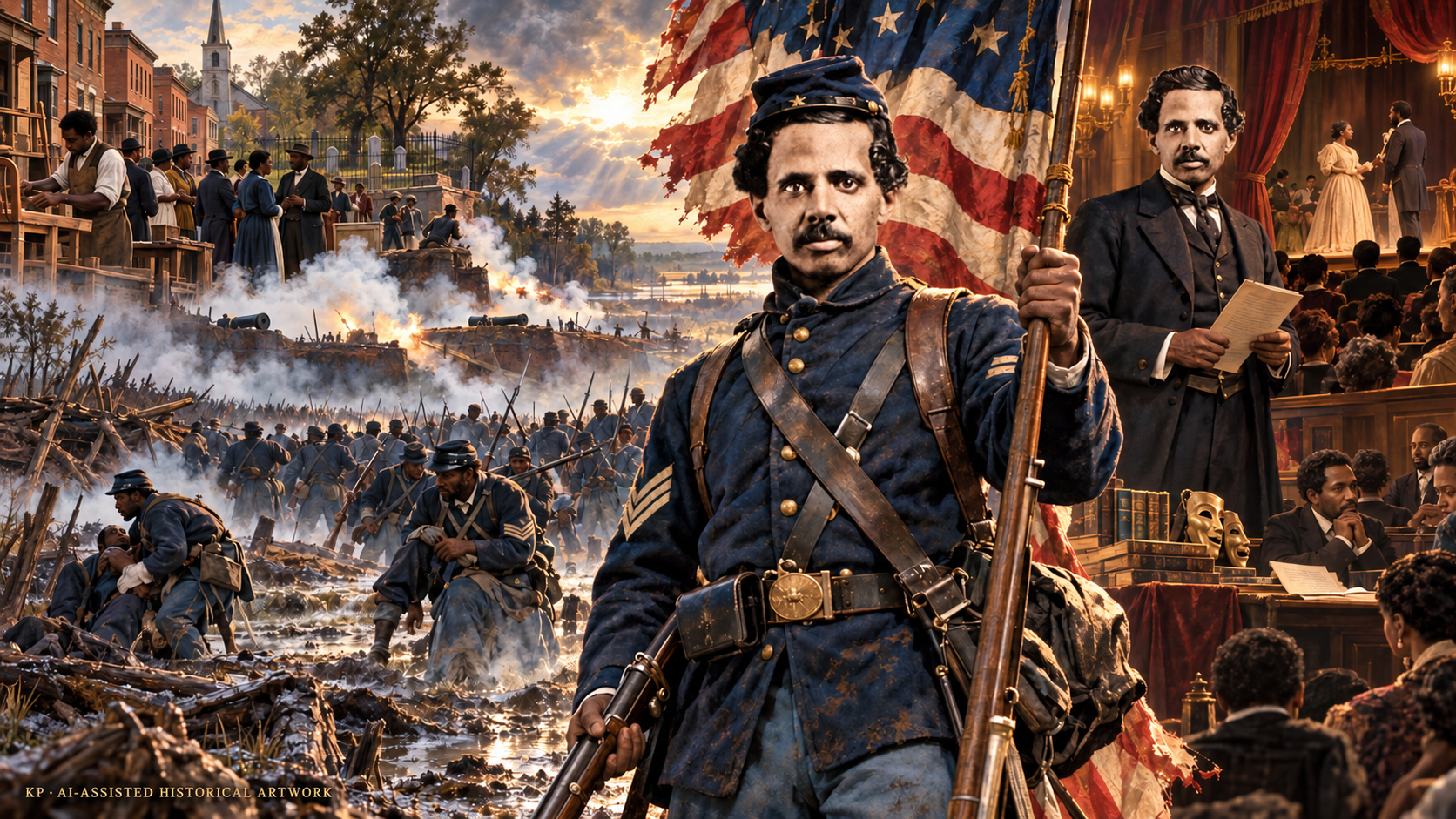
At New Market Heights, Company G suffered terrible losses. Military accounts report that of its eight officers and eighty-three enlisted men who entered the action, only sixteen enlisted men, including Beaty, emerged unwounded. When all of the company’s officers had been killed or wounded, Beaty took command. Although wounded himself, he led Company G in a further advance against the Confederate lines. According to later accounts, after the color-bearer fell during the fighting, Beaty also returned through heavy fire to recover the company’s flag.
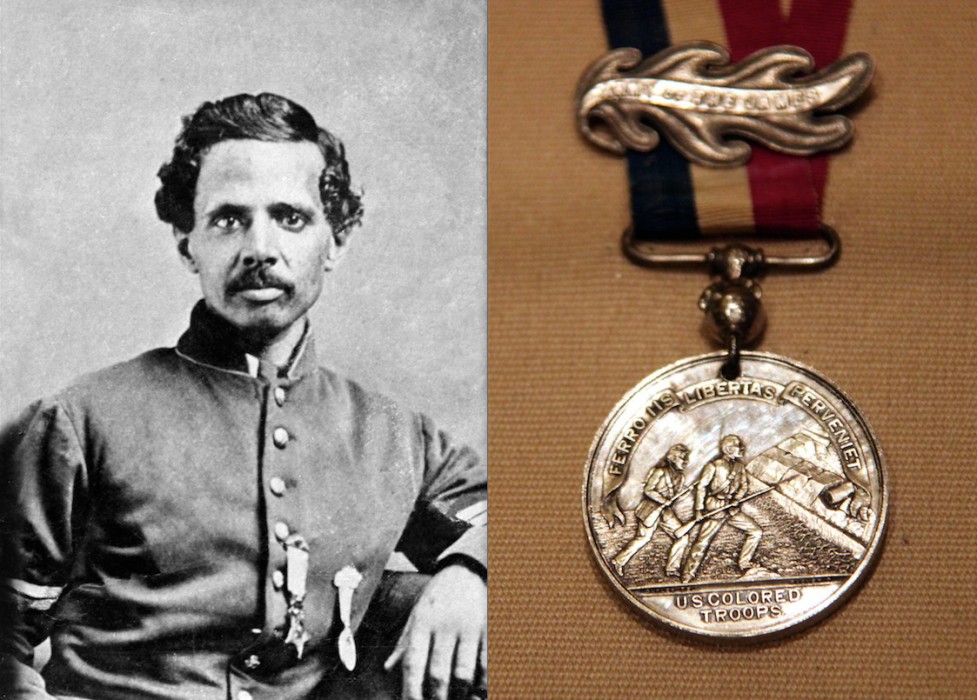
Beaty’s official Medal of Honor citation is concise:
“Took command of his company, all the officers having been killed or wounded, and gallantly led it.”
He received the Medal of Honor on 6 April 1865. Beaty was one of sixteen Black recipients of the decoration for service during the Civil War. Fourteen Black soldiers received the Medal of Honor for their conduct at Chaffin’s Farm and New Market Heights, an extraordinary concentration of Black military courage in one of the war’s most fiercely contested operations.
After the war, Beaty returned to civilian life in Cincinnati. He reportedly worked for a time as a porter aboard the Mississippi River steamboat City of Vicksburg, then resumed cabinetmaking. He also became known as an orator and actor, developing a theatrical career in the city’s Black literary and dramatic circles. His performances included roles in Robert Montgomery Bird’s The Gladiator, Shakespearean drama, and Ingomar, the Barbarian. Claims about particular reviews in the New York Globe should be cited directly to the periodical before publication.
In 1880, Beaty wrote Delmar; or, Scenes in Southland, a play about the transformation from captivity to freedom. It was publicly performed in 1881, with Beaty appearing in the leading role of a plantation owner. The drama is an important example of Black post-emancipation cultural production: a Black veteran and actor writing publicly about captivity, freedom, racial power, and the unfinished consequences of emancipation.
Beaty appeared with the renowned Black actor Henrietta Vinton Davis in the 1880s, including a notable performance at Ford’s Opera House in Washington, D.C., in May 1884. Accounts describe a full audience of more than 1,100 people, including Frederick Douglass. Their collaboration matters because it placed two Black performers before major urban audiences at a time when professional theatrical opportunities for African Americans remained profoundly restricted.
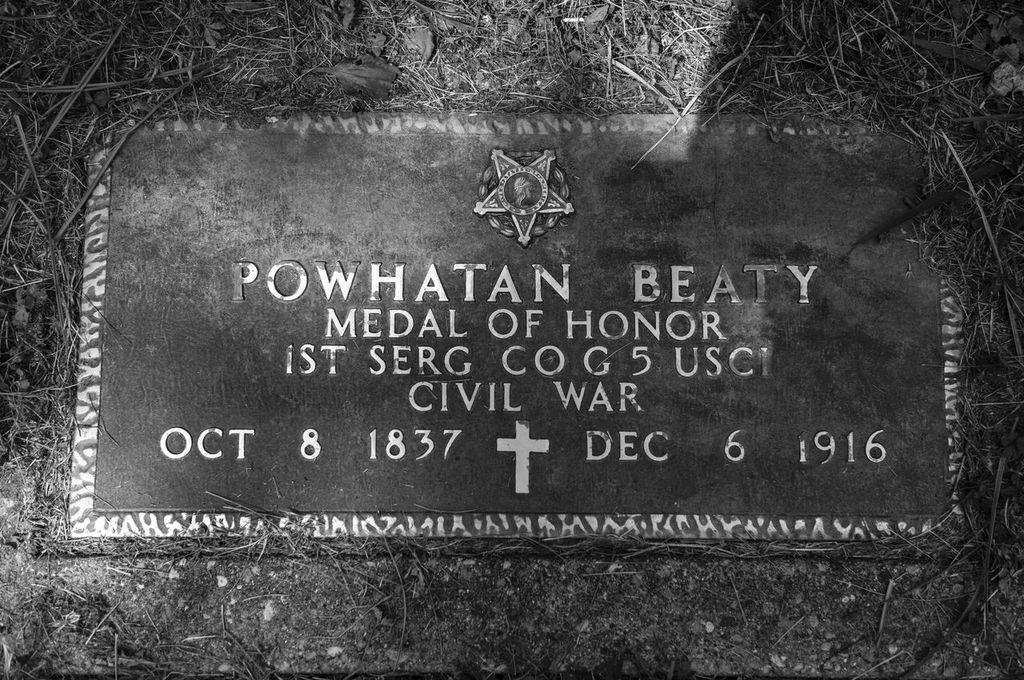
In 1888, Beaty became drama director of Cincinnati’s Literary and Dramatic Club, an organization he had helped establish. He died in Cincinnati on 6 December 1916 and was buried in Union Baptist Cemetery, where many United States Colored Troops veterans are also interred. He was survived by two sons, A. Lee Beaty—an attorney and Ohio state representative—and John W. Beaty.
In 2000, Congress designated the Interstate 895 bridge over Virginia Route 5 the Powhatan Beaty Memorial Bridge. This commemoration connects the Richmond-born soldier to the Virginia landscape in which he fought, while his burial in Cincinnati reflects the city that became his home, political community, and cultural base.
Sources:
http://www.fortwright.com/?c=article&l=en&s=black-brigade-of-cincinnati&id=41
http://www.findagrave.com/cgi-bin/fg.cgi?page=gr&GRid=8562387
http://www.academia.edu/12864035/_Powhatan_Beaty_from_African_American_National_Biography
https://en.wikipedia.org/wiki/Powhatan_Beaty
https://www.nps.gov/rich/learn/historyculture/beaty.htm
https://www.army.mil/article/217886/ohio_medal_of_honor_recipient_from_slavery_to_freedom
https://www.cmohs.org/news-events/medal-of-honor-recipient-profile/powhatan-beaty-a-gallant-commander
https://www.battlefields.org/learn/biographies/powhatan-beaty
https://remarkableohio.org/marker/48-31-powhatan-beaty-union-baptist-cemetery/
https://mohmuseum.org/recipient/beaty-powhatan
https://5thusct.net/index%20-%205th%20usct%20history.htm
https://warfarehistorynetwork.com/article/black-soldiers-medal-of-honor-chaffins-farm-x-corps
https://stories.cincinnatipreservation.org/items/show/49