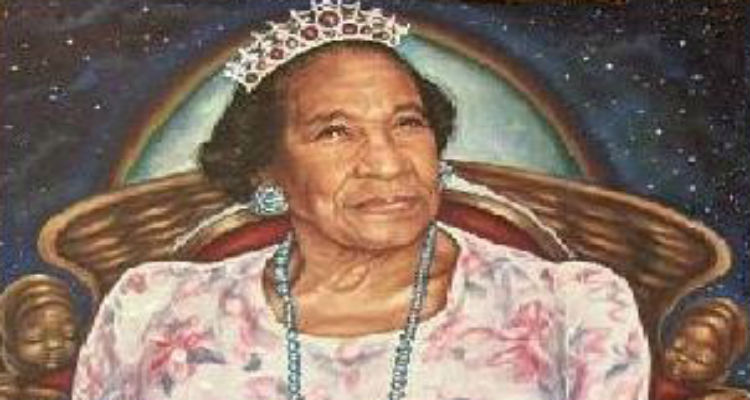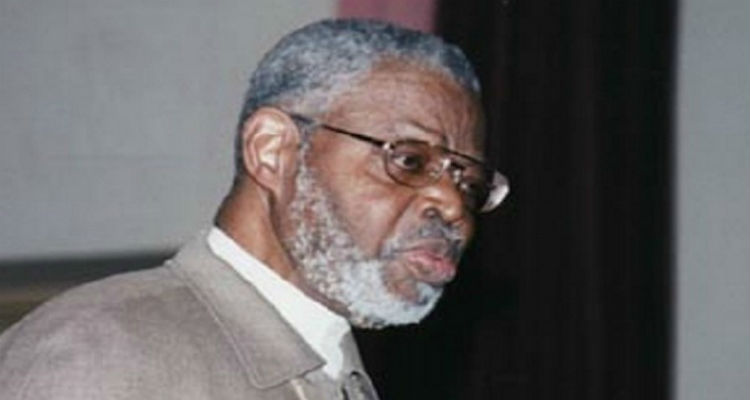

Audrey Layne Jeffers was one of the most consequential social reformers of twentieth-century Trinidad and Tobago: a pioneering social worker, feminist organiser, educator, and political trailblazer whose work reshaped ideas of public welfare and women’s civic participation in the English-speaking Caribbean. Born in Woodbrook, Port of Spain, on 12 February 1898, she emerged from Trinidad’s small Black property-owning class to build institutions for children, working women, people with disabilities, and others facing hardship. Her nephew was the historian Tony Martin, the distinguished scholar of Marcus Garvey and Pan-Africanism. Before his death in 2013, Martin was working on a biography of Jeffers, indicating both their family connection and his recognition that her public career deserved fuller historical attention
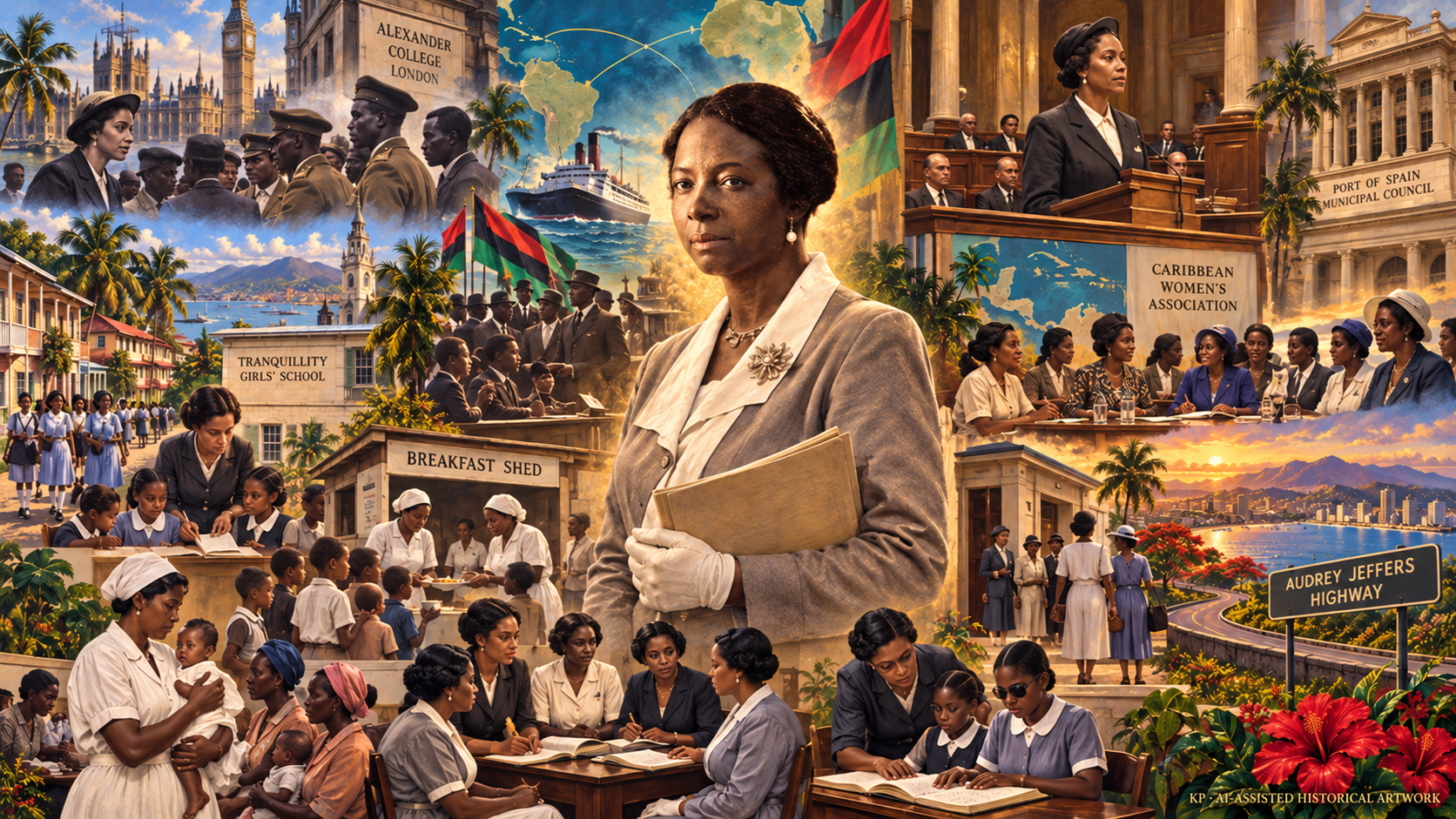
Jeffers received her early education in Port of Spain, including study at Tranquillity Girls’ Practicing School, before traveling to England in 1913 at the age of fifteen. At Alexander College in North Finchley, London, she studied social science, gaining a foundation that would later inform the highly practical, institution-building character of her work in Trinidad. Her years in Britain also introduced her to the political and racial concerns of the wider African diaspora. She helped found the Union of Students of African Descent, an organization that later became associated with the League of Coloured Peoples, and her involvement reflected an early commitment to racial advancement and collective organization.
The outbreak of the First World War gave Jeffers a chance to turn those concerns into action. She worked among West African and Caribbean troops in Britain and helped organize the West African Soldiers’ Fund and a Cigarette Fund through the West India Committee, mobilizing contributions from West Indians for the welfare of Black servicemen. After the war, she continued to participate in diasporic political life through the Society of Peoples of African Origin, founded by the Trinidadian F. E. M. Hercules. These experiences in Britain exposed her to the realities of race, war, and voluntary welfare work, and prepared her for a career that joined social service to Black advancement, women’s leadership, and a broader Caribbean vision.
When Jeffers returned to Trinidad in 1920, she began by operating a junior school from her family home, Briarsend, on Sweet Briar Road. Teaching brought her into close contact with Port of Spain’s social inequalities, where many children’s needs extended far beyond formal instruction. In 1921, moved by the poverty she witnessed and determined to organize a practical response, she gathered a group of young women and founded the Coterie of Workers, later known as the Coterie of Social Workers. The organization became one of the most important women’s associations in early twentieth-century Trinidad and Tobago, creating a vehicle through which women could move from private charitable activity into sustained public service and civic leadership.
The Coterie’s most enduring initiative was establishing the first “Breakfast Shed” in Newtown, Port of Spain, in 1926. Despite the name, the program provided free midday meals to children from poor families. What began as a local experiment in addressing hunger expanded to other communities, including Barataria, San Fernando, Siparia, and Tobago. The project is widely recognized as an important precursor to Trinidad and Tobago’s National School Feeding Program, demonstrating Jeffers’s belief that children’s education could not be separated from their health, nourishment, and material security. Rather than treating poverty as an individual failing, her work recognized social welfare as a collective responsibility.
Under Jeffers’s leadership, the Coterie developed a much wider network of services. It established day nurseries, including Cipriani House in John John, Laventille, which supported working mothers; St. Mary’s Home for Blind Girls and Women; the Maud Reeves Hostel for Working Girls; Anstey House for young women; and Faith House, a rest house and training center for women. It also supported facilities for older people, persons in distress, and working men. These initiatives represented more than philanthropy in the narrow sense. They created parts of the social infrastructure through which modern social work and community development would later be practiced in Trinidad and across the Caribbean.
Jeffers was also a significant feminist advocate. She understood that women’s equality depended on access to education, employment, safety, public authority, and representation. In 1929, she represented Trinidad and Tobago at a women’s conference in London, and in May 1936 the Coterie hosted the First Conference of British West Indies and British Guiana Women Social Workers in Port of Spain. This landmark gathering advanced recommendations for a girls’ open scholarship for higher education, the creation of a women’s police force, and expanded employment opportunities for educated Black women. Her activism therefore challenged both racial and gender exclusion at a time when Black women’s voices were routinely marginalized in official public life.
Her advocacy opened into formal politics in 1936, when she became the first woman elected to the Port of Spain Municipal Council. The achievement was historic in a male-dominated political culture, and it set a precedent for women’s participation in local government in Trinidad and Tobago. A decade later, Governor Sir Bede Clifford appointed her as the first female member of the Legislative Council of Trinidad and Tobago. She served in that body during a decisive period of constitutional change and also served on the Voting Franchise Commission and the Constitutional Reform Committee. While her vote against universal adult suffrage on the Franchise Committee in 1945 is widely regarded as a serious political misjudgment, it does not erase the broader importance of her role in opening political institutions to women and giving public expression to issues affecting women, children, and disadvantaged communities.
Jeffers’s influence reached beyond Trinidad and Tobago. She served as honorary consul for Liberia, an appointment reflecting her Pan-African connections and standing in public life. In 1956, she helped initiate the Caribbean Women’s Association, responding to the new possibilities of regional federation and insisting that women must play an active role in Caribbean development. Her work joined local community care to a wider regional and diasporic outlook: she saw the advancement of women, people of African descent, and Caribbean societies as mutually connected struggles.
Her decades of service brought formal recognition. Jeffers received the MBE in 1929 and was appointed an Officer of the Order of the British Empire in 1959. After her death on 24 June 1968, she received the Chaconia Gold Medal for Social Service posthumously in 1969. Her name endures in the Audrey Jeffers Highway, connecting Port of Spain and Cocorite, and in the Audrey Jeffers School for the Deaf in San Fernando. More importantly, her legacy remains active through the Coterie of Social Workers and through the enduring social programs, institutions, and possibilities for women’s leadership that her work helped make imaginable.
Audrey Jeffers’s life illustrates how determined civic action could transform charity into organized social welfare and how women’s voluntary associations could become training grounds for political leadership. She did not simply assist the vulnerable; she helped build durable institutions to support them, while advocating a more equitable public role for women and Black citizens. Tony Martin’s unfinished biography of his aunt would likely have deepened appreciation of the intellectual, familial, feminist, and Pan-African dimensions of her life. Her career remains a powerful testament to one Caribbean woman’s capacity to turn education, organization, and service into a lasting national legacy.
Sources:
https://en.wikipedia.org/wiki/Audrey_Jeffers
https://www.encyclopedia.com/history/encyclopedias-almanacs-transcripts-and-maps/jeffers-audrey
https://audreyjeffersuwi.wordpress.com/about-audrey-jeffers/
https://sweettntmagazine.com/audrey-jeffers-labour-day-trinidad-tobago/
https://highwaysoftrinidad.wordpress.com/audrey-jeffers-highway/
https://learn.moe.gov.tt/mod/resource/view.php?id=2753640