
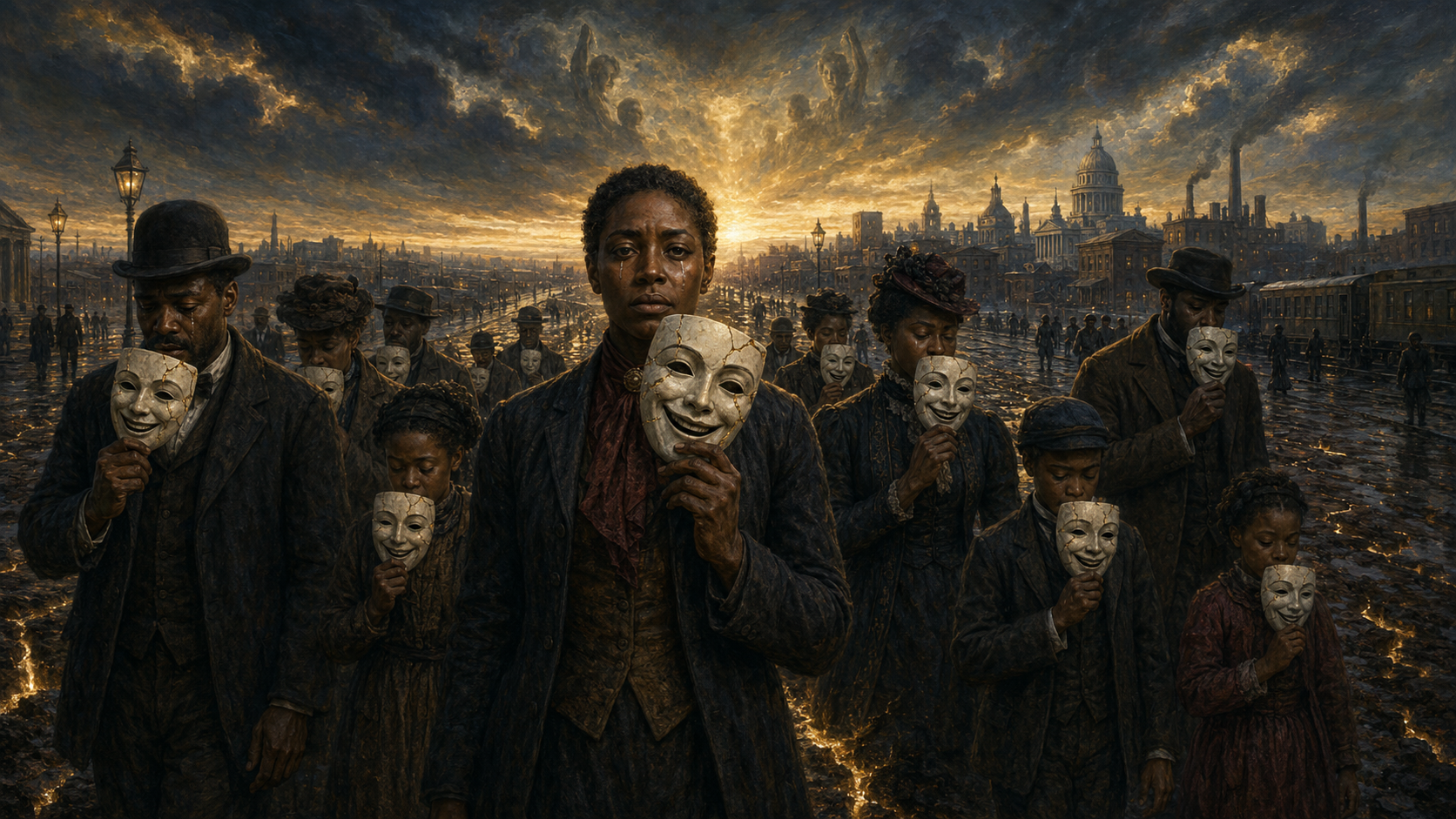
“We Wear The Mask” was first published in Paul Laurence Dunbar’s collection Majors and Minors in 1895. Written in standard English instead of dialect, the poem offers a concise yet profound reflection on the emotional discipline required of oppressed people. Using the powerful image of a smiling mask concealing wounded hearts, Dunbar exposes the gulf between public performance and private suffering. He transforms this concealment into a collective Black voice of survival, protest, and spiritual endurance.
The “mask” thus serves as both a false face and a necessary defense. It “grins,” suggesting cheerfulness, goodwill, and accommodation, yet it “lies” because this outward display conceals the speakers’ true feelings. Behind the mask are tears, sighs, and “torn and bleeding hearts.”
Dunbar’s use of “we” is crucial. Rather than depicting an isolated individual’s sadness, he presents a shared experience. The poem’s voice embodies a community forced to regulate its visible emotions in a society unwilling or unable to acknowledge its pain. The mask, therefore, becomes a symbol of social performance under unequal power: appearing untroubled, agreeable, grateful, or harmless in order to survive in a hostile world.
We wear the mask that grins and lies,
It hides our cheeks and shades our eyes,—
This debt we pay to human guile;
With torn and bleeding hearts we smile,
And mouth with myriad subtleties.
Why should the world be over-wise,
In counting all our tears and sighs?
Nay, let them only see us, while
We wear the mask.
We smile, but, O great Christ, our cries
To thee from tortured souls arise.
We sing, but oh the clay is vile
Beneath our feet, and long the mile;
But let the world dream otherwise,
We wear the mask!
Copyright Credit: Paul Laurence. Dunbar, ““We Wear the Mask.”” from The Complete Poems of Paul Laurence Dunbar. (New York: Dodd, Mead and Company, ).